Pipeline Programs

CGT Companies Tracked

Manufacturing Facilities


The global bulk-drug compounding market size was estimated at USD 12.52 billion in 2025 and is predicted to increase from USD 13.18 billion in 2026 to approximately USD 20.87 billion by 2035, expanding at a CAGR of 5.24% from 2026 to 2035.
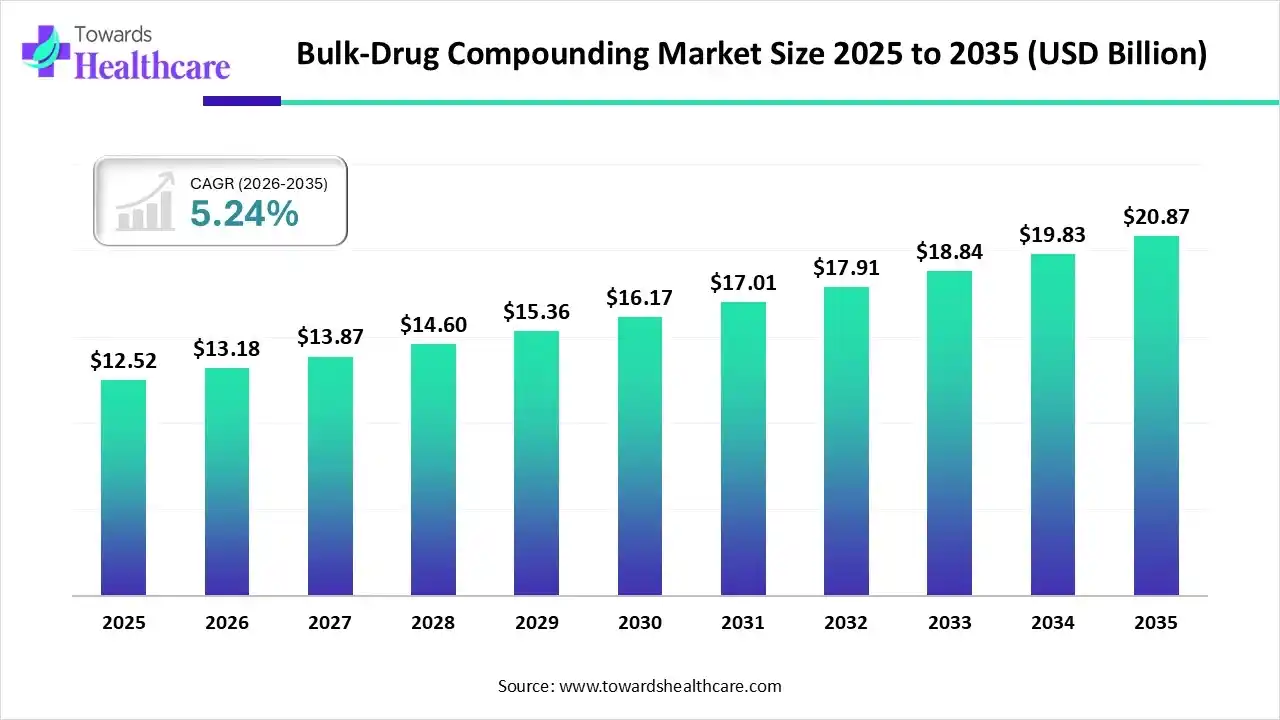
The market is expanding steadily, supported by growing demand for personalized therapies, management of drug shortages, and increased use of customised formulations across hospitals, clinics, and specialty pharmacies worldwide.
Bulk drug compounding is the preparation of customized medications in large quantities using active pharmaceutical ingredients to meet specific patient or clinical needs not addressed by commercially available drugs. The bulk-drug compounding market is growing due to rising demand for personalized medicines, frequent drug shortages, and increasing prevalence of chronic and rare diseases. Hospitals and pharmacies rely on compounded drugs to tailor dosages, improve patient compliance, and ensure continuous therapy when commercial drugs are unavailable.
| Chronic Diseases | Estimated Morbidity | Estimated Global Mortality |
| CVD | 523 million | 18 million |
| Diabetes | 589 million | 3.4 million |
| Cancer | 20 million | 10.3 million |
| Respiratory Diseases | 21000 | 9200 |
| HIV | 40.8 million | 6,30,000 |
AI can enhance the bulk-drug compounding market by optimizing formulation accuracy, predicting drug demand, and reducing wastage. It supports quality control through real-time monitoring, improves regulatory compliance, and enables data-driven personalization of therapies, leading to higher efficiency, safety, and faster turnaround times in compounding operations.
Bulk-drug compounding refers to the large-scale preparation, blending, and processing of active pharmaceutical ingredients and other drug substances into consistent formulations for further pharmaceutical manufacturing. The market is growing as pharmaceutical manufacturers seek efficient production methods, reliable ingredient quality, and greater flexibility in developing medicines. Current trends include automated compounding systems, continuous processing, closed manufacturing environments, and increased use of process monitoring. Future opportunities are emerging in personalized formulation, specialty medicines, biologics, and flexible production platforms. Technological advancements in automation, precision dosing, digital process control, robotics, and real-time quality monitoring are improving consistency and operational efficiency. Key drivers include expanding pharmaceutical production, rising demand for manufacturing activities, stricter quality requirements, and the need to reduce production time and waste. Growing investments in modern pharmaceutical manufacturing infrastructure are further supporting advanced compounding technologies.
Personalization and Customized Formulations
Demand for tailored therapies will rise as patient-specific dosing and unique combinations become more common, pushing compounding services to develop specialized, precision medicines that large manufacturers don’t offer.
Technology Integration
Automation, AI, and digital quality systems will boost efficiency and accuracy, allowing faster production, improved compliance, and reduced errors in compounding operations, strengthening market competitiveness.
Expanded Healthcare Settings
Growth in outpatient clinics, specialty pharmacies, and telehealth will increase reliance on compounded drugs, especially for rare diseases and niche treatments, broadening the market’s reach and long-term potential.
| Key Elements | Scope |
| Market Size in 2026 | USD 13.18 Billion |
| Projected Market Size in 2035 | USD 20.87 Billion |
| CAGR (2026 - 2035) | 5.24% |
| Historical Data | 2020 - 2023 |
| Base Year | 2025 |
| Forecast Period | 2026 - 2035 |
| Measurable Values | USD Millions/Units/Volume |
| Leading Region | North America by 42.5% |
| Market Segmentation | By Compounding Type, By Sterility, By Product/Form, By Therapeutic Area, By Region |
| Top Key Players | Fagron NV, B. Braun SE, Baxter International Inc., Fresenius Kabi AG, QuVa Pharma, Inc. |
Why Did the 503B Outsourcing Facilities Segment Dominate in the Market in 2025?
The 503B outsourcing facilitates segment dominated the bulk-drug compounding market with a share of approximately 62% in 2025 due to its ability to supply large-scale, standardized compounded drugs under stricter regulatory oversight. Hospitals increasingly prefer these facilities to manage drug shortages, reduce in-house compounding risks, and ensure consistent quality. Strong demand for sterilizing instruments and cost-efficient production is expected to drive the fastest growth during the forecast period.
How the Sterile Compounding Segment Dominated the Bulk-Drug Compounding Market in 2025?
The sterile compounding segment dominated with a revenue share of approximately 58% in 2025 because healthcare providers increasingly require injectable, high-purity medications for surgeries, oncology, and critical care. Strict quality standards and safety needs make sterile compounded drugs essential when commercial options aren’t available. This demand, along with rising chronic disease treatments and hospital reliance on ready-to-use sterile products, propelled the segment’s market share and growth.
Non-sterile Compounding
The non-sterile compounding segment is expected to grow at the fastest CAGR because of rising demand for customized oral, topical, and powder formulations that aren’t widely available commercially. As more patients require personalized dosages, flavors, or allergen-free options, pharmacies and clinics will increasingly turn to non-sterile compounding, especially for chronic conditions, pediatric care, and dermatological treatments.
Why Did the Oral (Capsules, Syrups) Segment Dominate in the Market in 2025?
The oral (Capsules, Syrups) segment dominated the bulk-drug compounding market with a share of approximately 39% in 2025 because these formulations are widely prescribed for chronic conditions, pediatric needs, and dose-specific treatments. Easy administration, high patient compliance, and frequent demand for customized strengths or flavors boosted their use. Pharmacies and healthcare products increasingly rely on compounded oral products to meet individual patient requirements not fulfilled by standard commercial drugs.
Parenteral (Injectables/IV)
The parenteral (Injectables/IV) segment is expected to grow at the fastest CAGR because hospitals and specialty clinics increasingly need sterile, ready-to-administer injections for critical care, oncology, and complex therapies. Customized IV formulations help manage drug shortages and enhance treatment precision. Their higher clinical demand, strict safety requirements, and limited commercial availability drive rapid adoption and market growth throughout the forecast period.
How the Pain Management Segment Dominated the Bulk-Drug Compounding Market in 2025?
The pain management segment dominated the market with a share of approximately 31% in 2025 because of the high and growing demand for tailored analgesic treatments, especially for chronic pain, post-surgical care, and cancer-related pain. Compounded pain medications allow customized dosage and routes of administration when standard products don’t meet patient needs, boosting their use in hospitals, clinics, and specialty pharmacies and driving market share.
Hormone Replacement Therapy (HRT)
The hormone replacement therapy (HRT) segment is expected to grow at the fastest CAGR because aging populations and increased awareness of hormonal imbalance are boosting demand. Personalized HRT formulations help tailor doses for menopausal symptoms, endocrine disorders, and gender-affirming care. Limited availability of one-size-fits-all commercial products drives clinics and pharmacies to compounded solutions, accelerating market growth throughout the forecast period.
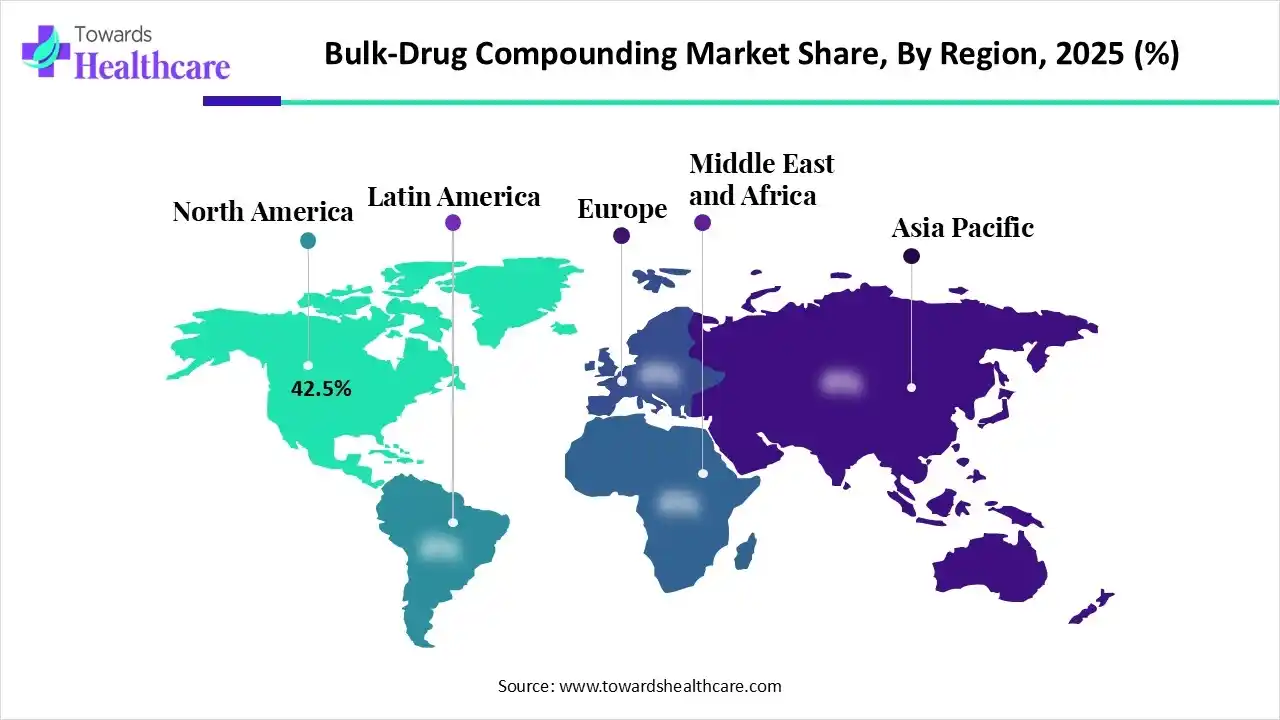
North America dominated the global bulk-drug compounding market with an estimated 42.5% share in 2025 due to strong regulatory frameworks, widespread adoption of 503A and 503B facilities, and high demand for personalized therapies. Advanced healthcare infrastructure, frequent drug shortages, and growing use of compounded sterile and non-sterile formulations across hospitals and clinics further supported the region’s market leadership.
U.S. at the Forefront of the Bulk-Drug Compounding Market
The U.S. led the market in 2025 by capturing the largest revenue share due to its well-established compounding regulations, strong presence of 503A and 503B facilities, and high healthcare spending. Rising demand for personalized medicine, effective management of drug shortages, and widespread adoption of compounded sterile products across hospitals and specialty clinics further reinforced the country’s market leadership.
Canada’s Bulk Drug Compounding Market Expanding Through Pharmaceutical Innovation
Canada is significantly growing in the bulk-drug compounding market due to expanding pharmaceutical manufacturing, increasing demand for specialized medicines, and growing investment in advanced production capabilities. Strong research and development activities are encouraging the adoption of automated compounding, precision dosing, and improved quality-control technologies. Rising demand for generic and specialty pharmaceuticals, combined with efforts to strengthen domestic drug supply capabilities, is further supporting market expansion.
Asia Pacific is expected to register the fastest CAGR during the forecast period due to expanding healthcare infrastructure, rising prevalence of chronic diseases, and growing demand for affordable personalized medicine. Increasing hospital capacity, improving regulatory support, rapid urbanization, and higher awareness of customized therapies across emerging economies such as India and China are accelerating the adoption of bulk drug compounding services in the region.
India: A High-Growth Hub in Bulk Drug Compounding
India is anticipated to grow at a rapid CAGR during the forecast period due to expanding healthcare infrastructure, rising chronic disease burden, and increasing demand for cost-effective personalized medicines. Growth in hospital networks, improving regulatory clarity, strong pharmaceutical manufacturing capabilities, and higher awareness of compounded therapies across urban and semi-urban regions are accelerating market adoption.
China’s Bulk Drug Compounding Market Expanding Through Manufacturing Strength
China is notably expanding in the bulk-drug compounding market due to its large pharmaceutical manufacturing base, rising demand for generic and specialty medicines, and increasing investment in modern production facilities. Growing adoption of automation, precision processing, and advanced quality-control systems is improving manufacturing efficiency. Expansion of domestic pharmaceutical capabilities and increasing demand for cost-effective drug production are further supporting market growth.
Europe is anticipated to grow at a notable CAGR during the forecast period due to increasing demand for personalized therapies, aging population growth, and rising prevalence of chronic diseases. Strong healthcare systems, expanding hospital pharmacies, supportive regulatory frameworks, and growing reliance on compounded medicines to address drug shortages are driving consistent market expansion across key European countries.
Germany’s Bulk Drug Compounding Market Expanding Through Precision Manufacturing
Germany is significantly expanding in the bulk-drug compounding market due to its strong pharmaceutical manufacturing base, advanced production infrastructure, and increasing demand for high-quality drug ingredients. Growing adoption of automated processing, precision dosing, digital quality monitoring, and advanced manufacturing technologies is improving production efficiency. Strong research capabilities, rising demand for specialty medicines, and continued modernization of pharmaceutical facilities are further supporting market expansion.
UK’s Rapid Growth in the Bulk-Drug Compounding Market
The UK is anticipated to grow at a rapid CAGR during the forecast period due to rising demand for personalized medicines, an aging population, and increasing chronic disease prevalence. Strong NHS support for specialized treatments, growing use of compounded drugs to manage supply gaps, advancements in hospital pharmacy services, and improving regulatory guidance are accelerating market growth across the country.
R&D
Clinical Trials
Formulation and Final Dosage Preparation
| Companies | Headquarters | Offerings |
| Fagron NV | Rotterdam, Netherlands | Fagron supplies compounding products, raw materials, excipients, equipment, and sterile/non-sterile formulations to pharmacies, hospitals, and healthcare providers worldwide, supporting personalized medicine and compounding services. |
| B. Braun SE | Melsungen, Germany | A major medical and pharmaceutical company offering a wide range of healthcare products, including infusion and injection systems, surgical instruments, hospital supplies, and devices for patient care and therapy. |
| Baxter International Inc. | Illinois, USA | Provides medical supplies and therapies such as sterile IV solutions, infusion systems, parenteral nutrition, dialysis products, anesthesia, and critical care pharmaceuticals. |
| Fresenius Kabi AG | Homburg, Germany | Specializes in life-saving medicines and technologies for infusion, transfusion, clinical nutrition, and IV generic drugs, serving critically and chronically ill patients globally |
| QuVa Pharma, Inc. | Texas, USA | Focuses on 503B sterile injectable compounding services for hospitals and health systems, offering ready-to-administer compounded medications and data/analytics solutions to optimize pharmacy operations |
Strengths
Weaknesses
Opportunities
Threats
In May 2026, “When FDA-approved drugs are available, outsourcing facilities cannot lawfully compound using bulk drug substances unless there is a clear clinical need.” “This action reflects our responsibility to protect patients and preserve the integrity of the drug approval process while continuing to provide a transparent, science-based pathway for public input, “ said FDA Commissioner Marty Makary, MD, MPH.
By Compounding Type
By Sterility
By Product/Form
By Therapeutic Area
By Region




Principal Consultant
Payal Rabde is a Healthcare Market Research Analyst at Towards Healthcare Research & Consulting with 4+ years of experience in pharmaceuticals, biotechnology, medical devices, and life sciences.
Learn more about Payal Rabde

Reviewed By
Aditi Shivarkar is a seasoned professional with over 14 years of experience in healthcare market research. As a content reviewer, Aditi ensures the quality and accuracy of all market insights and data presented by the research team.
Learn more about Aditi Shivarkar