


The Germany AI in healthcare market size is predicted to increase from USD 3.34 billion in 2026 to approximately USD 52.47 billion by 2035, expanding at a CAGR of 35.8% from 2026 to 2035. Growing healthcare digitalization in Germany is increasing the adoption of AI health solutions. Increasing health awareness, R&D activities, clinical trials , workload, innovations, and investments are also enhancing the market growth.
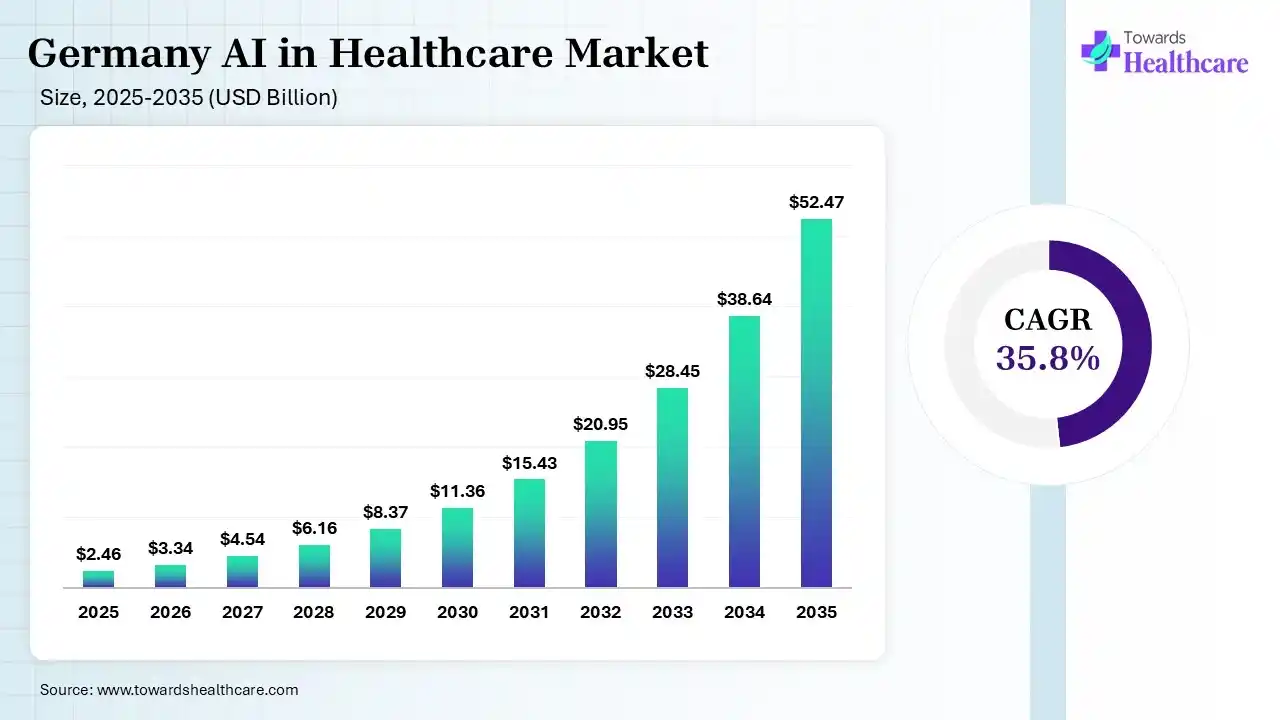
The market also benefits from increasing adoption of electronic health records, cloud computing, and advanced medical imaging systems. Hospitals and research institutions are integrating artificial intelligence to improve treatment accuracy and operational efficiency. Growing collaboration between technology companies, healthcare providers, and academic organizations supports continuous innovation. Regulatory frameworks encourage responsible development and safe deployment of AI solutions. Rising investments in digital health infrastructure strengthen implementation across public and private healthcare facilities. Predictive analytics, natural language processing, and machine learning help improve patient outcomes, reduce administrative burden, optimize resource allocation, and support faster clinical decision-making throughout Germany.
Macro Factors
Micro Factors
Germany AI in healthcare market is driven by a growing aging population, shortage of skilled professionals, and growing government funding. The Germany AI in healthcare refers to AI-based healthcare technologies, applications, and services used across the Germany healthcare sector. These solutions are used for disease diagnosis, drug discovery & development, personalized medicines development, workflow automation, clinical decision support, and remote patient monitoring.
Growth in AI-Powered Diagnostics
A rise in the chronic disease burden is increasing the demand for faster and more accurate diagnostic tools. This is driving the adoption of AI-powered diagnostics due to their predictive analytics and early disease diagnosis.
Increasing Demand for Personalized Medicine
Growing health awareness is increasing the demand for personalized and precision medicine. This is increasing the use of AI for genomics data analysis, precision oncology solutions, patient-specific drug recommendations, and predicting treatment response.
Expansion of Remote Healthcare
Expanding healthcare digitalization and the telehealth ecosystem are driving remote healthcare. This is increasing the use of AI-powered monitoring platforms, wearable devices, and smart sensors.
| Table | Scope |
| Market Size in 2026 | USD 3.34 Billion |
| Projected Market Size in 2035 | USD 52.47 Billion |
| CAGR (2026 - 2035) | 35.8% |
| Historical Data | 2020 - 2023 |
| Base Year | 2025 |
| Forecast Period | 2026 - 2035 |
| Measurable Values | USD Millions/Units/Volume |
| Market Segmentation | By Component, By Technology, By Application, By End User, By Function, By Deployment Mode |
| Top Key Players | Siemens Healthineers, mediaire, Ada Health, voize, Vara, Caresyntax, Aignostics, Floy, Mindpeak, Semalytix |
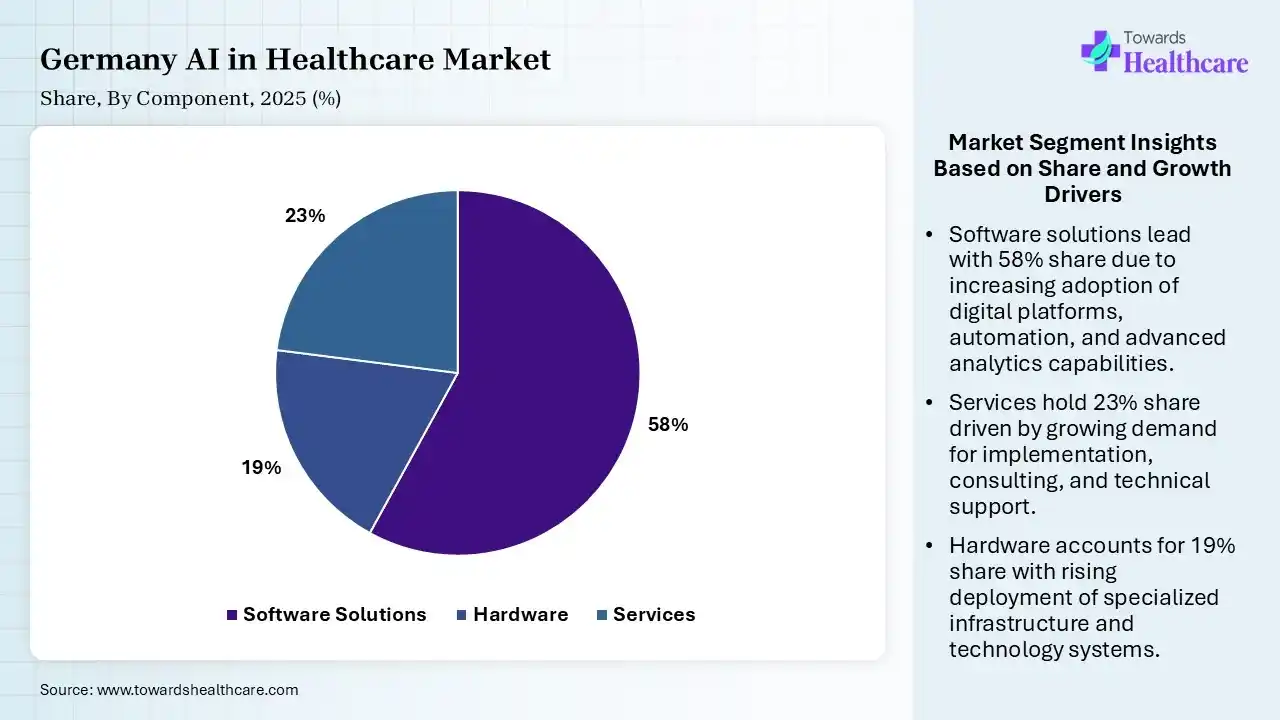
| Segment | Share 2025 (%) |
| Software Solutions | 58% |
| Hardware | 19% |
| Services | 23% |
The Software Solutions Segment Dominated the Market With 58% in 2025
The software solutions segment led the Germany AI in healthcare market with 58% share in 2025, due to growth in their use for diagnostics and workflow optimization. Digital health reforms also accelerated software procurement across hospitals. Growth in interoperability requirements also supported platform expansion.
The services segment held the second-largest share of 23% of the market in 2025 and is expected to witness the fastest growth during the forecast period, as healthcare organizations require integration, consulting, and AI deployment expertise. Continuous upgrades and compliance management also drive recurring service demand. Workforce training initiatives also accelerate service adoption.
The hardware segment held 19% of the Germany AI in healthcare market share in 2025, driven by rising deployment of AI-enabled imaging systems and edge devices, which increases hardware demand. Investments in smart hospitals also strengthen infrastructure modernization. Growth in medical IoT ecosystems also supports device integration.
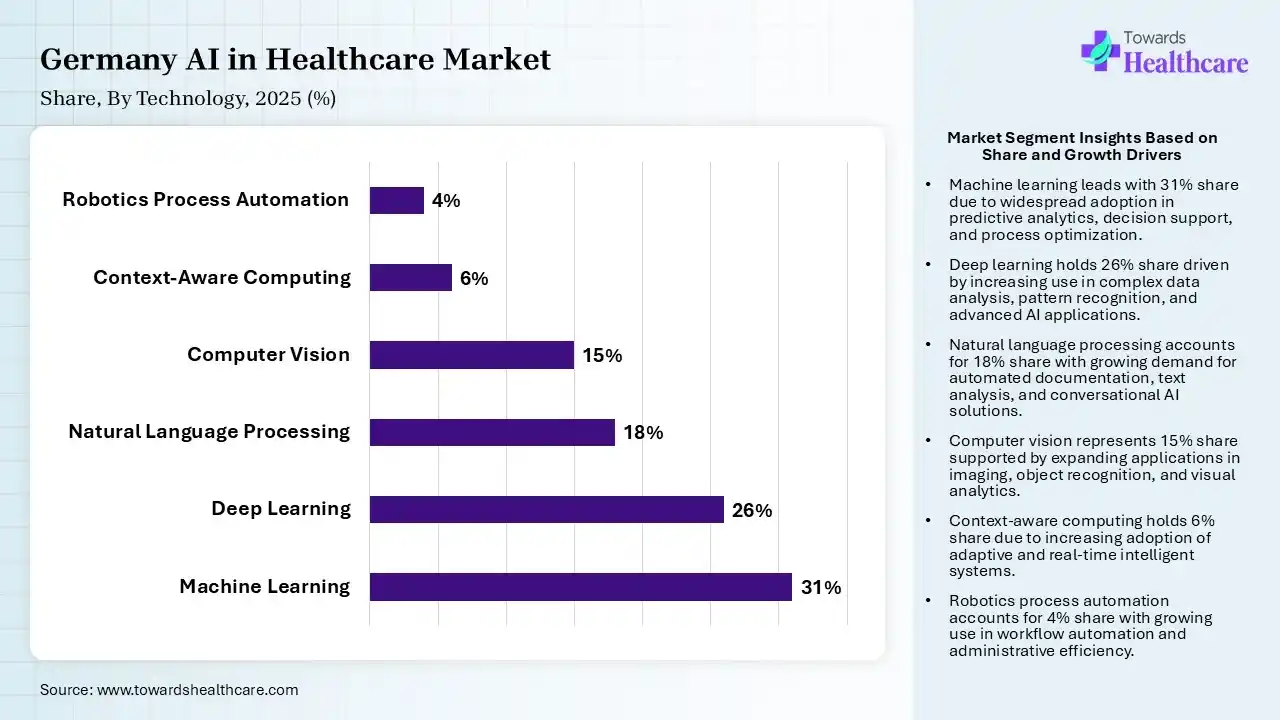
| Segment | Share 2025 (%) |
| Machine Learning | 31% |
| Deep Learning | 26% |
| Natural Language Processing | 18% |
| Computer Vision | 15% |
| Context-Aware Computing | 6% |
| Robotics Process Automation | 4% |
The Machine Learning Segment Dominated the Market With 31% in 2025
The machine learning segment accounted for the highest revenue share of 31% of the Germany AI in healthcare market in 2025, as hospitals widely used machine learning for predictive analytics and diagnosis support. It also provided improved algorithm performance and scalability for large clinical datasets. Government-backed digitization initiatives also encouraged their adoption.
The deep learning segment held the second-largest share of 26% of the market in 2025 and is expected to show the highest growth during the forecast period, due to its enhanced image interpretation accuracy across radiology and pathology. Increasing GPU availability also strengthens AI model deployment. Pharmaceutical firms are also accelerating generative AI research programs.
The natural language processing segment held 18% of the Germany AI in healthcare market share in 2025, as it automates medical documentation and improves physician efficiency. German-language clinical data processing capabilities also continue to improve. Demand for AI chatbots also supports their wider implementation.
The computer vision segment held 15% of the market share in 2025, due to its real-time imaging analysis and surgical assistance. Diagnostic centers are increasingly integrating AI-enabled imaging tools. Growth in pathology digitization also drives adoption.
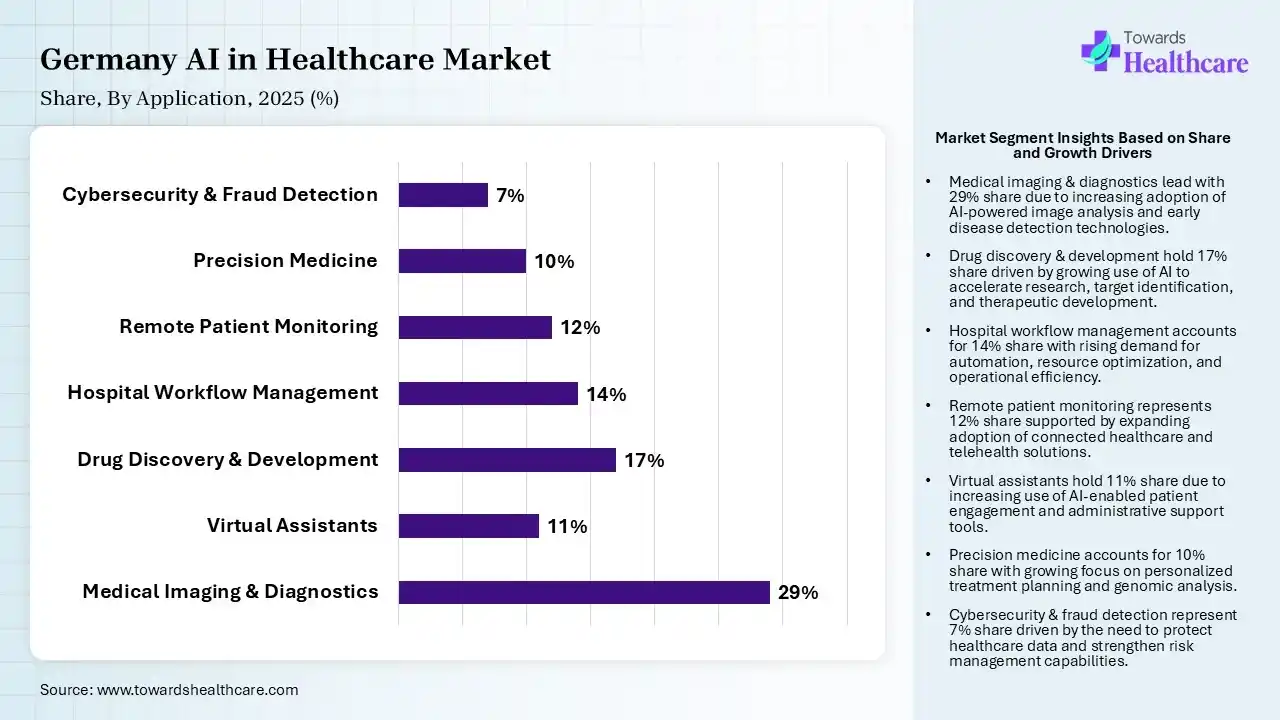
| Segment | Share 2025 (%) |
| Medical Imaging & Diagnostics | 29% |
| Virtual Assistants | 11% |
| Drug Discovery & Development | 17% |
| Hospital Workflow Management | 14% |
| Remote Patient Monitoring | 12% |
| Precision Medicine | 10% |
| Cybersecurity & Fraud Detection | 7% |
The Medical Imaging & Diagnostics Segment Dominated the Market With 29% in 2025
The medical imaging & diagnostics segment held a major revenue share of 29% of the Germany AI in healthcare market in 2025, as AI significantly improved diagnostic accuracy and imaging efficiency. Radiology departments also increasingly integrated automated interpretation tools. Aging populations also contributed to the increased imaging volumes across Germany.
The drug discovery & development segment held the second-largest share of 17% of the market in 2025 and is expected to expand rapidly during the forecast period, as pharmaceutical companies are accelerating AI-driven molecule discovery and trial optimization. Germany’s biotech ecosystem also supports AI-enabled R&D investments. Demand for faster therapeutic development also boosts their adoption.
The hospital workflow management segment held 14% of the Germany AI in healthcare market share in 2025, as AI optimizes scheduling, patient flow, and operational resource allocation. Hospitals are also seeking efficiency improvements amid staffing shortages. Smart infrastructure investments also strengthen workflow digitization.
The remote patient monitoring segment held 12% of the market share in 2025, due to increasing chronic disease prevalence, which drives the demand for continuous monitoring solutions. Wearable device integration also supports real-time analytics. Home healthcare adoption also expands remote care infrastructure.
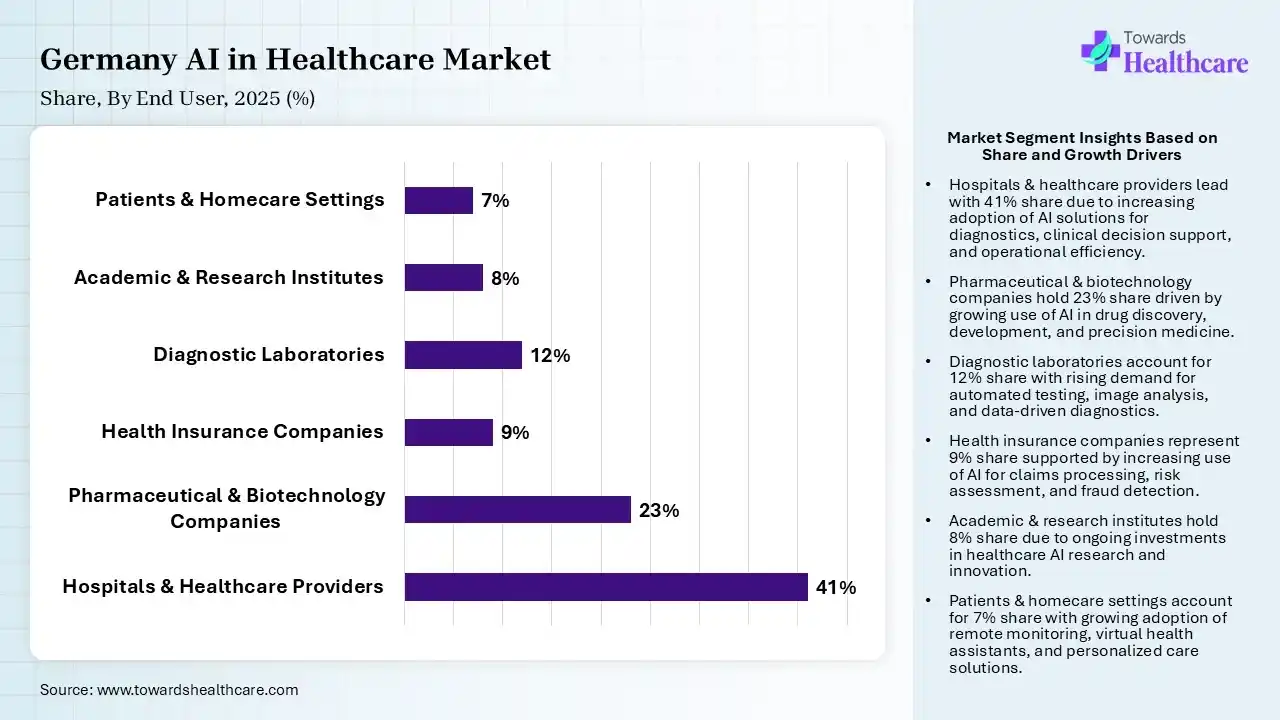
| Segment | Share 2025 (%) |
| Hospitals & Healthcare Providers | 41% |
| Pharmaceutical & Biotechnology Companies | 23% |
| Health Insurance Companies | 9% |
| Diagnostic Laboratories | 12% |
| Academic & Research Institutes | 8% |
| Patients & Homecare Settings | 7% |
The Hospitals & Healthcare Providers Segment Dominated the Market With 41% in 2025
The hospitals & healthcare providers segment contributed the biggest revenue share of 41% of the Germany AI in healthcare market in 2025, due to growth in AI implementation for diagnostics, workflow automation, and patient management. Public healthcare digitization programs also supported investment growth. Growth in patient volumes also accelerated AI integration.
The pharmaceutical & biotechnology companies segment held the second-largest share of 23% of the market in 2025 and is expected to gain the highest share during the forecast period, due to expanding AI use in clinical research and molecule screening. Germany’s biotech innovation ecosystem also supports its rapid adoption. Competitive pressure also encourages faster R&D cycles.
The diagnostic laboratories segment held 12% of the Germany AI in healthcare market share in 2025, due to AI-powered pathology and imaging analytics improving diagnostic throughput. AI is also used for operational efficiency and accuracy improvements. Automation demand continues to increase, promoting its adoption.
The health insurance companies segment held 9% of the market share in 2025, as insurers utilize AI for fraud detection and claims automation. Predictive analytics also improves risk assessment efficiency. Digital insurance transformation initiatives also support their adoption.
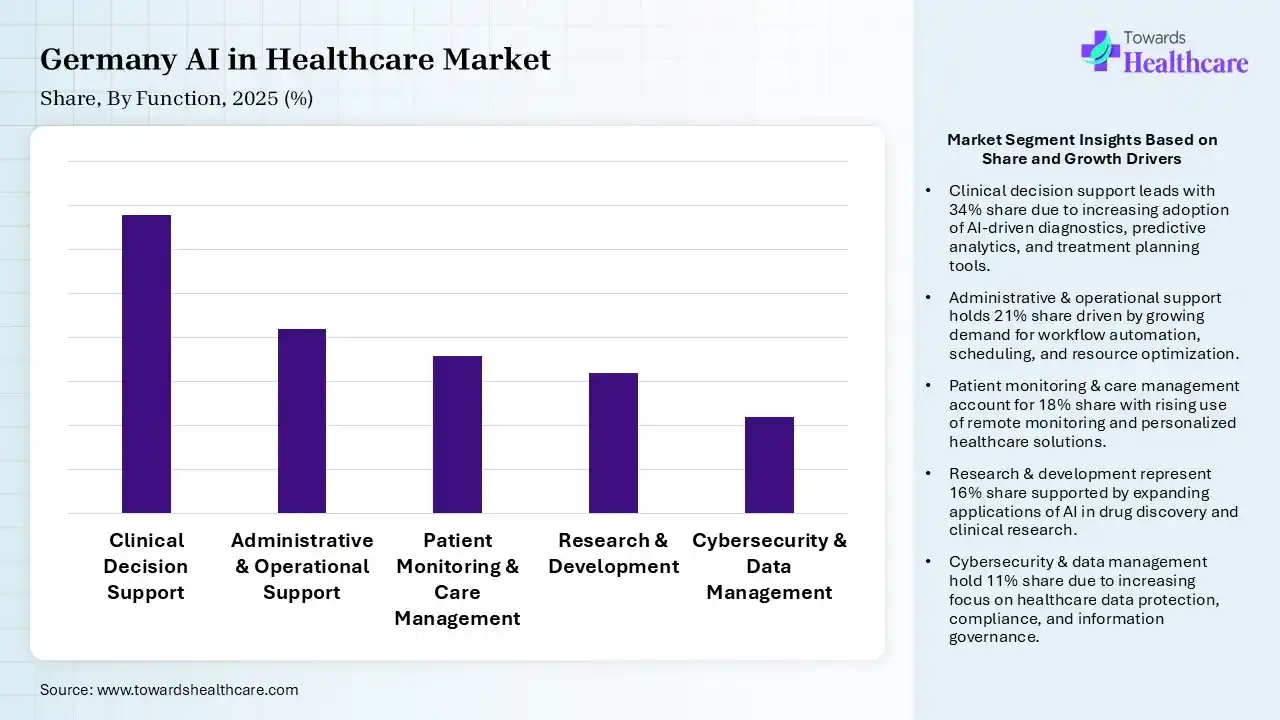
| Segment | Share 2025 (%) |
| Clinical Decision Support | 34% |
| Administrative & Operational Support | 21% |
| Patient Monitoring & Care Management | 18% |
| Research & Development | 16% |
| Cybersecurity & Data Management | 11% |
The Clinical Decision Support Segment Dominated the Market With 34% in 2025
The clinical decision support segment held the largest revenue share of 34% of the Germany AI in healthcare market in 2025, as AI-driven clinical insights improve diagnosis and treatment planning accuracy. Hospitals also integrated predictive decision-support systems. Physicians' demand for workflow efficiency also accelerated their adoption.
The administrative & operational support segment held the second-largest share of 21% of the market in 2025, as healthcare facilities automate billing, scheduling, and documentation workflows. Staffing shortages also increase operational automation requirements. AI also improves hospital resource utilization efficiency.
The patient monitoring & care management segment held 18% of the Germany AI in healthcare market share in 2025 and is expected to grow with the fastest CAGR during the forecast period, due to its proactive patient management. Chronic disease prevalence also drives continuous monitoring demand. Wearable device ecosystems also support real-time healthcare analytics.
The research & development segment held 16% of the market share in 2025, as pharmaceutical and biotech companies leverage AI to accelerate innovation cycles. Clinical trial optimization also increases operational efficiency. AI-supported genomics research also drives investment growth.
The AI in healthcare market is projected to reach USD 928.18 billion by 2035, growing from USD 37.98 billion in 2025, at a CAGR of 37.66% during the forecast period from 2026 to 2035.
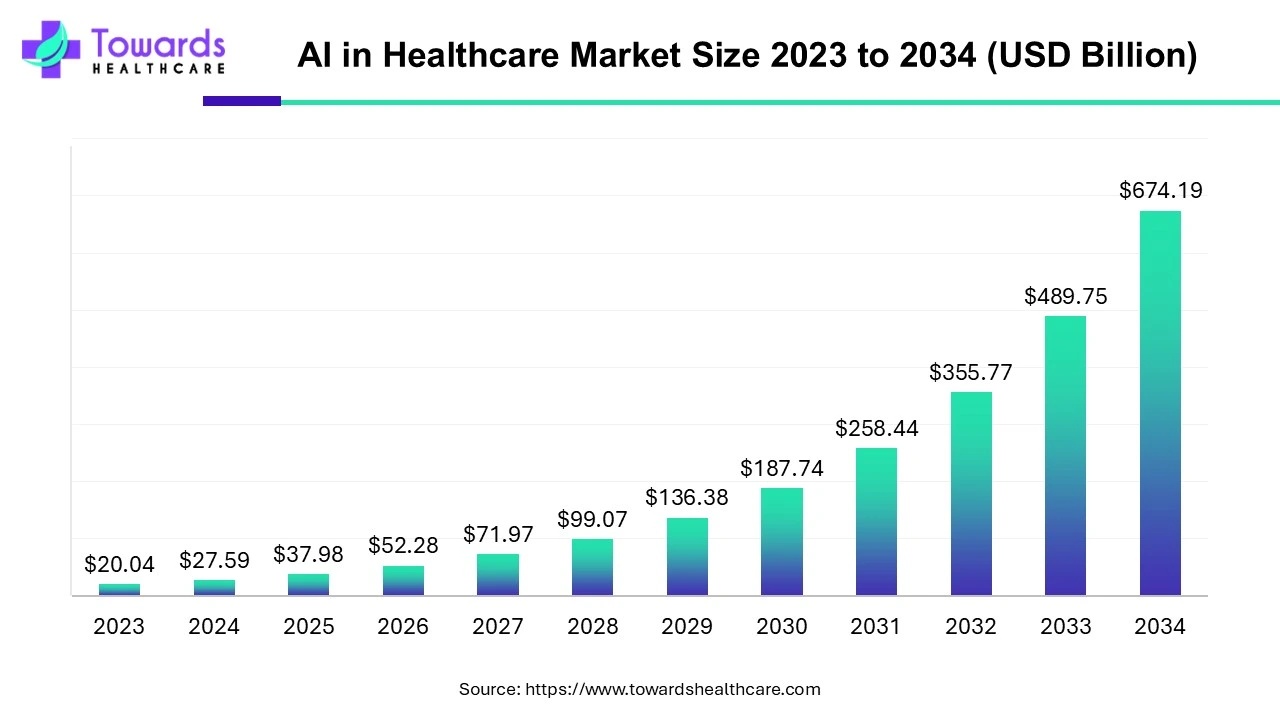
Germany AI in healthcare market is expected to expand significantly during the forecast period, due to the presence of a robust healthcare infrastructure, which has increased the adoption of AI solutions. Growing healthcare investments and demand for precision medicines have also increased their use. Expanding telemedicine platforms are also enhancing the market growth.
Germany AI in healthcare market is expanding through strong digital health policies and advanced medical research. Hospitals increasingly adopt artificial intelligence for diagnostics, workflow automation, and patient monitoring. Universities and technology companies collaborate on innovative solutions. Rising healthcare investments and supportive regulations encourage implementation across public and private facilities. Skilled research institutions strengthen long-term industry development nationwide.
Bavaria is a leading innovation center for healthcare artificial intelligence. Munich hosts global technology companies, research institutes, and university hospitals. Startups develop AI platforms for imaging, diagnostics, and clinical decision support. Strong venture funding and industry partnerships accelerate commercialization. Modern healthcare infrastructure supports testing and adoption of advanced digital health solutions across the regional healthcare ecosystem.
Baden-Württemberg combines engineering excellence with medical innovation. Stuttgart and Heidelberg support AI research through hospitals, universities, and biotechnology companies. Healthcare providers use intelligent software to improve treatment planning and hospital efficiency. Regional collaborations encourage clinical validation and product development. Continuous investment in digital infrastructure strengthens healthcare modernization while skilled professionals support sustainable innovation across the region.
Bavaria Market Trends
Bavaria acts as a prime region for the growth of the market; the Bavarian government has committed billions of euros dedicated directly to AI initiatives and over 100 newly created AI professorships to build robust research and transfer infrastructure, helpful for the growth of the market. In April 2026, Bavaria approved AI-BAY-HEALTH, a major state-backed initiative coordinated via the Pattern Recognition Lab at FAU Erlangen-Nuremberg, TUM, LMU, and regional university hospitals to build sovereign, multi-modal healthcare foundation models spanning medical imaging, radiology, pathology, and omics data. The region also houses a large number of life sciences companies and medical technology enterprises along with international heavyweights, further fueling the growth of the market.
North Rhine-Westphalia (NRW) Market Trends
North Rhine-Westphalia (NRW) also has a major contribution to the growth of the market through a massive population base, concentrated talent, university hospital infrastructure, and targeted innovation platforms. Developed by Fraunhofer IAIS, the KI. NRW Platform bundles AI expertise and moves research directly into clinical industry applications, featuring tools like "AI Worlds" to map AI use across the care process, helpful for the growth of the market. NRW's extensive network of university hospitals acts as a testing ground for clinical AI, further propelling the growth of the market. As Germany's most populous federal state with substantial local healthcare spending and numerous clinical centers, NRW provides a massive deployment market for diagnostic automation and operational AI workflows as well.
Berlin Market Trends
Berlin has a central contribution to the growth of the market, reflected by factors such as a premier digital health hub, startup incubator, and clinical research center. The region also serves as a primary national cluster for health-tech and digital startups turning out agile software, diagnostic, and clinical workflow tools. Berlin's dense network of tech talent and digital health initiatives accelerates teleconsulting, remote monitoring, and AI-assisted medical applications, further fueling the growth of the market. Berlin bridges medium-sized medical device manufacturers with software developers to integrate AI into orthopedics, cardiovascular technology, and minimally invasive surgery, further fueling the growth of the market.
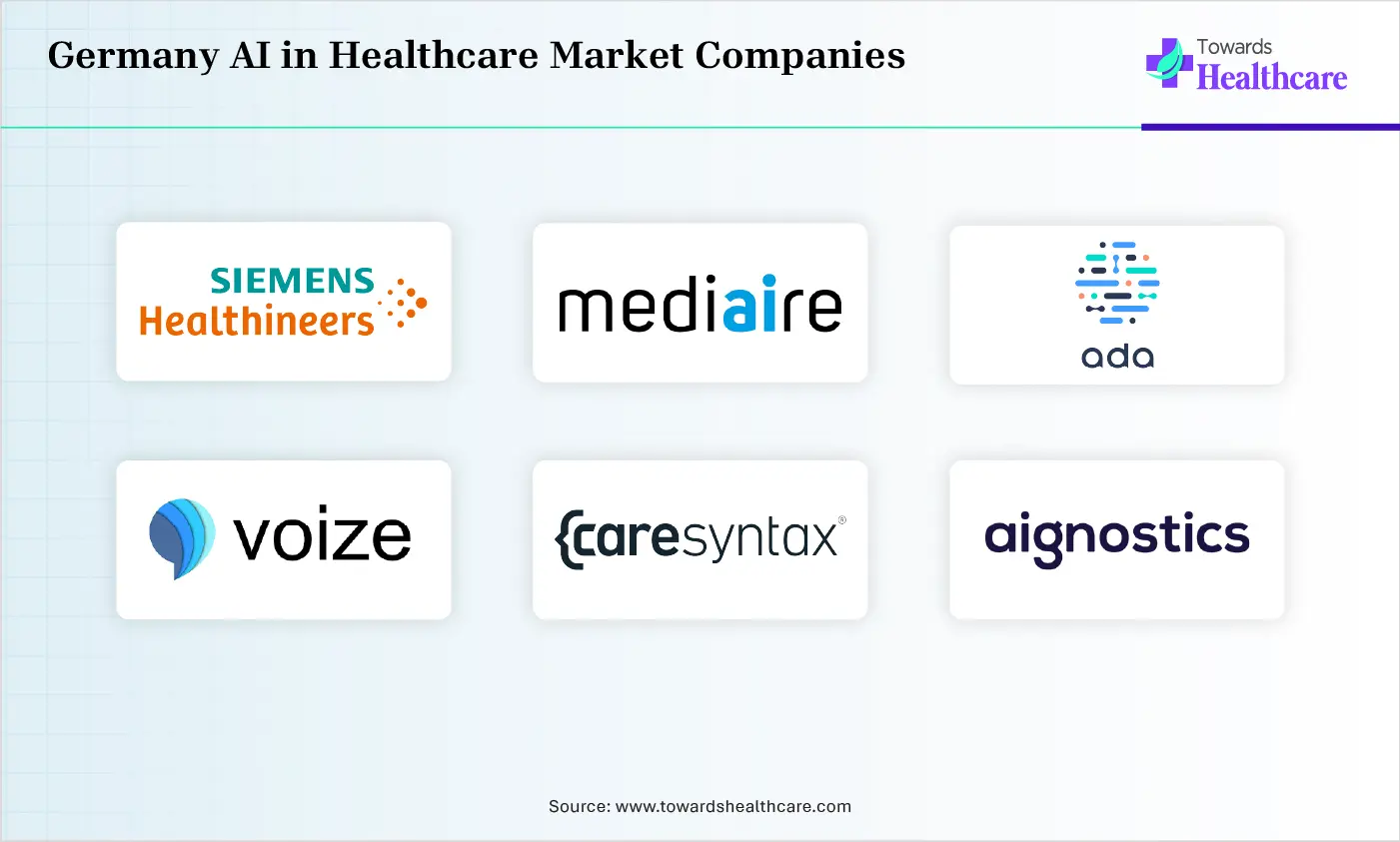
| Companies | Headquarters | AI Healthcare Solutions in Germany |
| Siemens Healthineers | Erlangen, Bavaria | AI-Rad Companion |
| mediaire | Berlin | mdBrain |
| Ada Health | Berlin | Ada App and Enterprise |
| voize | Heidelberg | voize Digital Assistant |
| Vara | Berlin | Vara Mammography AI |
| Caresyntax | Berlin | Caresyntax CX Platform |
| Aignostics | Berlin | AI-driven Pathology Solutions |
| Floy | Munich | Floy AI Assistant |
| Mindpeak | Hamburg | Mindpeak Breast & Lung AI |
| Semalytix | Bielefeld | Pharos |
In July 2026, “Merck KGaA, Darmstadt, Germany’s forward-thinking and bold approach to transforming clinical development end-to-end raises the bar for the industry, making them an exceptional partner for Evinova’s efforts,” said Cristina Duran, President of Evinova. “With a seat on Evinova’s Strategic Roadmap Steering Committee, Merck KGaA, Darmstadt, Germany will help, and together we will push the next frontier of clinical development to accelerate the delivery of high-quality medicines to patients.”
By Component
By Technology
By Application
By End User
By Function
By Deployment Mode









Principal Consultant
Rohan Patil is a seasoned market research professional with over 5+ years of focused experience in the healthcare sector, bringing deep domain expertise, strategic foresight, and analytical precision to every project he undertakes.
Learn more about Rohan Patil

Reviewed By
Aditi Shivarkar is a seasoned professional with over 14 years of experience in healthcare market research. As a content reviewer, Aditi ensures the quality and accuracy of all market insights and data presented by the research team.
Learn more about Aditi Shivarkar









