Pipeline Programs

CGT Companies Tracked

Manufacturing Facilities


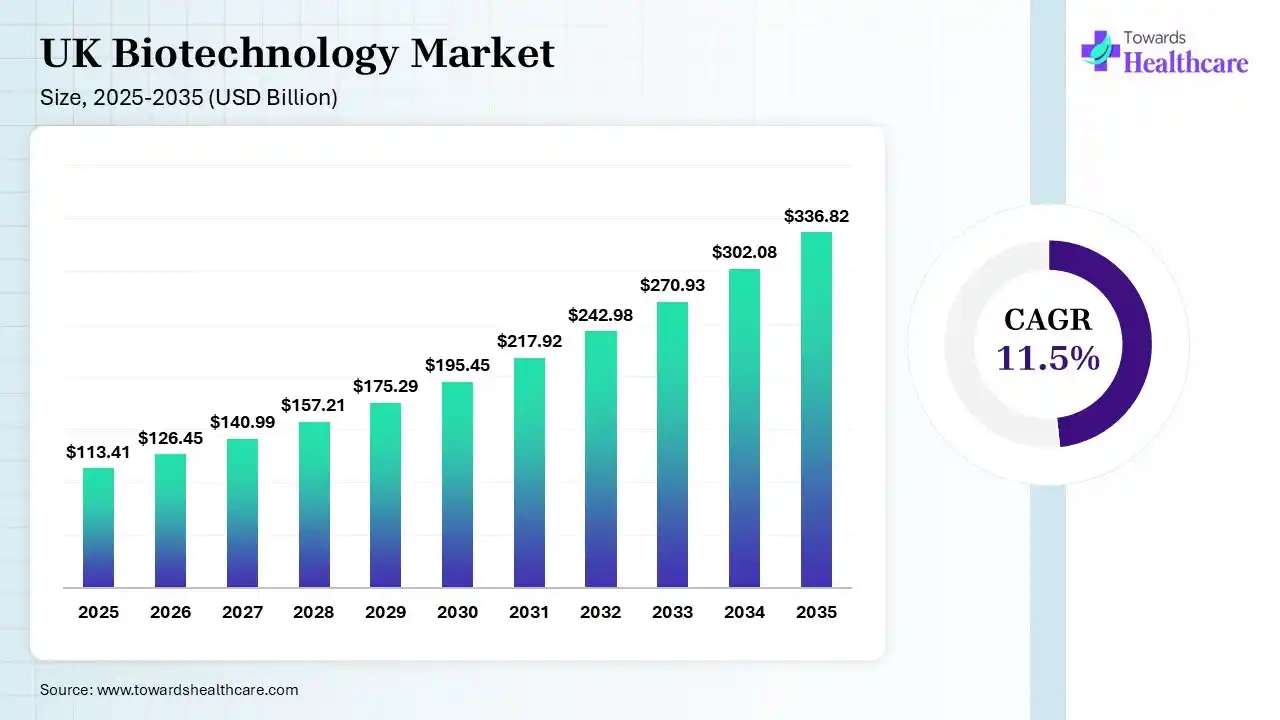
The UK biotechnology market size was estimated at USD 113.41 billion in 2025 and is predicted to increase from USD 126.45 billion in 2026 to approximately USD 336.82 billion by 2035, expanding at a CAGR of 11.5% from 2026 to 2035. The market is growing steadily due to increasing innovation in biopharmaceuticals, precision medicine, and genetic research. Strong government initiatives, growing research collaborations, and rising healthcare demand continue to support the sector’s long-term growth.
Biotechnology in the UK involves the use of biological science and advanced technologies to develop innovative solutions in healthcare, agriculture, and industrial applications. The UK biotechnology market is growing due to increasing investment in life science research, rising demand for personalized medicine, and strong government support for innovation. Expanding biotechnology applications in drug development, genomics, and healthcare solutions are further accelerating market growth. In addition, collaborations between research institutes and biotech companies, along with advances in artificial intelligence and precision medicine, continue to strengthen he Uk’s biotechnology sector.
Artificial intelligence is transforming the market by accelerating drug discovery, improving genomic analysis, and enhancing precision medicine development. AI-driven technologies help researchers analyze complex biological data faster and more accurately, reducing research time and operational costs. Increasing adoption of machine learning in clinical research, diagnostics, and biotechnology manufacturing is further supporting innovation, improving treatment outcomes, and strengthening the overall growth of the UK biotechnology sector.
| Table | Scope |
| Market Size in 2026 | USD 126.45 Billion |
| Projected Market Size in 2035 | USD 336.82 Billion |
| CAGR (2026 - 2035) | 11.5% |
| Historical Data | 2020 - 2023 |
| Base Year | 2025 |
| Forecast Period | 2026 - 2035 |
| Measurable Values | USD Millions/Units/Volume |
| Market Segmentation | By Product Type, By Technology, By Application, By End User |
| Top Key Players | Oxford Biomedica, Autolus Therapeutics, Adaptimmune Therapeutics, Verona Pharma, Immunocore, Orchard Therapeutics, Silence Therapeutics, Bicycle Therapeutics, Touchlight, Abcam, Vaccitech, Avacta Group |
| Segment | Share 2025 (%) |
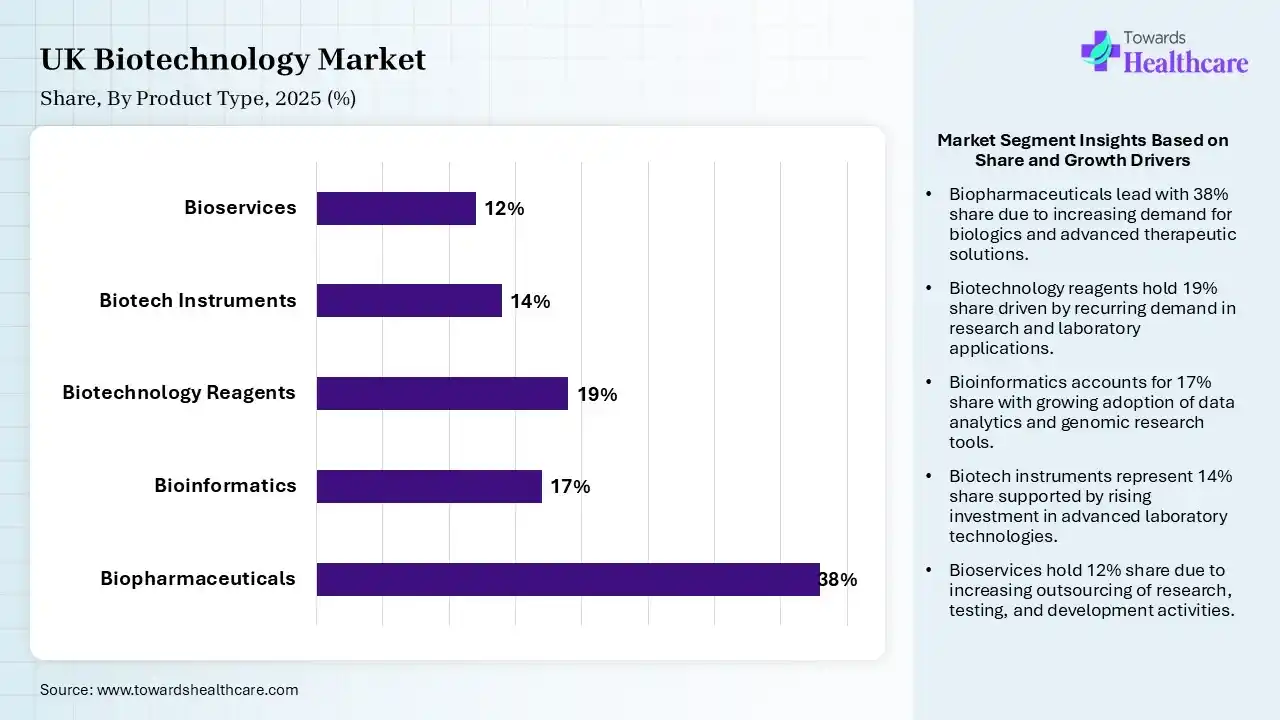
| Biopharmaceuticals | 38% |
| Bioinformatics | 17% |
| Biotechnology Reagents | 19% |
| Biotech Instruments | 14% |
| Bioservices | 12% |
The Biopharmaceuticals Segment Dominated the UK Biotechnology Market in 2025
The biopharmaceuticals segment held a dominant share of 38% in 2025 due to rising demand for biologic drugs, targeted therapies, and advanced treatments for chronic diseases. Increasing investments in biopharmaceutical research, strong clinical trial activity, and growing adoption of personalized medicine further supported segment growth. In addition, continuous innovation in monoclonal antibodies, vaccines, and cell-based therapies strengthened the leadership of the biopharmaceutical segment across the UK biotechnology industry.
The biotechnology reagents segment held the second-largest share of 19% in 2025 due to its essential role in research, diagnostics, and drug development processes. High demand from academic institutions, pharmaceutical companies, and clinical laboratories supports steady usage of reagents for experiments and testing. Increasing biotechnology R&D activities, expansion of molecular diagnostics, and rising focus on life science innovation further drive the consistent growth of the reagent segment in the UK market.
The bioinformatics segment held 17% share in 2025 and is expected to grow at the fastest CAGR in the UK biotechnology market during the forecast period due to rising demand for advanced data analysis in genomics, drug discovery, and personalized medicine. Increasing adoption of big data tools, cloud computing, and computational biology is accelerating research efficiency. Growing volumes of biology data and a strong focus on precision healthcare further drive the need for bioinformatics solutions across the biotechnology and pharmaceutical industries.
The biotech instruments segment held a 14% of market share due to increasing demand for advanced laboratory equipment used in research, diagnostics, and drug development. Rising investment in life sciences R&D, expanding biopharmaceutical production, and growth in clinical testing are driving the adoption of high-precision instruments. Continuous technological advancements, automation in laboratories, and increasing focus on accuracy and efficiency further support the strong growth of this segment in the biotechnology industry.
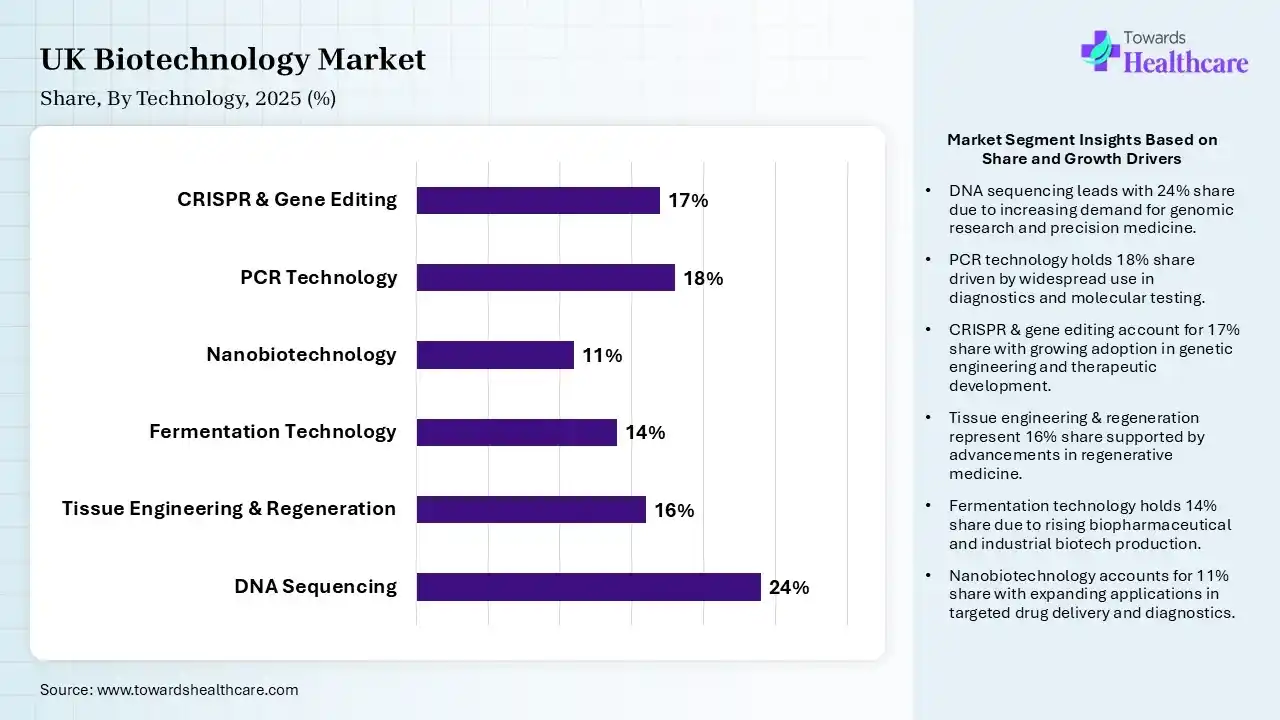
| Segment | Share 2025 (%) |
| DNA Sequencing | 24% |
| Tissue Engineering & Regeneration | 16% |
| Fermentation Technology | 14% |
| Nanobiotechnology | 11% |
| PCR Technology | 18% |
| CRISPR & Gene Editing | 17% |
The DNA Sequencing Segment Led the Market in 2025 with the Largest Share
The DNA sequencing segment led the UK biotechnology market with a share of 24% in 2025 due to increasing demand for genetic research, personalized medicine, and early disease detection. Advancements in next-generation sequencing technologies have made sequencing faster, more accurate, and cost-effective. Rising applications in oncology, rare disease diagnosis, and drug development are further driving adoption. Expanding genomic projects and strong investments in biotechnology research also continue to accelerate the growth of DNA sequencing technologies.
The PCR technology segment held the second-largest share of 18% in 2025 due to its widespread use in disease diagnosis, genetic testing, and research applications. Its high accuracy, speed, and cost-effectiveness make it essential in clinical laboratories and biotechnology studies. Growing demand for infectious disease detection, increasing adoption in molecular diagnostics, and strong usage in research and drug development further support the consistent growth of PCR technology.
The CRISPR & gene editing segment held 17% share in 2025 and is expected to grow at the fastest CAGR in the UK biotechnology market during the forecast period due to its high potential in treating genetic disorders, cancers, and rare diseases. Increasing clinical trials, rising investment in advanced genome engineering, and expanding applications in drug development are driving adoption. Continuous technological improvements in gene editing accuracy and a strong focus on personalized medicine further accelerate the growth of this segment in biotechnology.
The tissue engineering & regeneration segment held a 16% of market share due to rising demand for advanced treatments for organ failure, chronic wounds, and severe injuries. Increasing cases of degenerative diseases and trauma-related conditions are driving the need for regenerative solutions. Advancements in stem cell research, biomaterials, and 3D bioprinting technologies are further supporting innovation. Strong clinical research activity and growing focus on personalized regenerative therapies also boost segment growth.
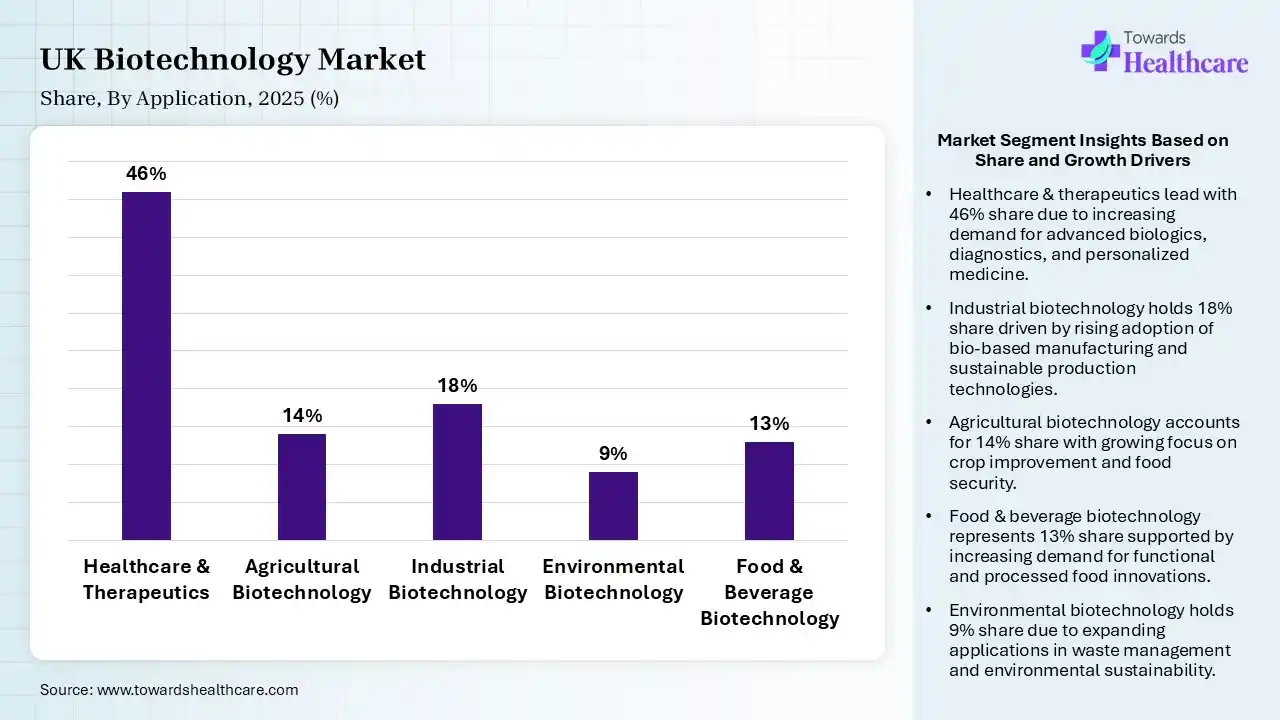
| Segment | Share 2025 (%) |
| Healthcare & Therapeutics | 46% |
| Agricultural Biotechnology | 14% |
| Industrial Biotechnology | 18% |
| Environmental Biotechnology | 9% |
| Food & Beverage Biotechnology | 13% |
The Healthcare & Therapeutics Segment Led the UK Biotechnology Market in 2025 with the Largest Share
The healthcare & therapeutics segment dominated the market with a share of 46% in 2025 due to strong demand for advanced treatments, biologics, drugs, and personalized medicine. The rising prevalence of chronic and infectious diseases has increased the need for innovative therapeutic solutions. Expanding use of biotechnology in drug development, diagnostics, and precision medicine further strengthened its dominance. Additionally, high R&D investments and continuous clinical advancements supported its leading market position.
The industrial biotechnology segment held the second-largest share of 18% in 2025 due to its wide applications in biofuels, enzymes, chemicals, and sustainable manufacturing processes. Growing demand for eco-friendly and cost-efficient production methods is driving adoption across industries. Increasing focus on reducing carbon emissions, along with advancements in microbial and fermentation technologies, further supports segment growth. Strong use in food, agriculture, and bio-based production also strengthens its market position.
The food & beverage biotechnology segment held 13% of the UK biotechnology market share and is estimated to grow at the fastest CAGR during the forecast period due to increasing demand for safer, healthier, and high-quality food products. Biotechnology is widely used in food processing, fermentation, and the development of functional foods and probiotics. Rising consumer awareness about nutrition, clean-label products, and food safety is driving adoption. Additionally, innovations in enzymes and microbial technologies, along with expanding food production needs, are further supporting growth in the biotechnology industry.
The agriculture biotechnology segment held a 14% of market share due to rising demand for higher crop yields, improved food security, and climate-resilient farming solutions. Increasing use of genetically modified crops, biofertilizers, and biopesticides in enhancing productivity and reducing environmental impact. Growing population pressures, land constraints, and changing climate conditions are further driving adoption. Continuous advancements in gene editing and sustainable farming technologies are also supporting strong growth in this segment.
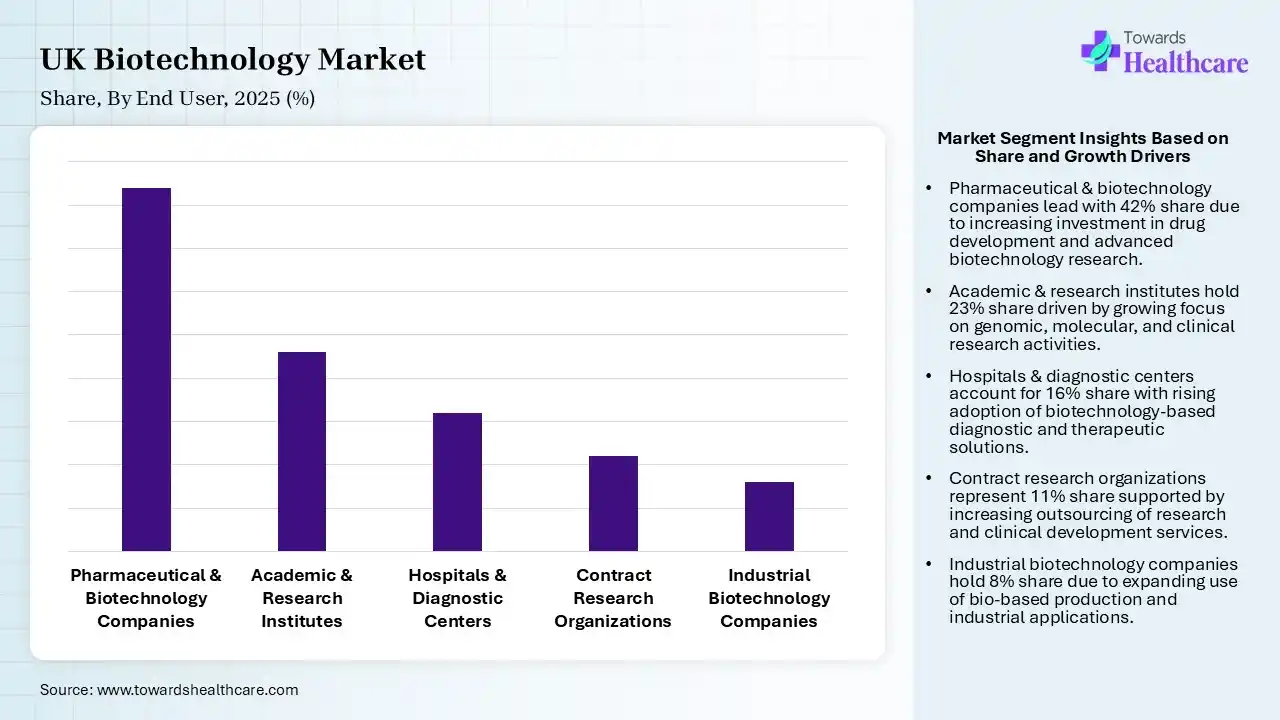
| Segment | Share 2025 (%) |
| Pharmaceutical & Biotechnology Companies | 42% |
| Academic & Research Institutes | 23% |
| Hospitals & Diagnostic Centers | 16% |
| Contract Research Organizations | 11% |
| Industrial Biotechnology Companies | 8% |
The Pharmaceutical & Biotechnology Companies Segment Led the UK Biotechnology Market in 2025 with the Largest Share
The pharmaceutical & biotechnology companies segment held a dominant share of 42% in 2025 due to their strong focus on drug discovery, biologics development, and advanced therapeutic research. High R&D investments, access to advanced technologies, and extensive clinical trial activities strengthen their dominance. These companies drive innovation in precision medicine, vaccines, and gene therapies. Increasing demand for novel treatments and strategic collaborations with research institutions further support their leading position in the biotechnology market.
The academic & research institutes segment held the second-largest share of 23% in 2025 due to their strong involvement in biotechnology research, innovation, and talent development. These institutions actively participate in genomics, molecular biology, and drug discovery studies. Increasing government funding, collaborations with biotech and pharmaceutical companies, and expanding research infrastructure further support growth. Their continuous contribution to early-stage research and scientific advancements strengthens their important role in the biotechnology ecosystem.
The contract research organizations (CROs) segment held 11% share in 2025 and is expected to grow at the fastest CAGR in the UK biotechnology market during the forecast period due to the increasing outsourcing of clinical trials and research activities by pharmaceutical and biotechnology companies> CROs offer cost-effective, time-efficient, and specialized expertise in drug development and regulatory processes. The rising complexity of clinical trials, growing R&D pipelines, and demand for faster drug approvals are further driving strong adoption of CRO services globally.
The hospitals & diagnostic centers segment held a 16% of market share due to rising demand for early disease detection, advanced diagnostic testing, and personalized treatment solutions. The increasing prevalence of chronic and infectious diseases is driving higher adoption of biotechnology-based diagnostic tools. Expanding healthcare infrastructure, growing patient inflow, and improvements in laboratory technologies further support segment growth. In addition, a strong focus on accurate and timely diagnosis is boosting their role in biotechnology applications.
The biotechnology market size is forecasted to expand from USD 1744.83 billion in 2025 to USD 5666.02 billion by 2035, growing at a CAGR of 12.5% from 2026 to 2035, as a result of innovation and technological advancements in the biotechnology industry.
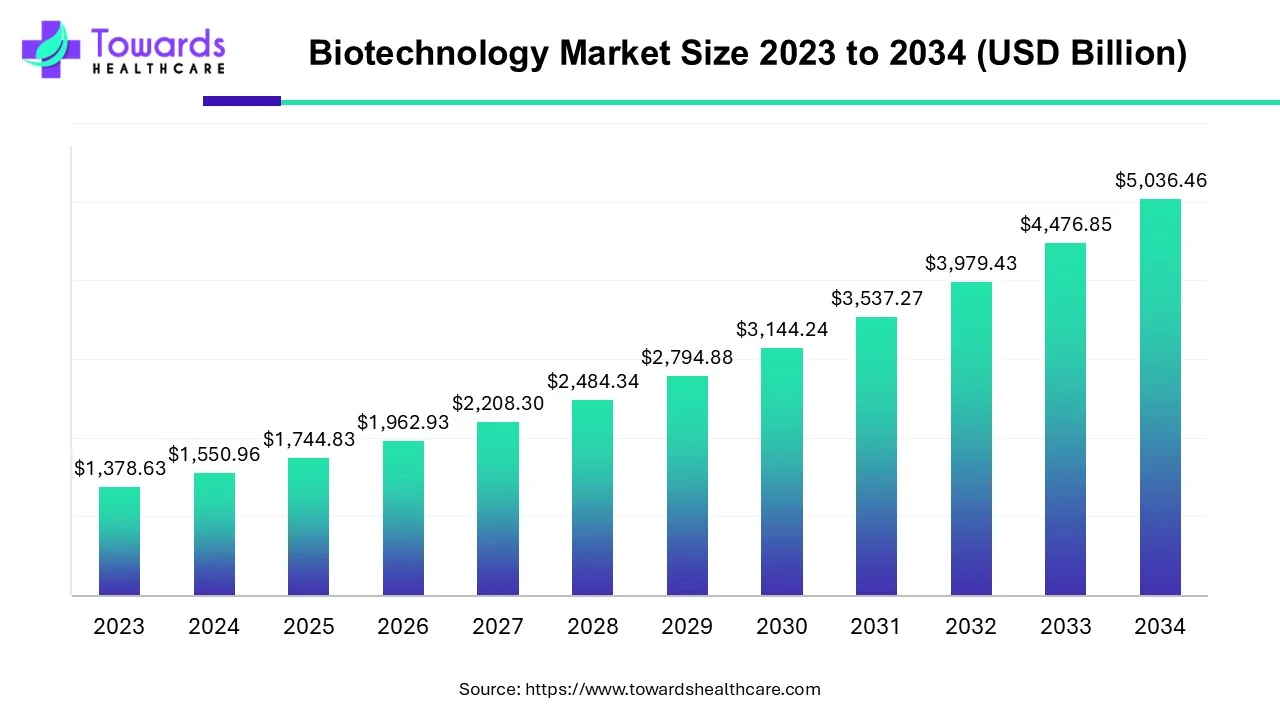
The UK biotechnology market expands rapidly due to massive financial backing from private investors and national research grants. Excellent collaboration between world-class universities and commercial labs creates a booming ecosystem for scientific startups. London and Cambridge form powerful research hubs that attract top global talent and encourage major medical breakthroughs. The national healthcare system actively adopts these homegrown bio-therapies to improve patient treatment across the country. Additionally, new government regulations speed up the approval process for safe laboratory experiments, allowing innovative, eco-friendly materials and advanced medicines to reach the public much faster than before.
The UK biotechnology is supported by over 2.5 billion in annual life sciences R&D investment and more than 6,000 biotech companies, with major clusters in London, Cambridge, and Oxford. It accounts for nearly 5% of global biotech research output and ranks among. Europe’s top three for clinical trials. Strong academic-industry collaboration, 25+ leading research universities, and robust government funding programs reinforced its global competitiveness.
Clinical Trials
Regulatory Approvals
Serialization
| Vendor | Key Offerings | Core Biotechnology Focus |
| Oxford Biomedica | Lentiviral vector development, cell & gene therapy manufacturing, process development services | Gene therapy, viral vector platforms, and advanced therapeutics. |
| Autolus Therapeutics | CAR-T cell therapies, cancer immunotherapy platforms, T-cell engineering | Cell therapy and oncology biotechnology |
| Adaptimmune Therapeutics | TCR-based T-cell therapies, solid tumor immunotherapies, SPEAR T-cell platform | Immunotherapy and cancer treatment innovation |
| Verona Pharma | Respiratory disease biologics, COPD treatment development, and inhaled therapeutics. | Respiratory biotechnology and drug development |
| Immunocore | TCR bispecific therapies, oncology biologics, infectious disease immunotherapies | Immune-oncology and biologics |
| Orchard Therapeutics | Ex vivo gene therapies, rare disease treatments, hematopoietic stem cell therapies | Gene therapy for rare genetic diseases |
| Silence Therapeutics | RNA interference (RNAi) therapeutics, siRNA platform technologies | Genetic medicine and RNA therapeutics |
| Bicycle Therapeutics | Bicycle toxin conjugates, peptide-based therapeutics, and oncology drug discovery. | Precision oncology and peptide therapeutics |
| Touchlight | Synthetic DNA manufacturing, dbDNA™ platform, mRNA vaccine support | DNA technologies and vaccine biotechnology |
| Abcam | Antibodies, biomarkers, assay kits, protein research tools | Research biotechnology and diagnostics |
| Vaccitech | T-cell immunotherapies, vaccine platforms, and infectious disease research | Vaccine biotechnology and immunology |
| Avacta Group | Affimer® therapeutics, cancer diagnostics, targeted oncology therapies | Diagnostics and targeted therapeutics |
In February 2026, “Over the past decade, Fujifilm has invested more than £5 billion globally to grow our CDMO business – demonstrating our steadfast commitment to increasing our production capacity and capabilities to meet the growing demand for innovative medicines and vaccines for patients around the globe,” said Toshihisa Iida, director, corporate vice president, general manager of Life Sciences Strategy Headquarters and Bio CDMO Division, FUJIFILM Corporation, and chairman, FUJIFILM Biotechnologies. “The opening of our UK expansion will enable us to support our partners’ products from the process development stage to early clinical manufacturing – ranging from low-volume therapies for ultra-rare diseases to commercial biologics all from one site.”
Strengths
Weaknesses
Opportunities
Threats
By Product Type
By Technology
By Application
By End User








Principal Consultant
Payal Rabde is a Healthcare Market Research Analyst at Towards Healthcare Research & Consulting with 4+ years of experience in pharmaceuticals, biotechnology, medical devices, and life sciences.
Learn more about Payal Rabde

Reviewed By
Aditi Shivarkar is a seasoned professional with over 14 years of experience in healthcare market research. As a content reviewer, Aditi ensures the quality and accuracy of all market insights and data presented by the research team.
Learn more about Aditi Shivarkar