


Biocon announced the publication of important clinical data supporting the effectiveness of Yesafili, its biosimilar version of Eylea (aflibercept). The findings were published in two respected peer-reviewed medical journals, providing independent scientific validation of the product before its planned commercial expansion in the United States. The studies are based on the Phase III INSIGHT clinical trial program, which evaluated the safety, efficacy, and immunogenicity of MYL-1701P, marketed as Yesafili.
According to Biocon, the published data showed that Yesafili performed similarly to the reference medicine in patients with diabetic macular edema. The extension study also confirmed that patients who continued treatment with Yesafili and those who switched from the reference product experienced comparable outcomes. These results strengthen confidence among healthcare professionals by demonstrating that the biosimilar delivers reliable clinical performance while maintaining a safety profile similar to the original medicine.
The publication of peer-reviewed evidence is an important step because it allows independent experts to review the scientific findings and increases trust in the product before broader market adoption. Company leaders said these publications represent a major milestone for the aflibercept biosimilar program and support the upcoming U.S. launch. They also emphasized that the data reflect Biocon's commitment to developing high-quality biosimilars that can improve patient access to advanced therapies worldwide.
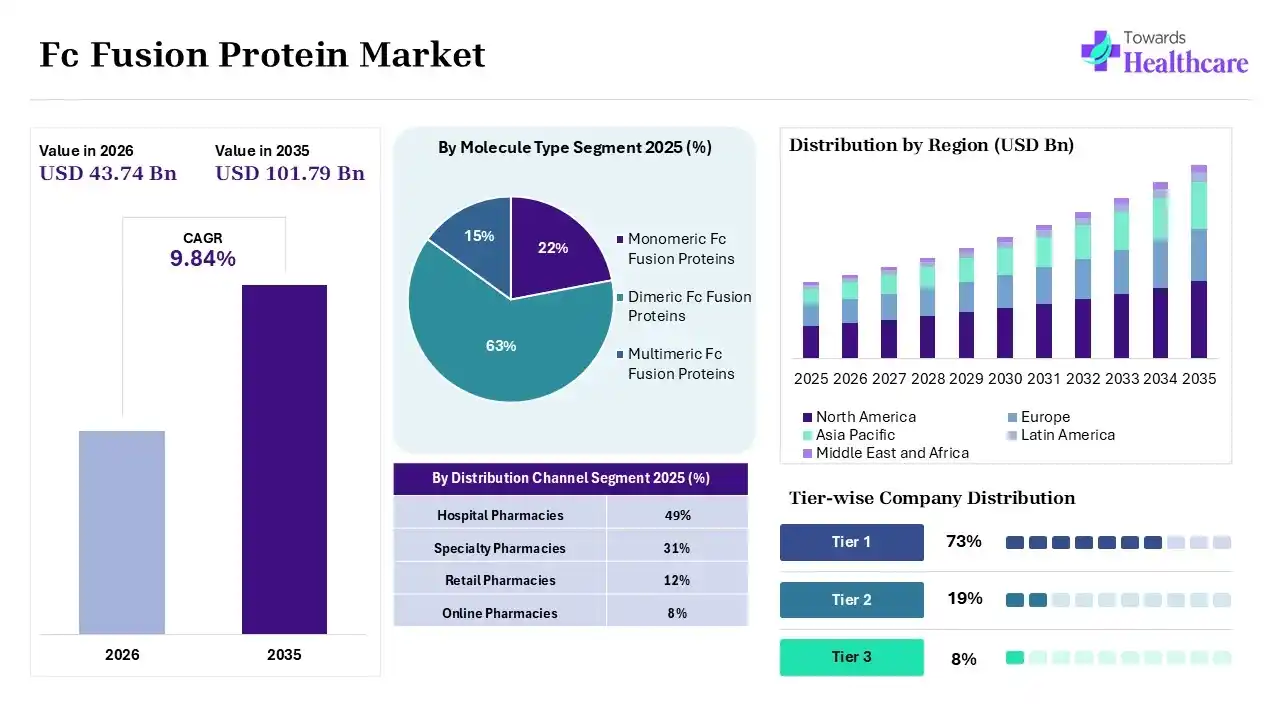
According to Towards Healthcare, the Fc fusion protein market is projected to experience significant growth, with estimates suggesting the market size will increase from USD 43.74 billion in 2026 to approximately USD 101.79 billion by 2035, representing a compound annual growth rate (CAGR) of 9.84% from 2026 to 2035, highlighting a strong commercial trajectory and accelerating global demand for these specialized bioengineered therapeutics. Furthermore, this notable milestone reflects extensive investments in cutting-edge biopharmaceutical pipelines, as major market developers actively transition from traditional treatment protocols toward long-acting, next-generation macromolecules. This financial evolution is expected to be prominently sustained by extensive government healthcare funding and expanded insurance coverage criteria across major developed economies, which collectively will expand patient access to highly advanced therapeutic variants.
Yesafili is designed to treat serious retinal diseases, including diabetic macular edema, by offering an alternative to the reference drug Eylea. These conditions can gradually damage vision and significantly affect a patient's quality of life if not treated early. The published studies showed that improvements in vision and retinal thickness were consistent across different patient groups, confirming that the biosimilar performs similarly regardless of patient characteristics. Researchers also found no meaningful differences in immune response or overall safety between Yesafili and the reference medicine. Such evidence is valuable because physicians depend on strong clinical data before prescribing biosimilars.
The peer-reviewed publications provide additional reassurance that patients can expect comparable treatment outcomes. As healthcare systems continue to look for affordable biologic therapies without compromising quality, biosimilars like Yesafili are becoming increasingly important. Independent publication of clinical findings also supports regulatory confidence and helps hospitals, insurers, and physicians make informed treatment decisions. By expanding the availability of scientifically validated biosimilars, Biocon aims to improve access to vision-saving therapies for more patients while supporting sustainable healthcare spending. These developments also highlight the growing role of biosimilars in modern ophthalmology and reinforce the importance of continued clinical research in improving patient care.
Shreehas Tambe, CEO & Managing Director, Biocon, said, "Findings from these peer reviewed publications represent an important milestone for our aflibercept biosimilar program as we prepare for our upcoming launch in the United States. Together, these studies demonstrate how our science-led approach continues to expand access to biosimilars for patients."
Biocon plays an important role in the growth of the Fc fusion protein market through its strong expertise in biologics, biosimilars, and advanced manufacturing. Aflibercept, the active ingredient in Yesafili, is an Fc fusion protein that combines portions of human vascular endothelial growth factor receptors with the Fc region of human immunoglobulin G. This design improves the stability of the medicine and extends its duration of action, making it an important example of Fc fusion protein technology. By successfully developing, clinically validating, and preparing to commercialize Yesafili, Biocon demonstrates its ability to manufacture complex Fc fusion protein products that meet global quality standards.
The publication of positive Phase III clinical data increases confidence among regulators, physicians, and healthcare providers, encouraging wider acceptance of Fc fusion protein biosimilars. As more healthcare systems adopt cost-effective biosimilars, demand for Fc fusion protein manufacturing, research, and development is expected to increase. Biocon's continued investment in biosimilar innovation, global regulatory approvals, and large-scale production capabilities supports the expansion of the Fc fusion protein market by making advanced biologic therapies more accessible and affordable. The company's success also encourages further research into new Fc fusion protein therapies across several therapeutic areas beyond ophthalmology, strengthening long-term market growth and innovation.
A recent report by Towards Healthcare highlights that the Fc fusion protein market is witnessing robust growth due to several key factors. The structural integration of the Fc region successfully extends the plasma half-life and stability of therapeutic molecules, reducing injection frequency. Also, there is a rising prevalence of complex chronic conditions, including autoimmune disorders and oncological diseases. The market expands due to surging global demand for long-acting, highly targeted biologics that improve patient adherence. Also, the continuous optimization of Fc domain engineering has allowed researchers to effectively minimize drug immunogenicity while heavily optimizing tissue-targeting capabilities. Strategic collaborative partnerships between contract development and manufacturing organizations (CDMOs) and leading biotech enterprises have also vastly streamlined large-scale production workflows. This manufacturing expansion successfully satisfies the rising regulatory approvals of novel receptor-based and peptide-based fusion therapies globally.


