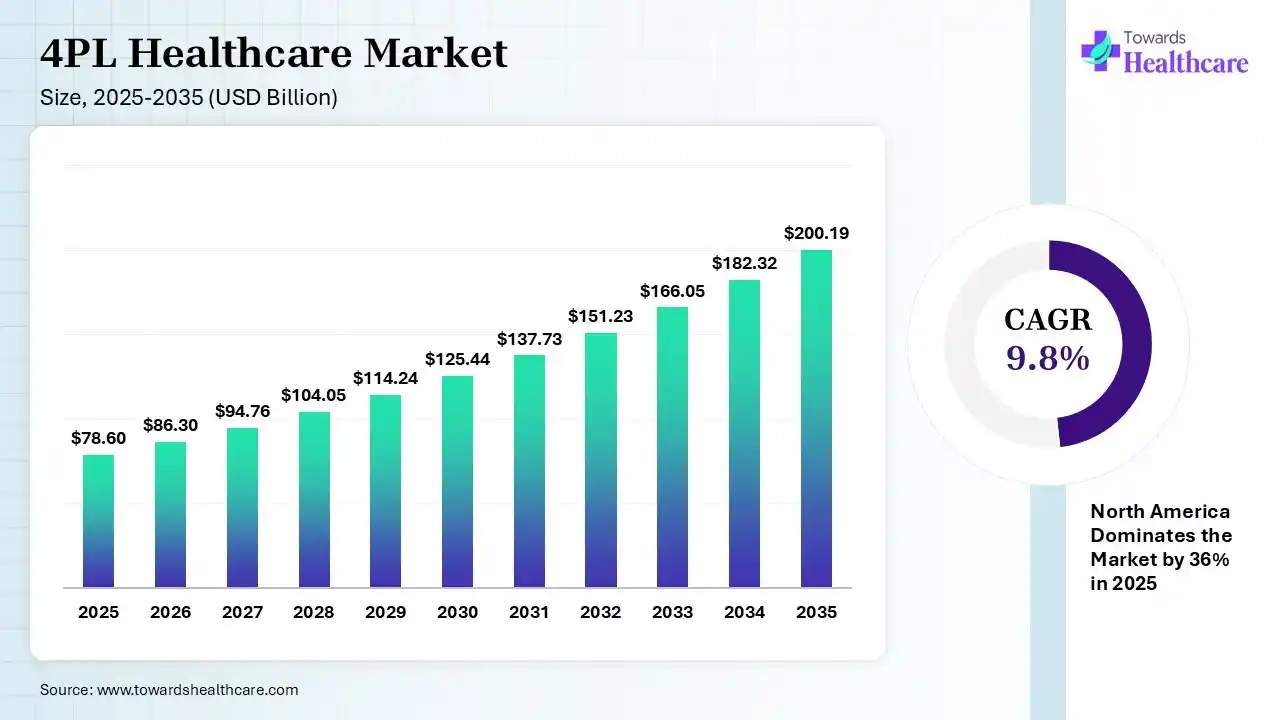
The global 4PL healthcare market size was estimated at USD 78.6 billion in 2025 and is predicted to increase from USD 86.3 billion in 2026 to approximately USD 200.19 billion by 2035, expanding at a CAGR of 9.8% from 2026 to 2035. The growth in the development and distribution of medical products is increasing the use of 4PL healthcare services. Growing disease burden, government initiatives, technological advancements, and new 4PL services launches are also enhancing the market growth.
The 4PL healthcare market is driven by a rise in the demand for technology-enabled orchestration and increasing medical supply chain complexities. The 4PL healthcare refers to the supply chain management model supporting the entire healthcare supply chain services. They help in the management of medical product procurement, transportation, distribution, and storage on behalf of healthcare organizations.
The use of AI in the 4PL healthcare is increasing due to its inventory optimization, real-time tracking, and risk prediction. It also offers warehouse automation, cold chain monitoring, and route optimization, which help in safe, accelerated, and cost-effective product deliveries. AI also offers error detection, automated decision making, and data analytics, which help in strategic planning of operations and error-free distribution.
Expanding Logistic Services
The growing demand for vaccines, gene therapies, and biologics is increasing the demand for 4PL healthcare services. This is driving the adoption of temperature-controlled logistics and cold chain logistics.
Shift Towards Patient-Centric Care
The growing use of telemedicine platforms is increasing the adoption of 4PL healthcare solutions for home deliveries and last-mile deliveries. This is expanding the direct-to-patient logistics systems.
Technological Advancements
Increasing technological advancements are driving the development of a smarter, more efficient, and automated 4PL healthcare supply chain. This supports real-time monitoring, secure and transparent tracking, along with enhanced speed and accuracy.
| Table | Scope |
| Market Size in 2026 | USD 86.3 Billion |
| Projected Market Size in 2035 | USD 200.19 Billion |
| CAGR (2026 - 2035) | 9.8% |
| Leading Region | North America by 36% |
| Historical Data | 2020 - 2023 |
| Base Year | 2025 |
| Forecast Period | 2026 - 2035 |
| Measurable Values | USD Millions/Units/Volume |
| Market Segmentation | By Service Type, By End User, By Mode of Transport, By Temperature Control, By Deployment Model, By Region |
| Top Key Players | DHL Supply Chain, FedEx Logistics, Kuehne + Nagel, GEODIS, UPS Healthcare, C.H. Robinson, DB Schenker, Maersk, CEVA Logistics, DSV |
| Segment | Share 2025 (%) |
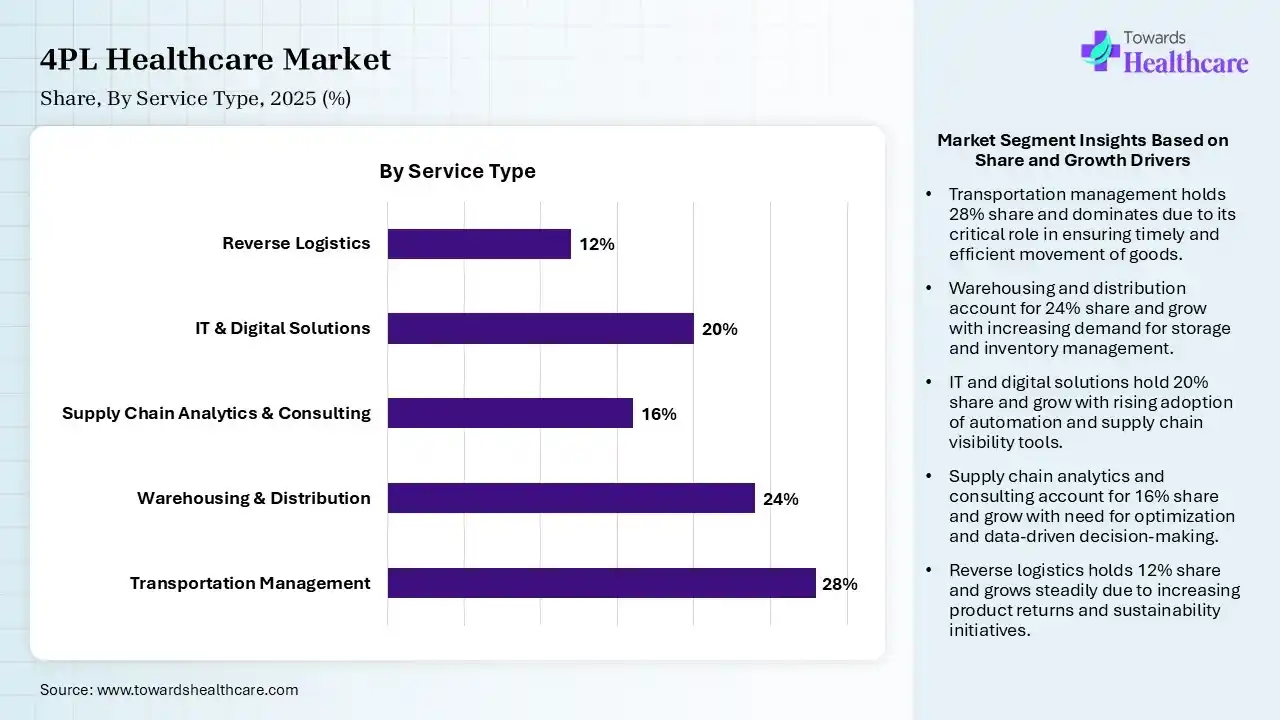
| Transportation Management | 28% |
| Warehousing & Distribution | 24% |
| Supply Chain Analytics & Consulting | 16% |
| IT & Digital Solutions | 20% |
| Reverse Logistics | 12% |
The Transportation Management Segment Dominated the Market With 28% in 2025
The transportation management segment led the 4PL healthcare market with 28% share in 2025, due to expanding pharmaceutical distribution networks, which increased the demand for optimized transport. Companies prioritize cost reduction and efficiency, which has increased their use. Growth in global trade, driving cross-border logistics complexity also increased their use.
The warehousing & distribution segment held the second-largest share of 24% of the market in 2025, driven by the rising need for temperature-controlled storage, which boosts its adoption. Expanding e-commerce pharma platforms also increases their use for fulfillment demand. Inventory optimization of 4PL healthcare also enhances operational efficiency.
The IT & digital solutions segment held 20% of the 4PL healthcare market share in 2025, due to digital transformation, which accelerates the adoption of control towers. AI-driven logistics improves real-time tracking, promoting the use of 4PL healthcare. Blockchain ensures transparency and compliance, which also drives their demand.
The supply chain analytics & consulting segment held 16% of market share in 2025 and is expected to witness the fastest growth with a CAGR of 11.2% during the forecast period, due to increasing reliance on data-driven decision-making, which improves supply chain visibility. They are also being used for risk mitigation. Their advanced analytics enhances forecasting accuracy, promoting their demand.
| Segment | Share 2025 (%) |
| Pharmaceutical & Biopharmaceutical Companies | 38% |
| Hospitals & Clinics | 22% |
| Medical Device Companies | 16% |
| Healthcare Distributors | 18% |
| Others | 6% |
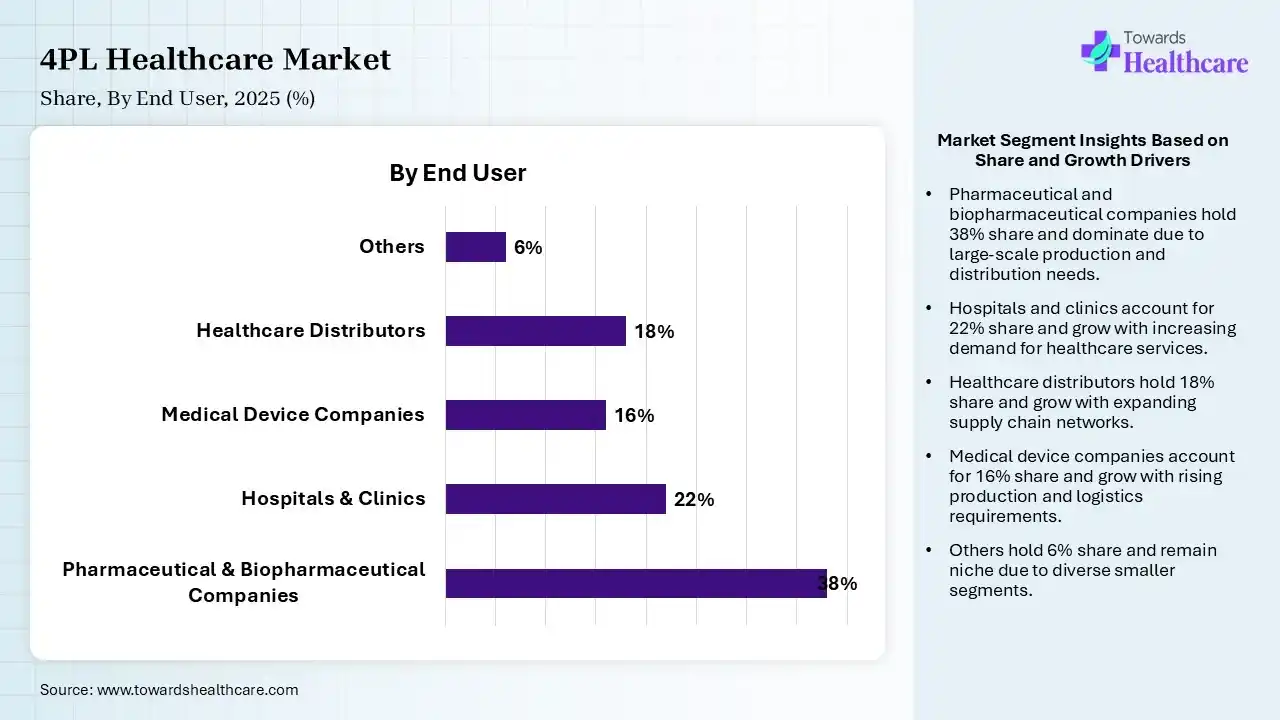
The Pharmaceutical & Biopharmaceutical Companies Segment Dominated the Market With 38% in 2025
The pharmaceutical & biopharmaceutical companies segment accounted for the highest revenue share of 38% of the 4PL healthcare market in 2025, due to increasing drug production, which contributed to the outsourcing of logistics. Complex biologics require specialized supply chains, which have increased the use of 4PL healthcare services. Growth in the demand for integrated services also increased their use.
The hospitals & clinics segment held the second-largest share of 22% of the market in 2025, due to rising patient volume, which increases supply chain complexity. Hospitals adopt outsourcing to reduce operational burden, which is driving the demand for 4PL healthcare services. Demand for the timely delivery of critical supplies is also increasing its use.
The healthcare distributors segment held 18% of the 4PL healthcare market share in 2025 and is expected to show the highest growth with a CAGR of 10.2% during the forecast period, due to the expansion of distribution networks, which boosts logistics demand. Expanding retail pharmacy increases inventory turnover, promoting the use of 4PL healthcare services. Demand for real-time visibility also drives their adoption.
The medical device companies segment held 16% of the market share in 2025, driven by growth in device manufacturing, which increases logistics needs. Regulatory compliance of 4PL healthcare drives structured supply chains. High-value equipment requires secure transportation, increasing the adoption of these services.
| Segment | Share 2025 (%) |
| Road Transport | 42% |
| Air Freight | 30% |
| Sea Freight | 20% |
| Rail Transport | 8% |
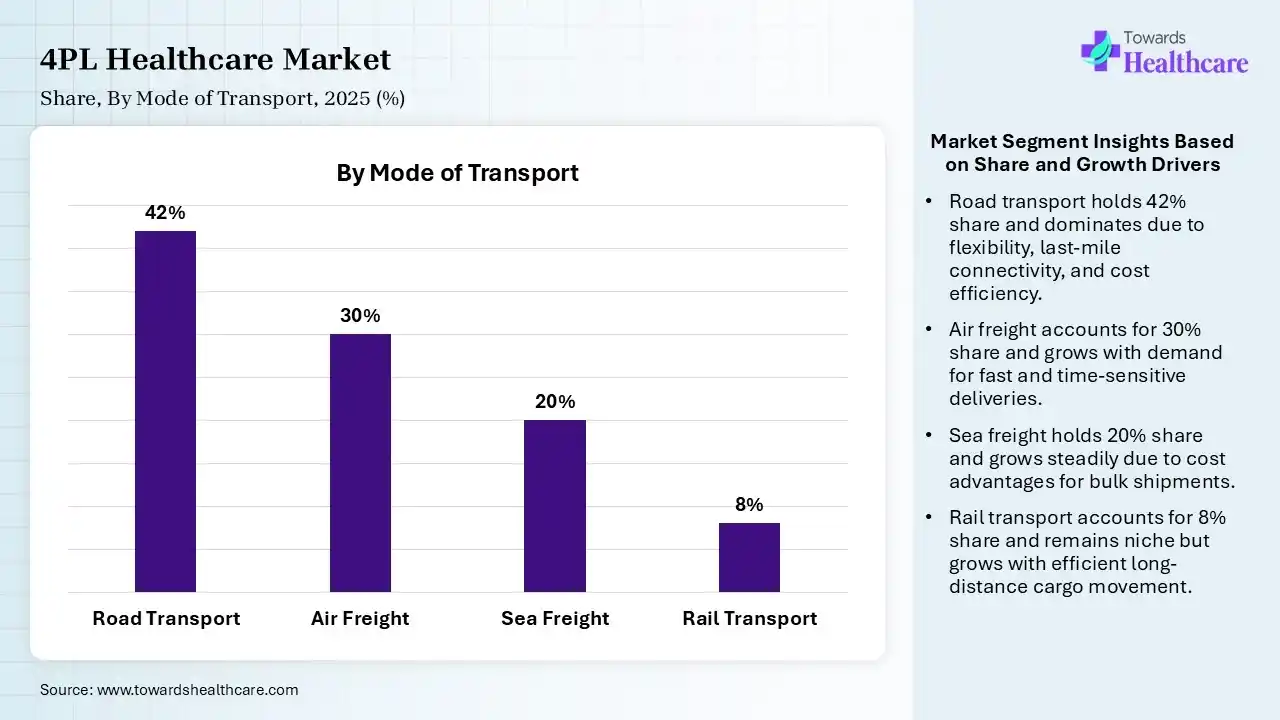
The Road Transport Segment Dominated the Market With 42% in 2025
The road transport segment held a major revenue share of 42% of the 4PL healthcare market in 2025, due to growth in the last-mile delivery demand, which increased the demand for road logistics. Their flexibility and cost efficiency also supported their widespread use. Increased domestic healthcare distribution also contributed to their growth.
The air freight segment held the second-largest share of 30% of the market in 2025 and is expected to expand rapidly with a CAGR of 10.6% during the forecast period, due to the rise in the urgent delivery of biologics and vaccines. Globalization also increases the demand for fast cross-border transport, increasing its use. High-value shipments prioritizing speed over cost are also increasing their use.
The sea freight segment held 20% of the 4PL healthcare market share in 2025, driven by bulk transportation, which reduces costs for large shipments. Stable demand from generic drugs also supports their growth. International trade expansion is also increasing its adoption.
The rail transport segment held 8% of the market share in 2025, as it acts as a cost-effective alternative for regional transport. Infrastructure improvements are also supporting their usage. Sustainability initiatives are also encouraging rail adoption.
| Segment | Share 2025 (%) |
| Cold Chain Logistics | 62% |
| Non-Cold Chain Logistics | 38% |
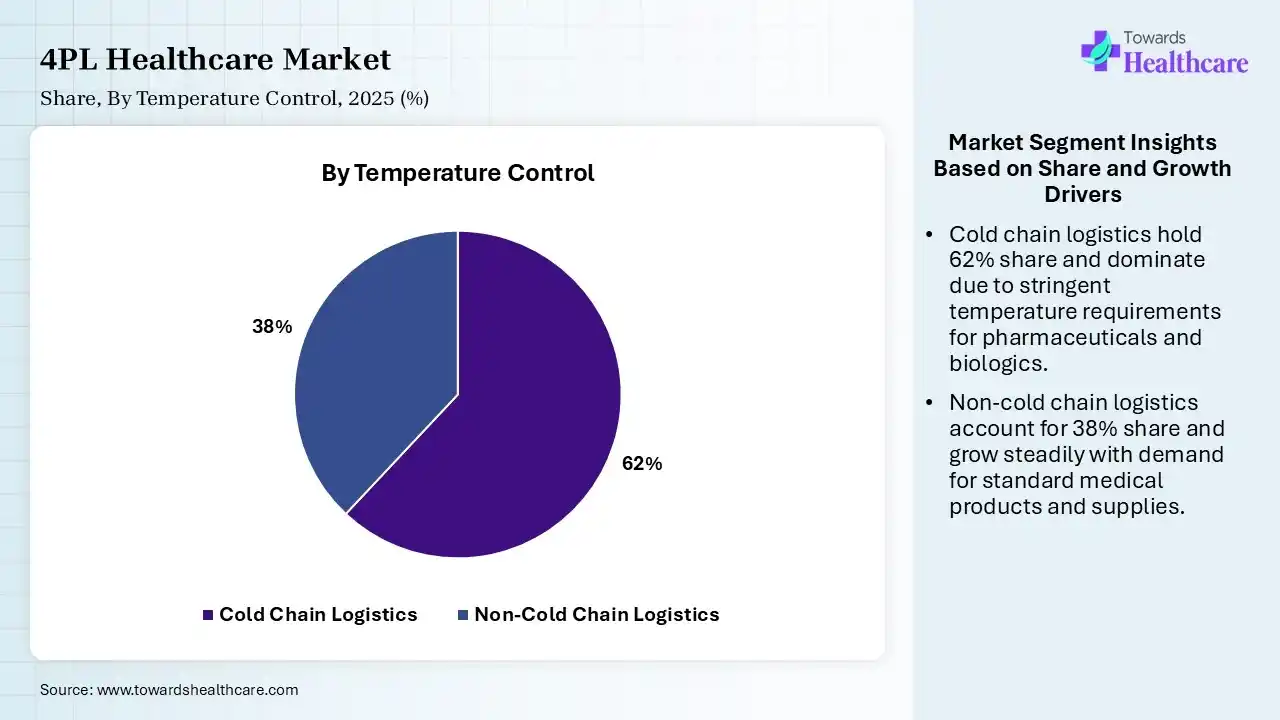
The Cold Chain Logistics Segment Dominated the Market With 62% in 2025
The cold chain logistics segment contributed the biggest revenue share of 62% of the 4PL healthcare market in 2025 and is expected to gain the highest share with a CAGR of 10.7% during the forecast period, as the biologics and vaccines require strict temperature control. Stringent regulatory standards also increased the demand for cold chain compliance. Growth in specialty drugs has also increased their demand.
The non-cold chain logistics segment held the second-largest share of 38% of the market in 2025, driven by traditional pharmaceuticals, which maintain a steady demand for non-cold chain logistics. Their lower cost also supports widespread adoption. A rise in the stable generic drug market also contributes to their sustained growth.
| Segment | Share 2025 (%) |
| On-Premise | 40% |
| Cloud-Based | 60% |
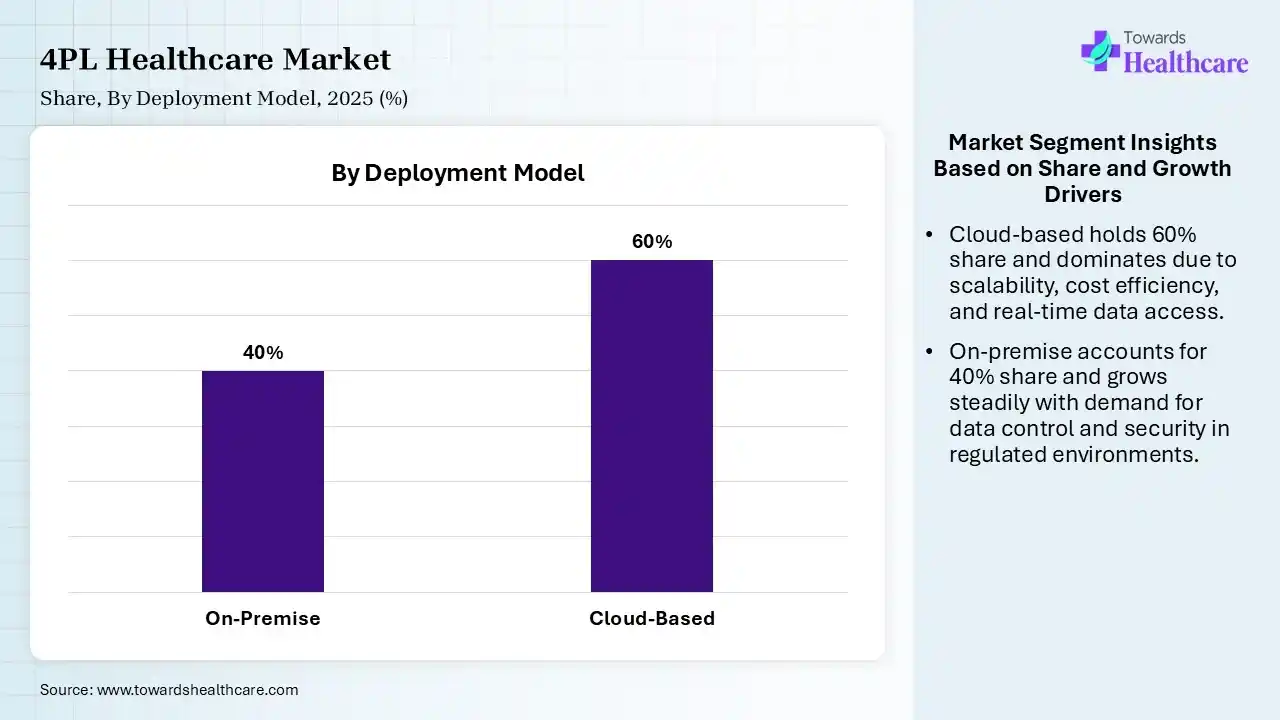
The Cloud-Based Segment Dominated the Market With 60% in 2025
The cloud-based segment held the largest revenue share of 60% of the 4PL healthcare market in 2025 and is expected to grow with the fastest CAGR of 12.40% during the forecast period, due to enhanced scalability and flexibility. Real-time analytics offering improved decision-making has also increased its use. Integration with digital supply chains also accelerated their growth.
The on-premise segment held the second-largest share of 40% of the market in 2025, due to established firms relying on legacy systems. Data security concerns also prefer on-premise solutions. Their real-time monitoring is also increasing their adoption rates.
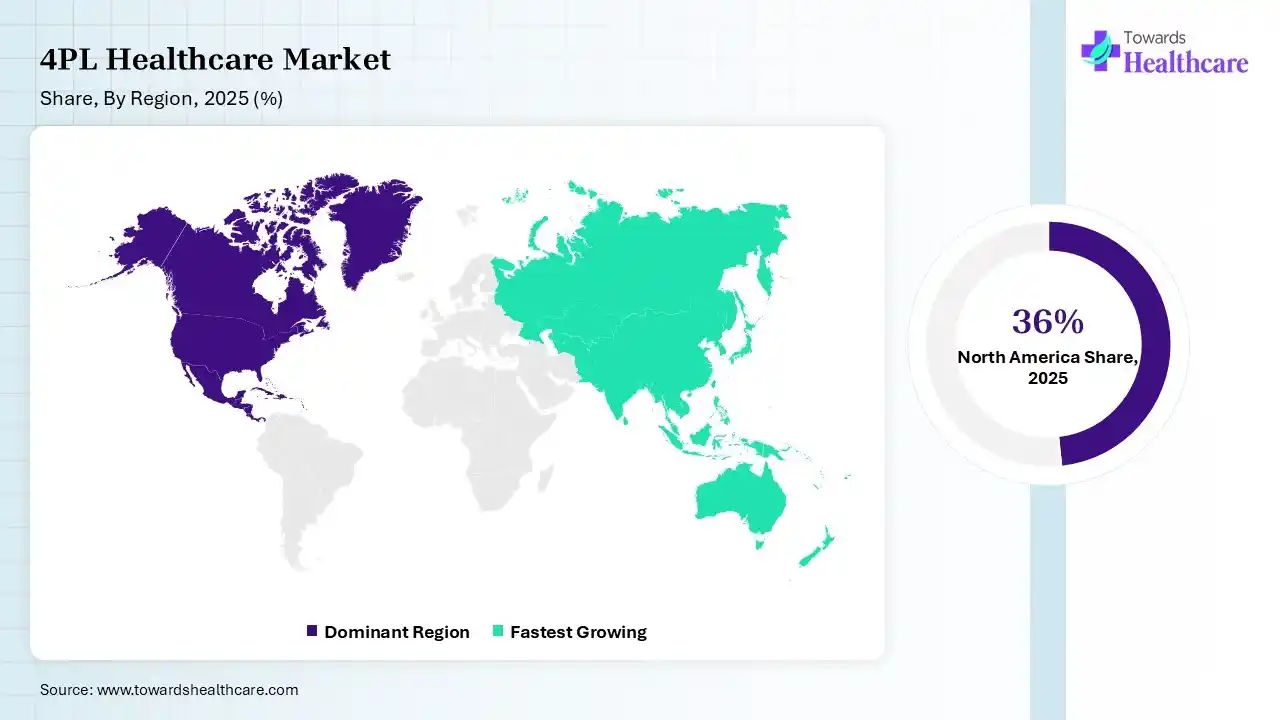
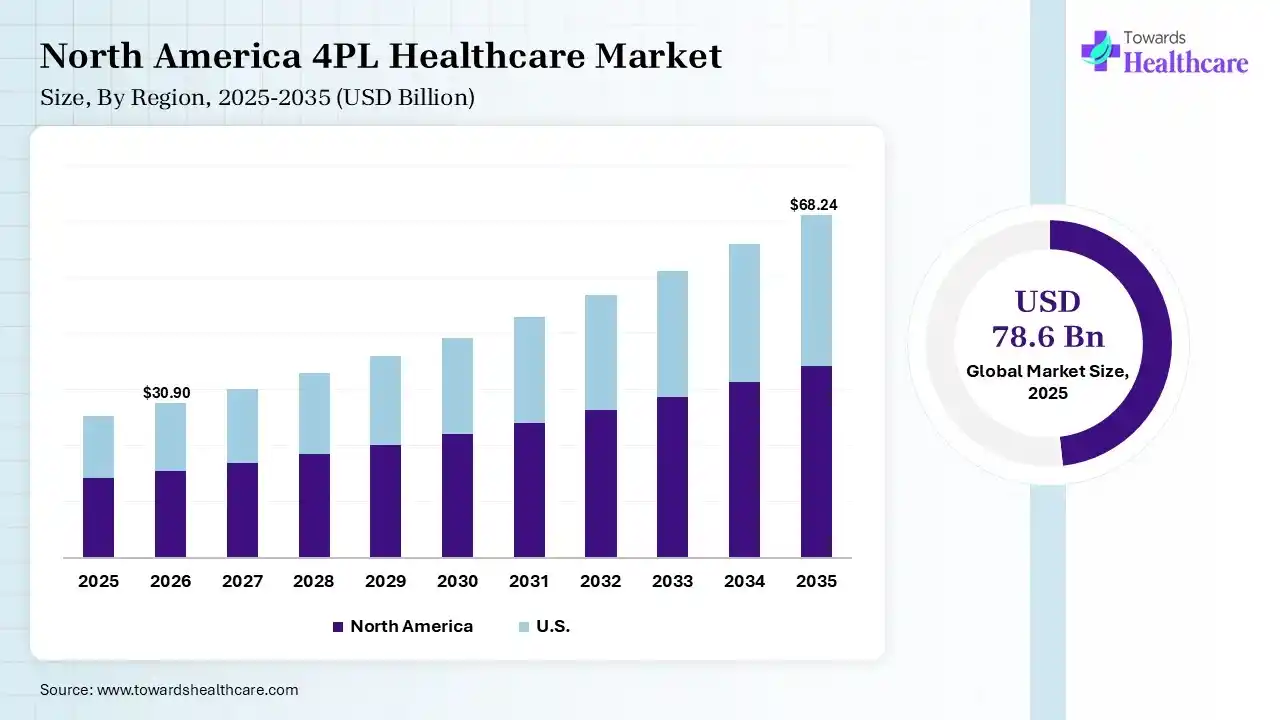
North America dominated the 4PL healthcare market with 36% in 2025, due to advanced healthcare infrastructure, which increased the adoption of 4PL healthcare services. The strong pharma industry and stringent regulatory environment also supported their demand. High digitalization accelerated logistics innovation, which enhanced the market growth.
U.S. Market Trends
The U.S. consists of the largest pharmaceutical market, boosting demand for 4PL healthcare services. The presence of strong cold chain infrastructure also supports their growth. Growing technological advancements and healthcare spending are also increasing the innovations of new models.
Asia Pacific held 24% share of the 4PL healthcare market in 2025 and is expected to grow at the fastest CAGR of 11.50% during the forecast period, due to rapid pharma manufacturing expansion, which is driving the demand for 4PL healthcare. Increasing healthcare access boosts logistics needs. The growing biologics market also accelerates their adoption, promoting the market growth.
India Market Trends
The presence of a strong generics industry in India is driving logistics needs. Increasing cold chain investments and rising healthcare demand are also accelerating the expansion of 4PL healthcare services. Growing outsourcing trends, digital transformation, and government initiatives are also increasing their demand.
R&D
Packaging and Serialization
Patient Support and Services
| Companies | Headquarters | 4PL Healthcare Solutions |
| DHL Supply Chain | Bonn, Germany | DHL Health Logics and Lead Logistic Partner |
| FedEx Logistics | Memphis, U.S. | FedEx Healthcare Solutions and FedEx Custom Critical |
| Kuehne + Nagel | Schindellegi, Switzerland | KN Integrated Logistics and KN PharmaChain |
| GEODIS | Levallois-Perret, France | GEODIS Supply Chain Optimization and GEODIS Healthcare |
| UPS Healthcare | Atlanta, U.S. | UPS Supply Chain Symphony and UPS Premier |
| C.H. Robinson | Eden Prairie, U.S. | Managed 4PL Services |
| DB Schenker | Essen, Germany | Schenker Dedicated Services and DB SCHENKERlife+ |
| Maersk | Copenhagen, Denmark | Maersk 4PL and Maersk Cold Chain |
| CEVA Logistics | Marseille, France | Lead Logistics Solutions and FORPATIENT |
| DSV | Hedehusene, Denmark | DSV Lead Logistics and DSV Healthcare |
Strengths
Weaknesses
Opportunities
Threats
By Service Type
By End User
By Mode of Transport
By Temperature Control
By Deployment Model
By Region











Principal Consultant
Shivani Zoting is a dedicated research analyst specializing in the healthcare industry. With a strong academic foundation, a B.Sc. in Biotechnology and an MBA in Pharmabiotechnology, she brings a unique blend of scientific understanding and strategy.
Learn more about Shivani Zoting
Reviewed By
Aditi Shivarkar is a seasoned professional with over 14 years of experience in healthcare market research. As a content reviewer, Aditi ensures the quality and accuracy of all market insights and data presented by the research team.
Learn more about Aditi Shivarkar