


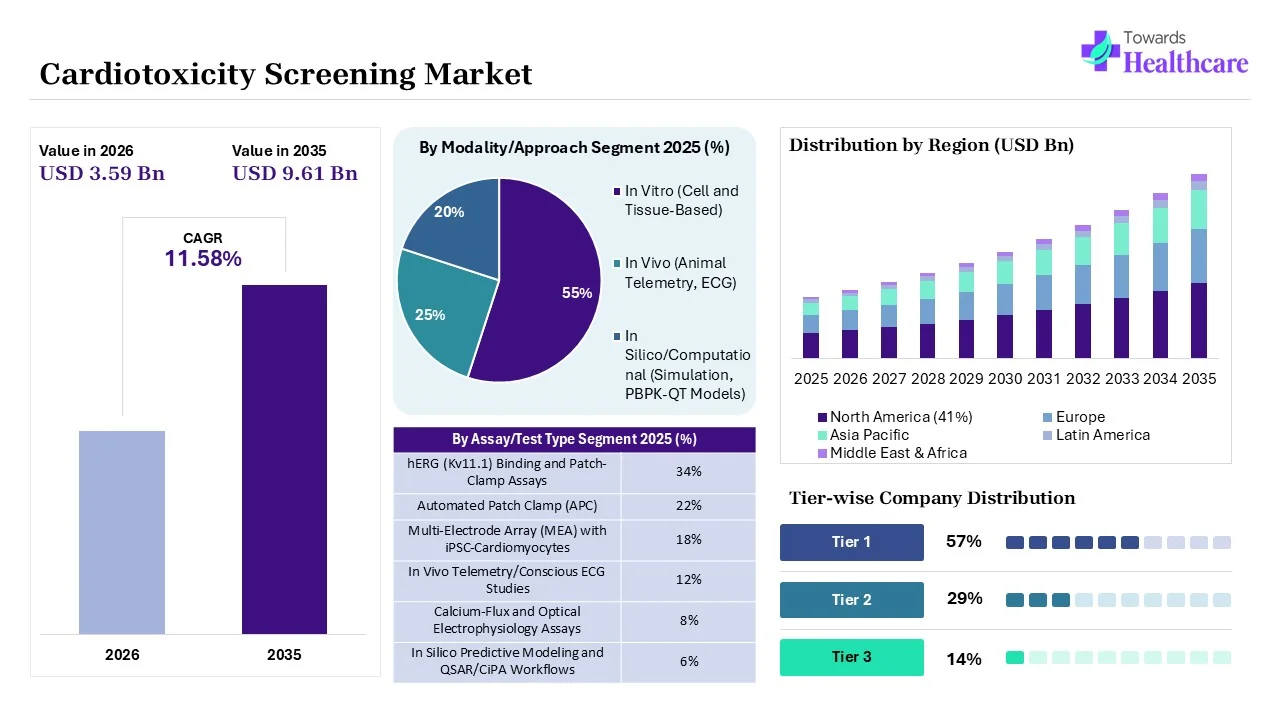
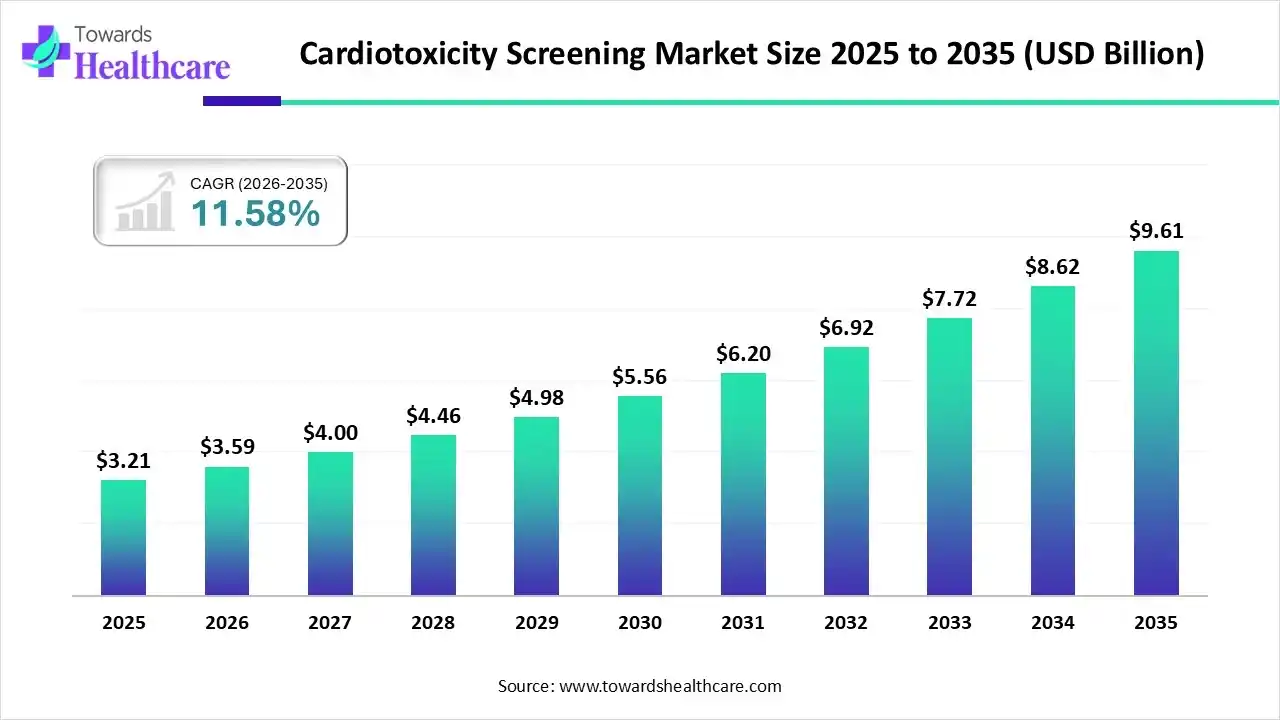
The global cardiotoxicity screening market size was estimated at USD 3.21 billion in 2025 and is predicted to increase from USD 3.59 billion in 2026 to approximately USD 9.61 billion by 2035, expanding at a CAGR of 11.58% from 2026 to 2035.
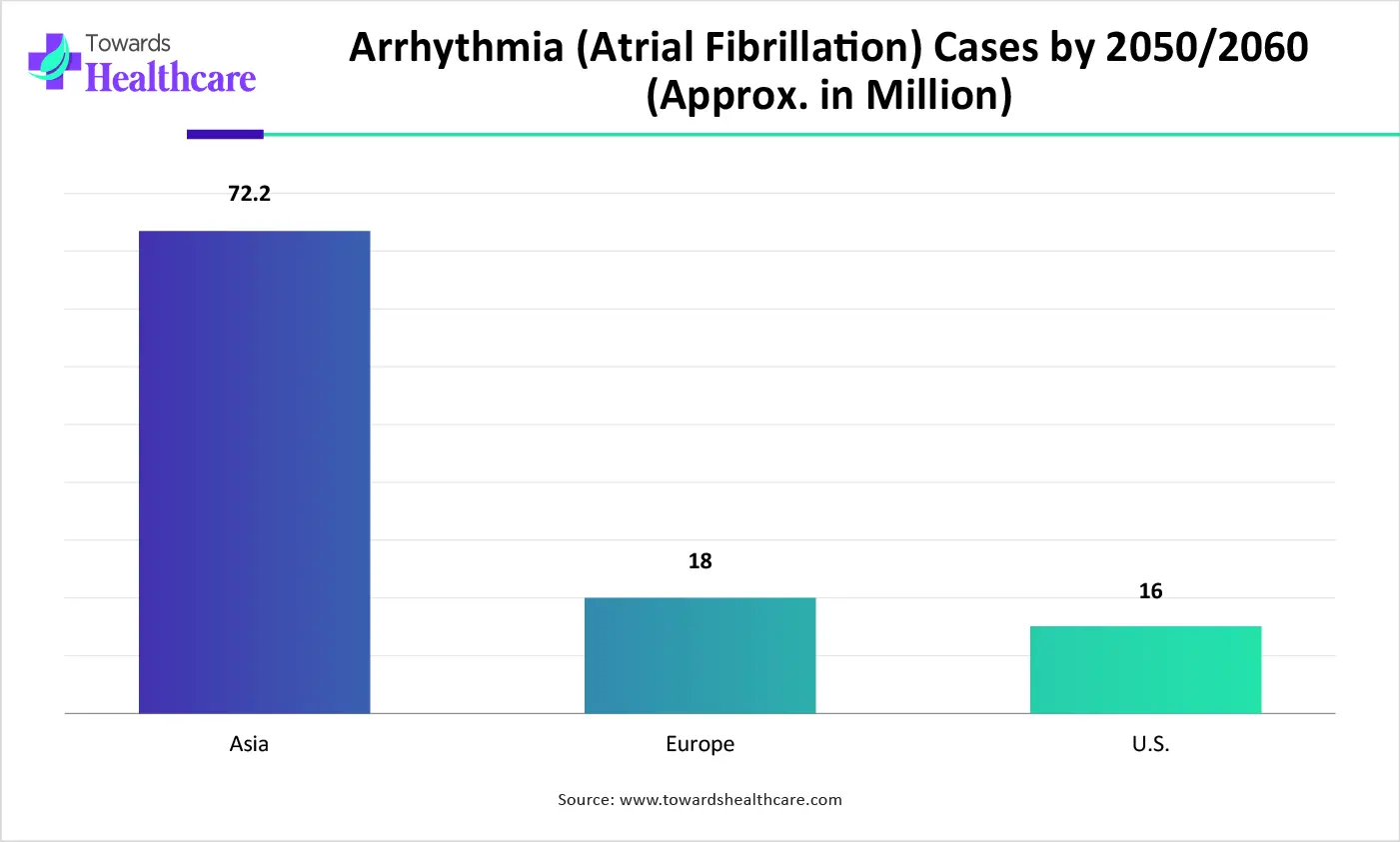
Across the globe, rising cases of cardiac diseases and the expanding need for early phase detection are propelling the demand for advanced cardiotoxicity screening solutions. Besides this, several companies are leveraging 3D biomarker models and modern AI platforms to meet the stringent regulatory guidelines.
The application of a vital safety assessment process for finding drugs or chemicals affecting the heart, which results in arrhythmia and minimal contraction, is referred to as cardiotoxicity screening. This cardiotoxicity screening market is driven by the growing number of cancer cases, which need cardiotoxic therapies, with the incorporation of stricter regulatory safety guidelines. Extensive advances encompass Zebrafish models, which have a major role in the detection of myocardial apoptosis & heart rate modification. Also, researchers are fostering microfluidic heart-on-a-chip solutions, such as BioFlux.
The cardiotoxicity screening market focuses on technologies, assays, and testing platforms used to evaluate the potential harmful effects of drug candidates on the heart during preclinical and early clinical development. The market is expanding as pharmaceutical and biotechnology companies prioritize cardiac safety to reduce late-stage drug failures and meet stringent regulatory requirements. Growing biologics, oncology, and gene therapy pipelines are increasing demand for predictive cardiac toxicity assessment. Technological advancements, including human-induced pluripotent stem cell-derived cardiomyocytes (hiPSC-CMs), organ-on-a-chip platforms, AI-powered toxicity prediction, high-content imaging, and automated electrophysiology systems, are improving screening accuracy and efficiency. Future opportunities lie in personalized cardiotoxicity testing, integrating in vitro and in silico models, and advanced 3D cardiac tissue platforms, supported by rising investments in precision medicines, translational research, and next-generation drug discovery.
Specifically, AI has a substantial role in early detection, such as AI supports the analysis of standard 12-lead ECGs to find subclinical left ventricular dysfunction, & also detects risks weeks before traditional echocardiograms show a lowering in ejection fraction, like the AI-CTRCD model. Moreover, at AHA 2025, AI-SCREEN-CA software was rolled out, which utilises deep learning on echocardiographic loops to determine cardiac amyloidosis (CA) early, detecting 17% of suspected, high-risk incidences.
Initially, human-induced pluripotent stem cell (hiPSC)-derived cardiomyocytes can be used in cardiotoxicity screening to improve prediction accuracy and speed and to reduce the number of false-positive predictions. AI and machine learning are increasingly being incorporated to help analyze complicated cardiac datasets more quickly, so toxic effects can be predicted sooner while avoiding false-positive predictions.
High-content imaging and multi-electrode array (MEA) technologies enable researchers to evaluate cardiac function, electrophysiology, and cell viability in real-time. The aforementioned advances allow pharmaceutical companies to identify potential cardiac risks much earlier in drug development, thus reducing clinical failures in later stages, improving the safety of new therapeutics, and providing an alternative to traditional animal models.
Strengthening Novelty in Biomarkers & Risk Stratification
Recently, the firms validated certain newer biomarker panels for prior detection of cardiotoxicity in cancer patients, for which individualized risk scoring systems, like PREVENT equations, are being employed to identify high-risk individuals.
Surging Microphysiological Systems (MPS)
The market is focusing on using "organ-on-a-chip" technology to model interactions between diverse cell types, including cardiomyocytes, endothelial cells, fibroblasts & vascular flow.
Emphasis on Mechanistic Assays
Researchers are evolving assays to emphasise non-electrophysiological pathways, such as mitochondrial dysfunction, metabolic perturbations, and structural damage.
| Key Elements | Scope |
| Market Size in 2026 | USD 3.59 Billion |
| Projected Market Size in 2035 | USD 9.61 Billion |
| CAGR (2026 - 2035) | 11.58% |
| Leading Region | North America by 41% |
| Key Applications | Drug discovery safety profiling, preclinical toxicology testing, hERG channel assays, iPSC-derived cardiomyocyte testing, ECG signal analysis, regulatory submission (ICH S7B/E14 compliance) |
| Primary End Users | Pharmaceutical companies, biotechnology firms, CROs, academic research institutes, regulatory agencies |
| Key Growth Drivers | Rising drug safety regulations, increasing drug attrition costs, adoption of predictive in vitro models, AI-based toxicity prediction, expansion of biologics and small molecules pipeline |
| Measurable Values | USD Millions/Units/Volume |
| Market Segmentation | By Assay/Test Type, By Modality/Approach, By Product and Service Type, By End User, By Region |
| Top Key Players | Charles River Laboratories, Labcorp/Covance, Eurofins Scientific, WuXi AppTec, Evotec, ICON plc, Certara, Axion BioSystems, Multi-Channel Systems (MCS) |
| Segments | Shares % |
| hERG (Kv11.1) Binding and Patch-Clamp Assays | 34% |
| Automated Patch Clamp (APC) | 22% |
| Multi-Electrode Array (MEA) with iPSC-Cardiomyocytes | 18% |
| In Vivo Telemetry/Conscious ECG Studies | 12% |
| Calcium-Flux and Optical Electrophysiology Assays | 8% |
| In Silico Predictive Modeling and QSAR/CiPA Workflows | 6% |
Which Assay/Test Type Registered Dominance in the Cardiotoxicity Screening Market in 2025?
In 2025, the hERG (Kv11.1) binding and patch-clamp assays segment led the market. Its significant benefit is the estimation of the risk of drug-induced QT interval prolongation and Torsades de Pointes (TdP), which leads to fatal ventricular arrhythmia. A current aim at modeling dynamic, state-dependent binding of drug-hERG interactions is impacting the overall progression. Recently, XGBoost-ISE Mapping launched, which integrates XGBoost with Isometric Stratified Ensemble (ISE) mapping to facilitate strong predictions for hERG liability.
Multi-Electrode Array (MEA) with iPSC-Cardiomyocytes
The multi-electrode array (MEA) with iPSC-cardiomyocytes segment will witness rapid growth. This is an immersive, non-invasive, and high-throughput approach used to assess cardiotoxicity in drug development. Whereas iPSCs enable the generation of patient-specific, or even disease-specific, cardiomyocytes, such as those with Long QT syndrome. Alongside, a latest study showed closed-loop "traveling wave" (TW) systems unified with MEAs, which utilise rapid electrical pacing to bolster the sarcomeric and functional maturation of the cells.
| Segments | Shares % |
| In Vitro (Cell and Tissue-Based) | 55% |
| In Vivo (Animal Telemetry, ECG) | 25% |
| In Silico/Computational (Simulation, PBPK-QT Models) | 20% |
How did the In Vitro (Cell and Tissue-Based) Segment Lead the Market in 2025?
The in vitro (cell and tissue-based) segment dominated the cardiotoxicity screening market by 55% share in 2025. It is mainly propelled by the rising requirement for more precise, affordable, and ethical options to animal testing in drug development. Ongoing innovations include 3D bio-printed cardiac tissues, which use decellularized extracellular matrix (dECM) hydrogels as bio-ink, for mimicking the complex 3D anisotropic structure of the human heart.
In Silico/Computational (Simulation, PBPK-QT Models)
The in silico/computational (simulation, PBPK-QT models) segment will expand rapidly. Particular adoption of in-silico screening enables the detection of adverse effects during the discovery stage, which prevents expenditures on toxic molecules & clinical trials. However, validated PBPK models are assisting in establishing "virtual populations" for future anticipation of drug exposure and improvement in dosing regimens for actual clinical trials. Recently, the QSP-PBPK-TD platform for anti-tumor drugs was developed by connecting the PBPK model with Quantitative Systems Pharmacology (QSP) and Toxicology Dynamics (TD).
| Segments | Shares % |
| Assay Kits, Reagents and Ready-to-use Cells | 36% |
| Contract Testing Services/CRO Screening Programs | 24% |
| Instrumentation and Platforms | 22% |
| Software and Predictive Analytics | 10% |
| Consulting, Validation, and Regulatory Support | 8% |
Which Product and Service Type Dominated the Cardiotoxicity Screening Market in 2025?
In 2025, the assay kits, reagents, and ready-to-use cells (iPSC-cardiomyocytes, dyes, media) segment registered dominance in the market by 36% share. Kits, like the EarlyTox Cardiotoxicity Kit, support measuring intracellular calcium flux, mitochondrial membrane potential, and general cytotoxicity. This segment also encompasses calcium-sensitive dyes, like FLIPR Calcium 5, & specialized media, such as MyoMax. Additionally, axocells confirmed against the Comprehensive in vitro Pro-arrhythmia Assay (CiPA) compound panel for high-throughput electrophysiology & calcium imaging.
Contract Testing Services/CRO Screening Programs
Moreover, the contract testing services/CRO screening programs segment is anticipated to expand fastest. It is primarily fueled by CRO’s inexpensive, specialized, high-throughput in vitro and in vivo screening services for lowering drug attrition rates. They are emphasizing the use of sophisticated human-induced pluripotent stem cell-derived cardiomyocyte (hiPSC-CM) technologies, 3D cardiac organoids, and AI-powered predictive modeling to raise safety assessments.
| Segments | Shares % |
| Pharmaceutical and Biotechnology Companies (In-house Screening) | 48% |
| CROs/Safety and Toxicology Service Providers | 25% |
| Academic and Research Institutes | 15% |
| Instrument and Reagent Suppliers (Internal R&D Use) | 7% |
| Regulatory Bodies and Translational Consortia | 5% |
Which End User Led the Cardiotoxicity Screening Market in 2025?
The pharmaceutical and biotechnology companies (in-house screening) segment was dominant in the market by 48% share. Players, like Novartis, Pfizer, Inc., etc., are highly involved in the development of cardioprotective drugs and assessing existing drugs for preventing heart damage. Nowadays, companies are promoting modern machine learning, including graph neural networks trained on the FDA’s Drug-Induced Cardiotoxicity Risk (DICTRank) dataset.
CROs/Safety and Toxicology Service Providers
The CROs/safety and toxicology service providers segment will witness rapid expansion. Specifically, they explore in vitro & in vivo testing, and also, advanced cardiac imaging and high-throughput screening tools. Alongside, CROs are widely leveraging the Comprehensive in vitro Proarrhythmia Assay (CiPA), mandating strong, early-phase cardiac safety assessments to avoid late-stage failures. The latest approach is "Cardiotox Screen" panels for evaluating both structural and functional endpoints from a single cell population.
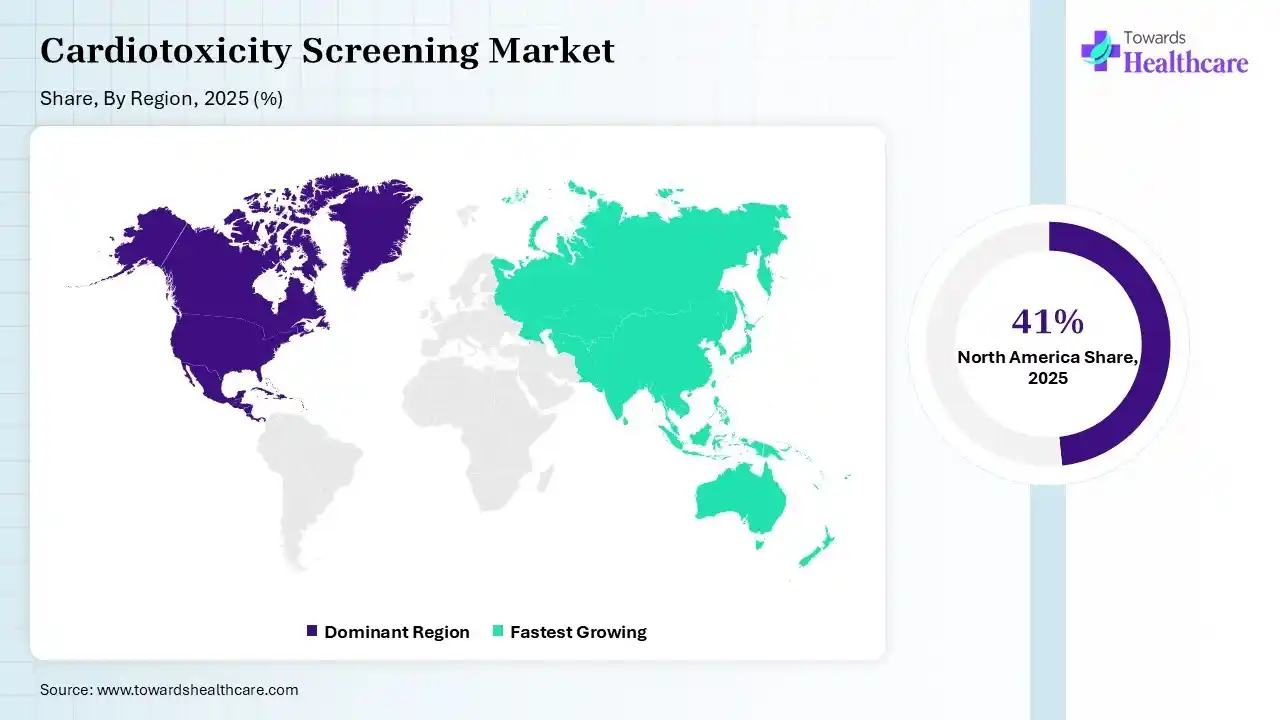
North America captured the biggest share of the cardiotoxicity screening market by 41% share, due to the stricter regulatory safety requirements, a rise in oncology-related cardiac risks, and increased R&D investment in drug development. Also, the region is spurring novel projects, especially the Jackson Laboratory (JAX), which is fostering "CARDIOVERSE," by using stem cell-based systems (iPSC-CMs) and AI to develop virtual hearts, or "digital twins" of cardiac tissue.
U.S. Market Trends
The U.S. was a major contributor in this regional market, as recently the FDA initiated formalizing its plan to phase out mandatory animal testing for some drugs, which supports manufacturers in submitting safety data derived from NAMs. The U.S. is increasingly bolstering ML solutions to Electrocardiograms (ECGs) for detecting subclinical structural heart diseases & estimating prospective heart failure.
Canada Market Trends
The cardiotoxicity screening market in Canada is being driven by more oncology drugs in development, greater awareness of the cardiovascular complications associated with drugs, and more life sciences research investment. Pharmaceutical companies, academic institutions and healthcare providers are using innovative in vitro assay technologies, biomarkers, and imaging technologies to assess cardiac safety during preclinical and clinical drug development; providing regulatory compliance and safer therapeutic development.
Mexico Market Trends
With increasing clinical research activities, expanding manufacture of pharmaceuticals and increasing focus on drug safety evaluation, the cardiotoxicity screening market in Mexico is steadily growing. There is an increase in collaboration between research organizations and pharmaceutical companies to provide advanced cardiotoxicity screening platforms to increase the early detection of cardiac risk and the efficiency of drug development programs.
Asia Pacific is predicted to witness the fastest growth in the cardiotoxicity screening market. A prominent catalyst is continuous investment in drug discovery, mainly in China, Japan, and India, which is driven by the need for early-stage in-vitro cardiotoxicity testing. However, Singapore & across Asian researchers are broadly adopting 3D human heart tissue, which is developed from stem cells, for new oncology and cardiovascular drug evolutions.
India Market Trends
India is emphasizing preventive cardiac care through youth screening campaigns, which include mandatory early, regular screening for at-risk individuals, like lipid profiles, ECG, and stress tests, even for young adults. Also, they are stepping towards uniting cardiovascular specialists into cancer care teams for tracking chemotherapy-induced cardiac damage.
Japan Market Trends
Japan's cardiotoxicity testing market is influenced by its developed pharmaceutical sector and growing emphasis on precision medicine. Pharmaceutical companies are investing in advanced technologies for cardiac safety assessment (e.g., stem cell-based models, automated screening systems) to make drug development more efficient and compliant with strict regulatory requirements.
China Market Trends
China is one of the fastest-growing cardiotoxicity testing markets due to increasing development of medicines, expanding development of biologics, and government assistance to encourage biomedical innovation. Increasing use of advanced lab tools, artificial intelligence (AI), and high-throughput screening systems have led to greater accuracy when evaluating cardiac safety in the drug development process.
Europe is anticipated to expand significantly in the market, as it is focusing on the widespread adoption of wearable devices, like the Garmin Venu SQ and Polar H10 sensor. These devices are encouraging consistent monitoring of older, multimorbid breast cancer patients to find cardiotoxicity before it becomes clinically evident.
UK Market Trends
Moreover, the UK researchers found a set of 29 intracellular ceramides, which act as a predictive metabolic signature for structural cardiotoxicity, and further enable early detection of damage in cardiac microtissues.
Germany Market Trends
Germany's high demand for cardiotoxicity screening market is primarily attributed to its robust pharmaceutical industry, advanced research institutions, and comprehensive investments in drug safety studies. As a result, the prevalence of predictive toxicology models, organ-on-chip technologies, and laboratory automation is improving the ability to assess cardiac risks throughout the entire pharmaceutical R&D cycle.
Netherlands Market Trends
In the past few years, there has been consistent growth in the Netherlands' cardiotoxicity screening market, thanks in large part to an established biotechnology sector and strong academic research networks that provide support to pharmaceutical innovators in improving their product development processes. In addition, there have been many alliances between academic and industrial partners that have increased the use of advanced cardiac testing technologies to enhance the ability of researchers and regulators to ensure the safety and efficacy of drugs.
R&D
Patient Support and Services
| Ecosystem Category | Key Participants | Role in Market |
| Technology Providers | Ion channel assay developers, electrophysiology system makers | Provide hERG assays, patch clamp systems, cardiomyocyte platforms |
| Product Manufacturers | Thermo Fisher Scientific, Roche | Supply reagents, assay kits, imaging systems |
| Service Providers | Charles River Laboratories, Labcorp | Conduct outsourced cardiotoxicity testing services |
| Platform Providers | Eurofins Scientific, WuXi AppTec | Integrated preclinical screening platforms |
| CROs/CDMOs | Labcorp, WuXi AppTec, Evotec | Provide end-to-end drug safety and toxicity testing |
| Software Vendors | Certara, Simulations Plus | Predictive toxicology modeling, PK/PD simulation |
| Research Institutions | Academic cardiac research labs, translational medicine institutes | Develop new biomarkers and models |
| End-User Industries | Pharma, biotech, academic research | Use screening outputs for drug approval decisions |
| Tier 1 | Tier 2 | Tier 3 | |
| Typical Market Influence | 70% | 20% | 10% |
| Tier 1 | ||||
| Company Name | Headquarters | Country | Why Relevant to This Market | Key Products/Services |
| Thermo Fisher Scientific | Waltham, Massachusetts | USA | Major provider of cell-based assays, ion channel tools, and cardiac safety reagents used in cardiotoxicity screening | Ion channel assays, electrophysiology systems, cell models, toxicity screening kits |
| Charles River Laboratories | Wilmington, Massachusetts | USA | Leading preclinical CRO offering dedicated cardiac safety pharmacology testing services | hERG assays, in vivo cardiac safety studies, iPSC cardiomyocyte testing |
| Labcorp | Burlington, North Carolina | USA | One of the largest global CROs with strong drug safety and cardiac toxicity testing capabilities | Nonclinical safety testing, ECG analysis, integrated cardiotoxicity services |
| Tier 2 | ||||
| Company Name | Headquarters | Country | Why Relevant to This Market | Key Products/Services |
| WuXi AppTec | Shanghai | China | Strong global CRO offering integrated drug safety and cardiac toxicity screening services | Safety pharmacology, in vitro cardiotoxicity assays, drug screening platforms |
| Evotec | Hamburg | Germany | Focused on drug discovery services including cardiac safety and disease modeling platforms | iPSC cardiomyocyte platforms, toxicity screening services |
| MilliporeSigma BioReliance | Darmstadt | Germany | Provides biosafety testing and preclinical toxicology services including cardiac safety assays | Toxicology testing, hERG assays, bioanalytical services |
| Tier 3 | ||||
| Company Name | Headquarters | Country | Why Relevant to This Market | Key Products/Services |
| Certara | Princeton, New Jersey | USA | Leading model-informed drug development company with cardiac safety simulation tools | In silico cardiotoxicity prediction, PK/PD modeling |
| Simulations Plus | Lancaster, California | USA | Provides AI-driven predictive toxicology and cardiac risk modeling software | Cardiac safety prediction software, mechanistic modeling |
| Metrion Biosciences | Cambridge | United Kingdom | Specialist in ion channel drug discovery and hERG assay services | Electrophysiology services, ion channel screening |
Strengths
Weaknesses
Opportunities
Threat
In January 2026, Cellistic launched three new iPSC-based GMP manufacturing platforms, Echo™-T, Echo™-Cardio, and Echo™-Endothelial, to accelerate scalable immuno-oncology and regenerative cell therapies. Gustavo Mahler, CEO of Cellistic, said: “The 2025 launch of the Echo™-NK manufacturing platform marked a significant advancement in cell therapy manufacturing.”
By Assay/Test Type
By Modality/Approach
By Product and Service Type
By End User
By Region






Principal Consultant
Payal Rabde is a Healthcare Market Research Analyst at Towards Healthcare Research & Consulting with 4+ years of experience in pharmaceuticals, biotechnology, medical devices, and life sciences.
Learn more about Payal Rabde

Reviewed By
Aditi Shivarkar is a seasoned professional with over 14 years of experience in healthcare market research. As a content reviewer, Aditi ensures the quality and accuracy of all market insights and data presented by the research team.
Learn more about Aditi Shivarkar









