

Pipeline Programs

CGT Companies Tracked

Manufacturing Facilities


The global exonucleases market size is expected to be worth around USD 281.81 million by 2035, from USD 223.61 million in 2025, growing at a CAGR of 2.34% during the forecast period from 2026 to 2035.
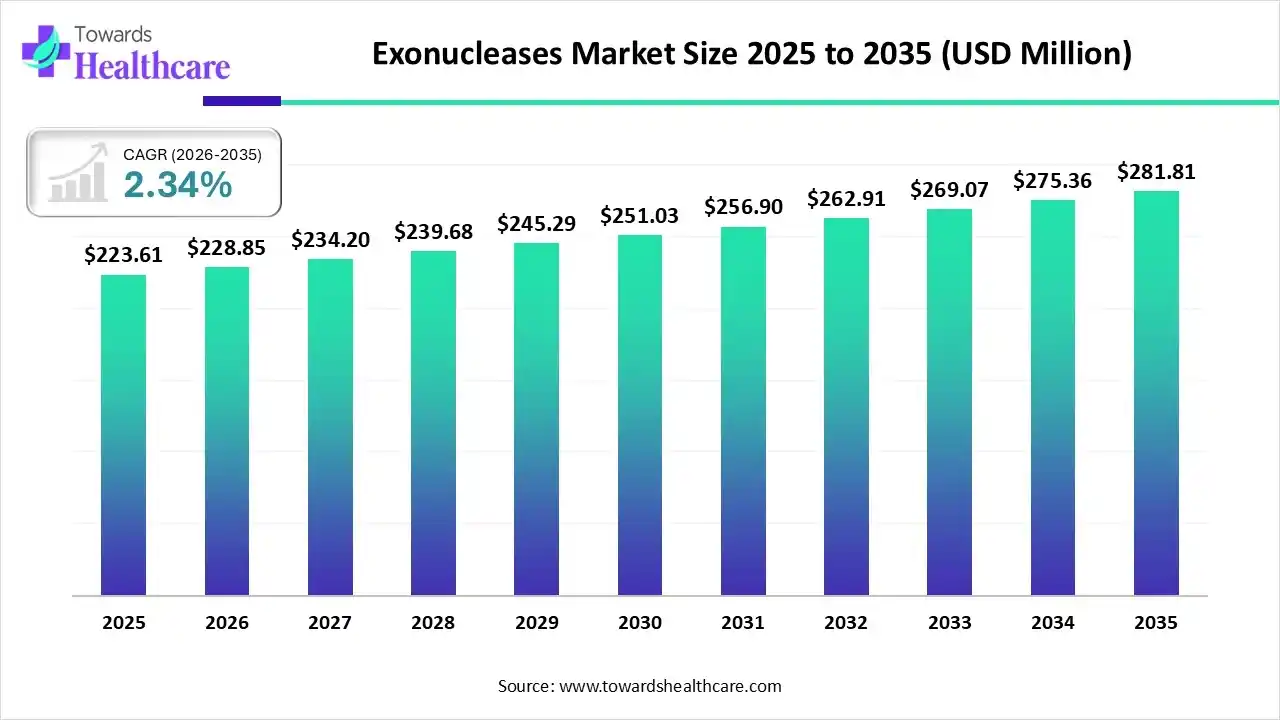
The exonucleases market is experiencing robust growth, driven by the growing demand for personalized medicines, the increasing use of next-generation sequencing, and the expansion of clinical research programs worldwide. Exonucleases are commonly used in cellular metabolism, genome stability & aging, and DNA repair and replication. Government organizations of various countries support genomic research through initiatives and funding programs.
The exonucleases market refers to the global market for enzymes that selectively remove nucleotides from the ends of DNA or RNA molecules. Exonucleases are widely used in molecular biology, genomics and biotechnology applications, including DNA sequencing, PCR clean-up, cloning, genome editing, and synthetic biology. These enzymes play a critical role in research, diagnostics, and therapeutic applications by enabling precise DNA/RNA manipulation, error correction, and sample preparation.
Artificial intelligence (AI) plays a pivotal role in transforming genomic research, enhancing efficiency and accuracy. It assists researchers in sample preparation and performing recombinant DNA procedures to derive the exonuclease enzyme with the desired properties, reducing manual errors. AI and machine learning (ML) algorithms can analyze vast amounts of data and help researchers interpret complex datasets. They guide exonucleases in identifying the correct site on DNA/RNA, driving precision. Thus, AI and ML have great potential in genetic engineering and gene therapy research.
Exonucleases are enzymes that remove nucleotides sequentially from the ends of DNA or RNA molecules, playing an important role in nucleic acid processing, replication, repair, and molecular biology research. The exonucleases market is growing as demand increases for genomic analysis, molecular diagnostics, biotechnology research, and nucleic acid-based applications. Key trends include enzyme engineering, recombinant enzyme production, multiplex workflows, and integration with advanced sequencing technologies.
Technological advancements in protein engineering, synthetic biology, and high-throughput screening are improving enzyme specificity, stability, and performance. Future opportunities include developing customized exonucleases for gene editing, next-generation sequencing, diagnostics, and therapeutic research. Major drivers include expanding genomics research, increasing investments in biotechnology, growing adoption of precision medicine, and rising demand for accurate molecular analysis. Continued innovation in enzyme design is expected to broaden exonuclease applications across research, clinical, and pharmaceutical settings.
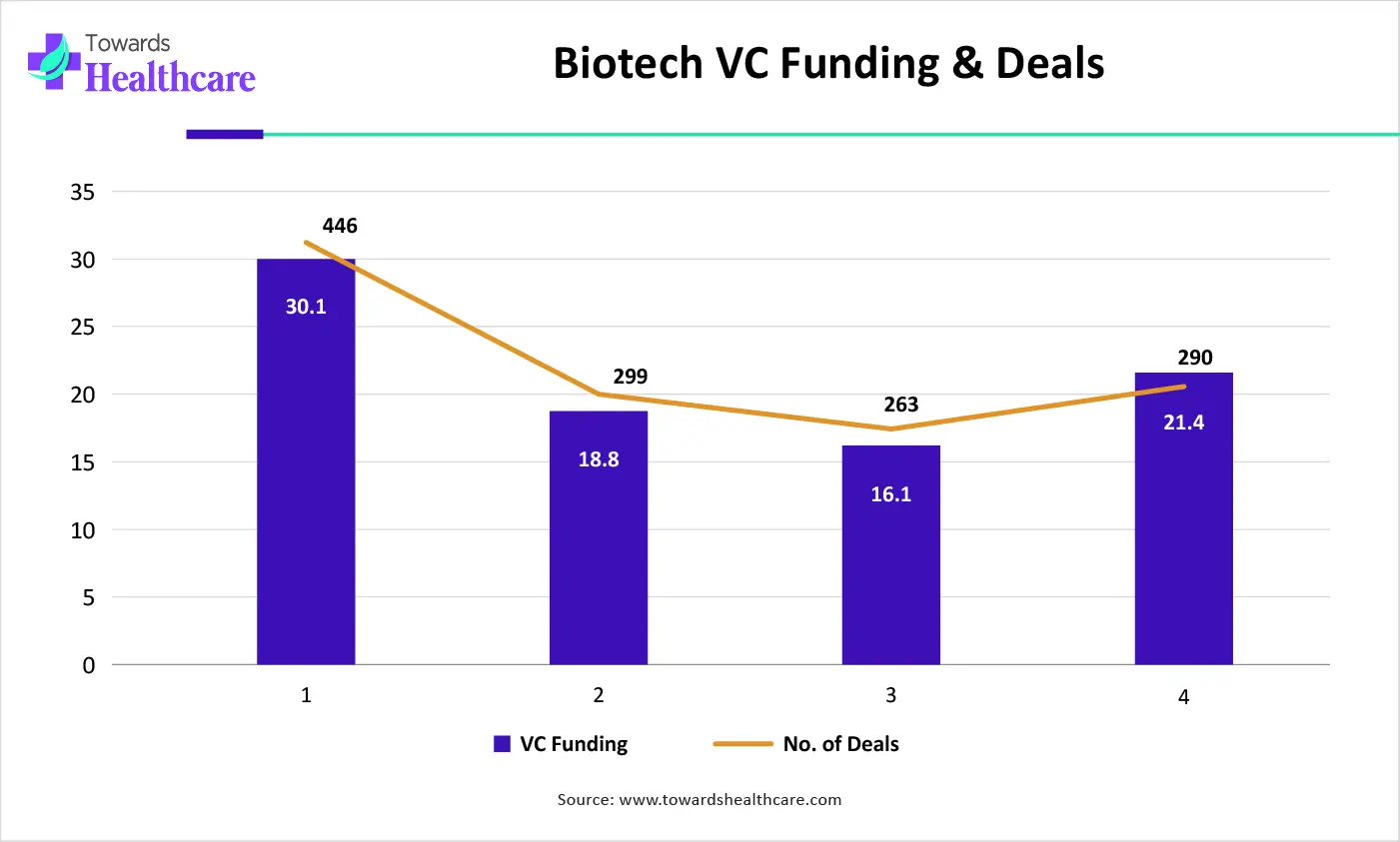
| Years | VC Funding ($ billion) | No. of Deals |
| 2021 | 30.1 | 446 |
| 2022 | 18.8 | 299 |
| 2023 | 16.1 | 263 |
| 2024 | 21.4 | 290 |
| Key Elements | Scope |
| Market Size in 2026 | USD 228.85 Million |
| Projected Market Size in 2035 | USD 281.81 Million |
| CAGR (2026 - 2035) | 2.34% |
| Leading Region | North America by 38% |
| Historical Data | 2020 - 2023 |
| Base Year | 2025 |
| Forecast Period | 2026 - 2035 |
| Measurable Values | USD Millions/Units/Volume |
| Market Segmentation | By Product Type, By Application, By Technology/Mode of Action, By End-User, By Usage, By Distribution Channel, By Region |
| Top Key Players | Thermo Fisher Scientific, Inc., New England Biolabs, Promega Corporation, Sigma-Aldrich, Takara Bio, Inc., Qiagen N.V., Roche Diagnostics, Toyobo Co. Ltd., GenScript Biotech Co., Ltd., Bio-Rad Laboratories |
| Segments | Shares % |
| 5’ → 3’ Exonucleases | 40.00% |
| 3’ → 5’ Exonucleases | 18.00% |
| Dual-Function Exonucleases | 14.00% |
| Modified/Engineered Exonucleases | 16.00% |
| Ancillary Reagents & Kits | 12.00% |
Why 5’ → 3’ Exonucleases Product Type Segment Dominated the Exonucleases Market?
The 5’ → 3’ exonucleases segment held a dominant position in the market with a share of 40% in 2025. 5’ → 3’ exonucleases are widely used to digest nucleotides in the 5’ to 3’ direction on a template ahead of polymerase activity. One of the common examples of 5’ → 3’ exonucleases is Taq polymerase, which catalyzes the cleavage of 5’ DNA flaps from a DNA duplex. The major advantages of these exonucleases are that they can remove mononucleotides or up to 10 nucleotides simultaneously.
3’ → 5’ Exonucleases
The 3’ → 5’ exonucleases segment is expected to grow at the fastest CAGR in the market during the forecast period. 3’ → 5’ exonuclease activity is known as proofreading activity that digests nucleotides with 3’ hydroxyl groups from the 3’ to 5’ direction. They correct mismatched base pairs and terminal 3’ digestion, as well as prevent mutations. They can remove one mononucleotide at a time, allowing researchers to focus on a single nucleotide precisely.
| Segments | Shares % |
| DNA Sequencing & NGS Workflows | 35.00% |
| PCR Clean-up & Sample Preparation | 24.00% |
| Cloning & Molecular Biology Protocols | 18.00% |
| Genome Editing & Repair Studies | 13.00% |
| Other Applications | 10.00% |
How the DNA Sequencing & NGS Workflows Segment Dominated the Exonucleases Market?
The DNA sequencing & NGS workflows segment held the largest revenue share of 35% in the market in 2025, due to the need for researchers to study disease progression and develop innovative diagnostics and therapeutics. Exonucleases facilitate the precise removal of nucleotides from DNA/RNA. DNA sequencing is an essential procedure to determine the order of DNA bases to read genetic instructions. The growing demand for point-of-care diagnostics boosts the segment’s growth.
PCR Clean-up & Sample Preparation
The PCR clean-up & sample preparation segment is expected to grow with the highest CAGR in the market during the studied years. PCR clean-up is used to purify DNA and remove remaining primers and dNTP left from a PCR reaction. Exonuclease-based real-time PCR uses Taq polymerase to measure PCR product accumulation. PCR clean-up is an essential step as it may interfere with the PCR results.
| Segments | Shares % |
| Enzyme-based Digestion Systems | 50.00% |
| Recombinant Expression Platforms | 20.00% |
| Cell-Free Enzymatic Systems | 12.00% |
| Synthetic/Engineered Variants | 10.00% |
| Other Technologies | 8.00% |
Why Did the Enzyme-based Digestion Systems Segment Dominate the Exonucleases Market?
The enzyme-based digestion systems segment contributed the biggest revenue share of 50% in the market in 2025, due to the need for precise sample preparation for various applications. Restriction enzyme-based methods use restriction enzymes to cleave genomic DNA in the initial step of library preparation. They are used in DNA sequencing procedures, either to generate long fragments or to reduce the length of the resulting fragments.
Recombinant Expression Platforms
The recombinant expression platforms segment is expected to expand rapidly in the market in the coming years. Exonucleases are considered essential parts of recombinant expression platforms for DNA manipulation. Recombinant technology is commonly used as a tool of gene therapy to prevent and treat acquired genetic disorders. It opens new opportunities for innovations to produce a wide range of therapeutic products.
| Segments | Shares % |
| Pharmaceutical & Biotechnology Companies | 40.00% |
| Diagnostic Laboratories | 24.00% |
| Academic & Research Institutes | 20.00% |
| CROs & Genomics Service Providers | 10.00% |
| Other End-Users | 6.00% |
How Pharmaceutical & Biotechnology Companies Segment Led the Exonucleases Market?
The pharmaceutical & biotechnology companies segment led the market with a share of 40% in 2025, due to favorable infrastructure and growing genomic research activities. Pharmaceutical & biotech companies have suitable capital investment to adopt advanced tools and techniques. The increasing competition among large and small companies necessitates them to develop advanced diagnostics and therapeutics, strengthening their market position.
Diagnostic Laboratories
The diagnostic laboratories segment is expected to witness the fastest growth in the market over the forecast period. Diagnostic laboratories possess specialized tools to diagnose a wide range of genetic and chronic disorders. Government initiatives encourage screening and early diagnosis of severe disorders to the general public. This enables healthcare professionals to provide early interventions. Diagnostic laboratories also operate on a referral basis from providers.
| Segments | Shares % |
| Research-Grade Enzymes | 65.00% |
| Clinical-Grade / GMP-Ready Enzymes | 20.00% |
| Industrial & Specialty Use | 15.00% |
What Made Research-Grade Enzymes the Dominant Segment in the Exonucleases Market?
The research-grade enzymes segment accounted for the highest revenue share of 65% in the market in 2025, due to the need for novel biologics, such as cell and gene therapy and monoclonal antibodies. Research-grade enzymes are more affordable and are available in smaller quantities, enabling researchers to purchase the desired enzyme based on their research requirements. They are in high demand due to growing research activities related to genomics and proteomics.
Clinical-Grade/GMP-Ready Enzymes
The clinical-grade/GMP-ready enzymes segment is expected to show the fastest growth over the forecast period. Clinical-grade or GMP-grade exonucleases are available from specialized suppliers for use in therapeutic manufacturing. They are comparatively stable and are required in large quantities to fulfill unmet needs.
| Segments | Shares % |
| Direct Sales (Labs & Biotech Firms) | 55.00% |
| Distributors & Resellers | 20.00% |
| Online / E-commerce Platforms | 15.00% |
| Government & Public Research Programs | 6.00% |
| Others | 4.00% |
How the Direct Sales Segment Dominated the Exonucleases Market?
The direct sales segment held a major revenue share of 55% in the market in 2025, due to high affordability and limited stability. Direct sales enable developers to supply exonucleases directly to research laboratories and biotech firms. This saves the extra costs of wholesalers or suppliers, enhancing cost-effectiveness. They provide high-quality enzymes and offer after-sales services. Direct sales allow developers to guide researchers about the properties, applications, and advantages of their proprietary exonucleases.
Online/E-commerce Platforms
The online/e-commerce platforms segment is expected to account for the highest growth in the upcoming years. The increasing adoption of smartphones and advances in internet connectivity technologies augment the segment’s growth. Online platforms allow researchers to choose from a wide range of options, resulting in enhanced affordability. They also reduce geographical barriers, as researchers can purchase high-quality exonucleases from different countries.
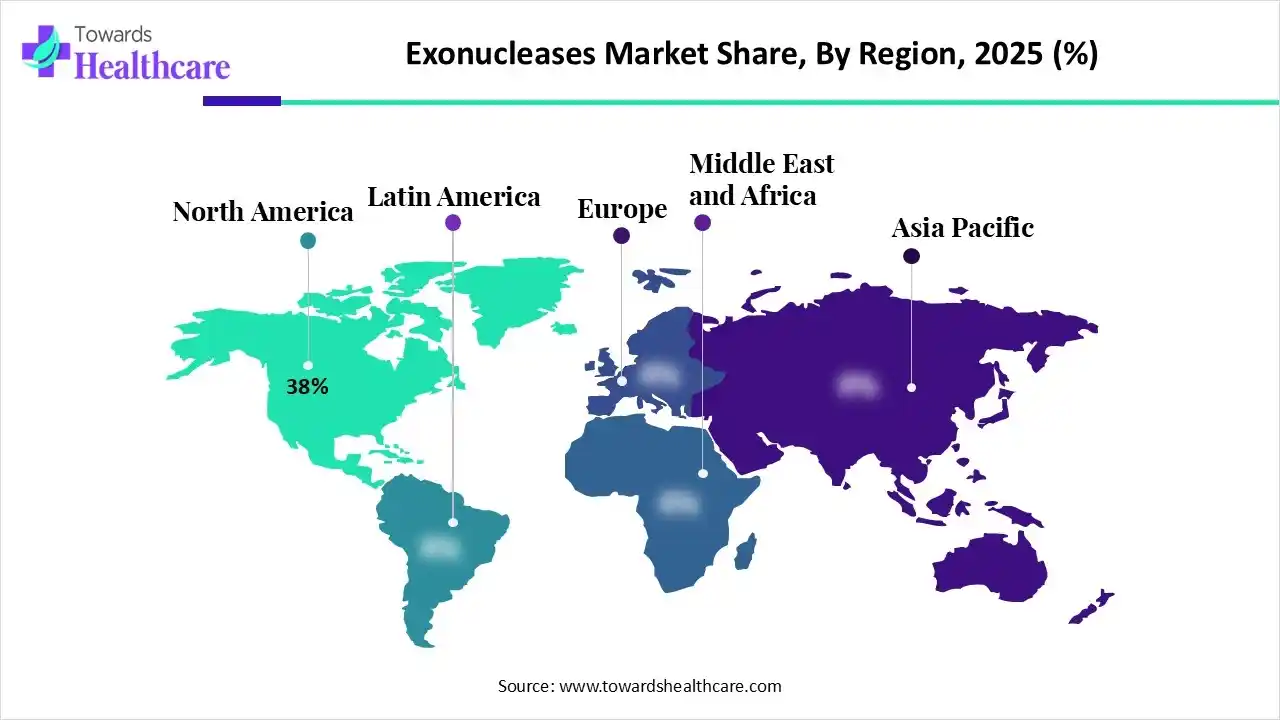
North America dominated the global market with a share of 38% in 2025. The availability of state-of-the-art research and development facilities, the presence of key players, and favorable government support are the factors that drive market growth in North America. The increasing R&D investments and collaborations among key players foster the market. North American countries also have a favorable clinical trial infrastructure, supporting the development of advanced genomic products.
U.S. Market Trends
There are over 5,000 pharmaceutical companies and over 3,000 biotechnology companies in the U.S. Key players, such as Thermo Fisher Scientific, Agilent Technologies, and Bio-Rad Laboratories, are major contributors to the market in the U.S. The National Institute of Health (NIH), a government-led institution, invested $27 million in first-year funding to establish a new program that supports the integration of genomics into learning health systems.
Canada’s Expanding Exonuclease Research Landscape
Canada’s exonucleases market is significantly growing due to expanding genomics research, molecular diagnostics, and biotechnology activities. Strong investments in life sciences and advanced laboratory infrastructure are encouraging the use of specialized enzymes in DNA and RNA analysis. Growing adoption of next-generation sequencing, precision medicine, and gene-based research is further increasing demand for high-performance exonucleases across academic, clinical, and pharmaceutical applications.
Asia-Pacific is expected to host the fastest-growing market by 21% share in 2025 in the coming years. Countries like China, India, Japan, and South Korea witness a surge in the number of biotech and pharmaceutical startups. The startups are supported by venture capital investments and technological advancements. Government and private institutions conduct seminars, workshops, and conferences to share the latest updates about biotech advancements. The increasing clinical testing due to the growing patient population contributes to market growth.
China Market Trends
China is projected to become the first country in the world to build a nationwide genomic database covering its entire population by 2049. This is driven by the nation’s Human Genome Project (HGP) to accelerate the integration of genomics into national proactive health management. In addition, biotech innovations are also on the rise in China. It is estimated that China will account for 35% of all FDA approvals in the coming years.
India’s Growing Exonuclease Applications
India’s exonucleases market is notably expanding due to increasing genomics research, molecular diagnostics, and biotechnology development. Growing investments in life sciences, advanced laboratory capabilities, and genetic research are supporting enzyme adoption. The rising use of next-generation sequencing, personalized medicine, and molecular testing is further creating demand for exonucleases across research institutions, diagnostic laboratories, and pharmaceutical organizations.
Europe is considered to be a significantly growing area by 27% share, due to the rising adoption of advanced technologies and evolving regulatory landscapes that support innovations in the biotech sector. Government organizations launch initiatives and provide funding to promote the development of novel diagnostics and therapeutics. The increasing prevalence of genetic and rare disorders and growing awareness of exonucleases and their applications propel the market.
UK Market Trends
The UK government recently announced an investment of £650 million by 2030 in genomic medicine in England. It aims to assess babies’ risk of hundreds of conditions, aligning with their focus on predictive and preventative healthcare. The Whole Genomic Sequencing (WGS) programme holds promise for speeding up the diagnosis of genetic, rare, and undiagnosed conditions.
Germany’s Strong Exonuclease Market Position
Germany holds a notable share in the exonucleases market due to its advanced biotechnology ecosystem, strong genomics research, and well-established pharmaceutical sector. Extensive molecular biology research and sophisticated laboratory infrastructure support enzyme utilization in DNA and RNA analysis. Growing adoption of next-generation sequencing, precision medicine, and innovative genetic technologies further strengthens demand for exonucleases across academic, clinical, and pharmaceutical applications.
The exonuclease market in South America is rapidly expanding due to increased healthcare investments, biotechnology research growth, and the rising use of molecular diagnostics and gene-editing technologies like CRISPR. Key factors driving this growth include improved laboratory infrastructure, a rising demand for personalized medicine, and more clinical trials focused on genetic therapies, especially in Brazil, Argentina, and Colombia. Significant investments in biotechnology and genomics are boosting the demand for exonucleases in DNA manipulation, supported by enhanced laboratory facilities in Brazil and Argentina for advanced molecular research. Moreover, a greater emphasis on local manufacturing and collaborative research initiatives is further enhancing market adoption across the region.
Brazil Market Trends
Brazil's exonuclease market is expanding due to advancements in biotechnology, molecular diagnostics, and CRISPR research. This growth is fueled by increased local production of bio-based enzymes, higher investment in genomics, and improved lab infrastructure. The demand for high-quality enzymes in pharmaceuticals and diagnostics also plays a role. Additionally, the rise of next-generation sequencing and molecular diagnostics in clinical settings boosts the need for exonucleases. Increasing funding for research and development in molecular studies and genetic manipulation further supports enzyme use. Brazil's strong agricultural sector offers a sustainable source of lignocellulosic biomass for bio-based industrial enzymes.
The Middle East and Africa (MEA) region is seeing significant growth in the endonucleases market by 6% share, fueled by high genetic disorder rates, substantial biotechnology investments, and advanced research facilities. This market, which includes restriction enzymes and CRISPR-associated endonucleases, is expanding as the region shifts towards personalized medicine and local therapeutic production. With a high prevalence of genetic diseases like thalassemia and sickle cell disease, there is a strong demand for endonucleases in diagnostics and gene therapy. Companies like QIAGEN are strengthening their presence by establishing headquarters in Riyadh and focusing on public health and clinical genomics. Furthermore, the rising use of CRISPR-Cas9 technologies for targeted treatments and agricultural enhancements is increasing the demand for high-fidelity endonucleases.
Saudi Arabia Market Trends
The endonucleases market in Saudi Arabia is rapidly growing due to the Kingdom's shift towards a knowledge-based economy under Vision 2030, focusing on biotechnology and advanced healthcare. This growth is supported by significant investments in research infrastructure, a high prevalence of genetic disorders needing specialized diagnostics, and increased adoption of CRISPR technologies. The Saudi government is investing billions in biotech, including USD 1 billion for R&D, innovation hubs, and public-private partnerships. The market is embracing CRISPR-associated endonucleases and other enzymes for genetic engineering and cell therapies. Furthermore, advancements in precision medicine are driving demand for customized genetic tools to enhance patient outcomes, especially in oncology and chronic disease management.
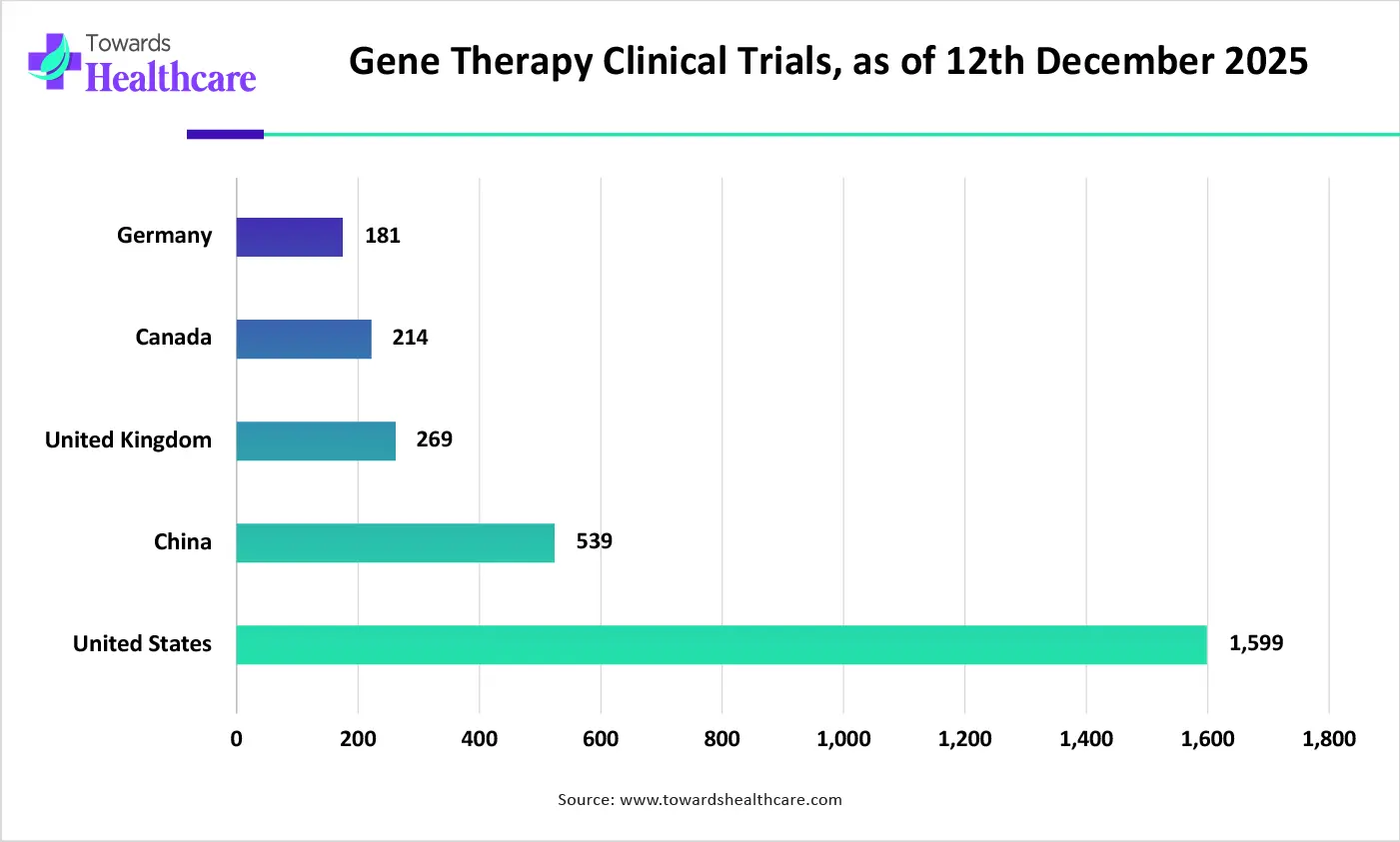
| Countries | Number of Clinical Trials, as of 12th December 2025 |
| United States | 1,599 |
| China | 539 |
| United Kingdom | 269 |
| Canada | 214 |
| Germany | 181 |
R&D:
R&D steps involve target identification, enzyme engineering, expression, purification, characterization of activity and specificity, optimization, and validation for specific applications and safety protocols.
Companies: F. Hoffmann-La Roche Ltd., Takara Bio Inc., Pacific Biosciences of California, Inc., New England Biolabs, Inc., Thermo Fisher Scientific, QIAGEN GmbH, Illumina, Inc., and ArcticZymes AS.
Clinical Trials & Regulatory Approvals:
Sterilization & Packaging:
| Companies | Headquarters | Offerings |
| Thermo Fisher Scientific, Inc. | Massachusetts, United States | It offers Exonuclease I (20 U/μL), Exonuclease III (200 U/μL), Lambda Exonuclease (10 U/μL), Exonuclease VII (1000 U), and T7 Gene 6 Exonuclease 10kU. |
| New England Biolabs | Massachusetts, United States | It provides a wide range of exonucleases derived from E.coli, such as Exonuclease I, Exonuclease T, and T7 Exonuclease. |
| Promega Corporation | Wisconsin, United States | It offers Exonuclease III, REXO1, and DNA Polymerase I Large Fragment Protocol. |
| Sigma-Aldrich | Missouri, United States | It offers Exonuclease I 10 U/μL and Exonuclease III. |
| Takara Bio, Inc. | Kusatsu, Japan | It offers a variety of endonucleases and exonucleases to cleave DNA and RNA, such as E.coli Exonuclease I & III. |
| Qiagen N.V. | Hilden, Germany | It provides Exonuclease I, III, and Lambda for assays and detection. |
| Roche Diagnostics | Indianapolis, United States | It provides AptaTaq exo DNA polymerase 5 U/μL and ActiTaq exo Genotyping Master. |
| Toyobo Co. Ltd. | Osaka, Japan | It offers KOD exo (-) DNA polymerase derived from Thermococcus kodakaraensis. |
| GenScript Biotech Co., Ltd. | New Jersey, United States | It offers multiple exonuclease products, supporting the company’s early drug discovery and development process. |
| Bio-Rad Laboratories | California, United States | It provides iProof High-Fidelity DNA polymerase to create a thermostable fusion polymerase that accurately amplifies long products from a variety of DNA templates. |
Strengths
Essential role in DNA and RNA processing and molecular research.
Broad applications in genomics, diagnostics, biotechnology, and pharmaceuticals.
High enzyme specificity supports precise nucleic acid analysis.
Increasing use in advanced sequencing and genetic technologies.
Weaknesses
High-quality enzymes can involve complex production and purification processes.
Performance may depend on reaction conditions and substrate characteristics.
Specialized applications require skilled technical expertise.
Research-grade enzymes can increase laboratory costs.
Opportunities
Growing demand for next-generation sequencing and precision medicine.
Development of engineered enzymes with improved specificity and stability.
Expanding applications in gene editing and molecular diagnostics.
Rising biotechnology research in emerging markets.
Threats
Strict regulatory requirements for clinical and diagnostic applications.
Competition from alternative nucleic acid-processing technologies.
Variability in research funding and biotechnology investments.
Technical challenges in developing highly specialized enzyme formulations.
By Product Type
By Application
By Technology/Mode of Action
By End-User
By Usage
By Distribution Channel
By Region






Principal Consultant
Payal Rabde is a Healthcare Market Research Analyst at Towards Healthcare Research & Consulting with 4+ years of experience in pharmaceuticals, biotechnology, medical devices, and life sciences.
Learn more about Payal Rabde

Reviewed By
Aditi Shivarkar is a seasoned professional with over 14 years of experience in healthcare market research. As a content reviewer, Aditi ensures the quality and accuracy of all market insights and data presented by the research team.
Learn more about Aditi Shivarkar










