

Towards Healthcare
Small Molecule Inhibitor Market to Promote USD 542.87 Bn by 2035

Small Molecule Inhibitor Market Trends Shaping Future Healthcare

According to market projections, small molecule inhibitor market was valued at USD 310.38 billion in 2025 and is expected to reach USD 328.22 billion by 2026, further expanding to around USD 542.87 billion by 2035, growing at a CAGR of 5.75% from 2026 to 2035.

Last Updated : 16 December 2025 Category: Pharmaceuticals Insight Code: 6512 Format: PDF / PPT / Excel
next-arrow
Revenue, 2025
310.38 Billion
next-arrow
Forecast, 2035
542.87 Billion
next-arrow
CAGR, 2026 – 2035
5.75%
next-arrow
Report Coverage
Global

The global small molecule inhibitor market size is expected to be worth around USD 542.87 billion by 2035, from USD 310.38 billion in 2025, growing at a CAGR of 5.75% during the forecast period from 2026 to 2035.
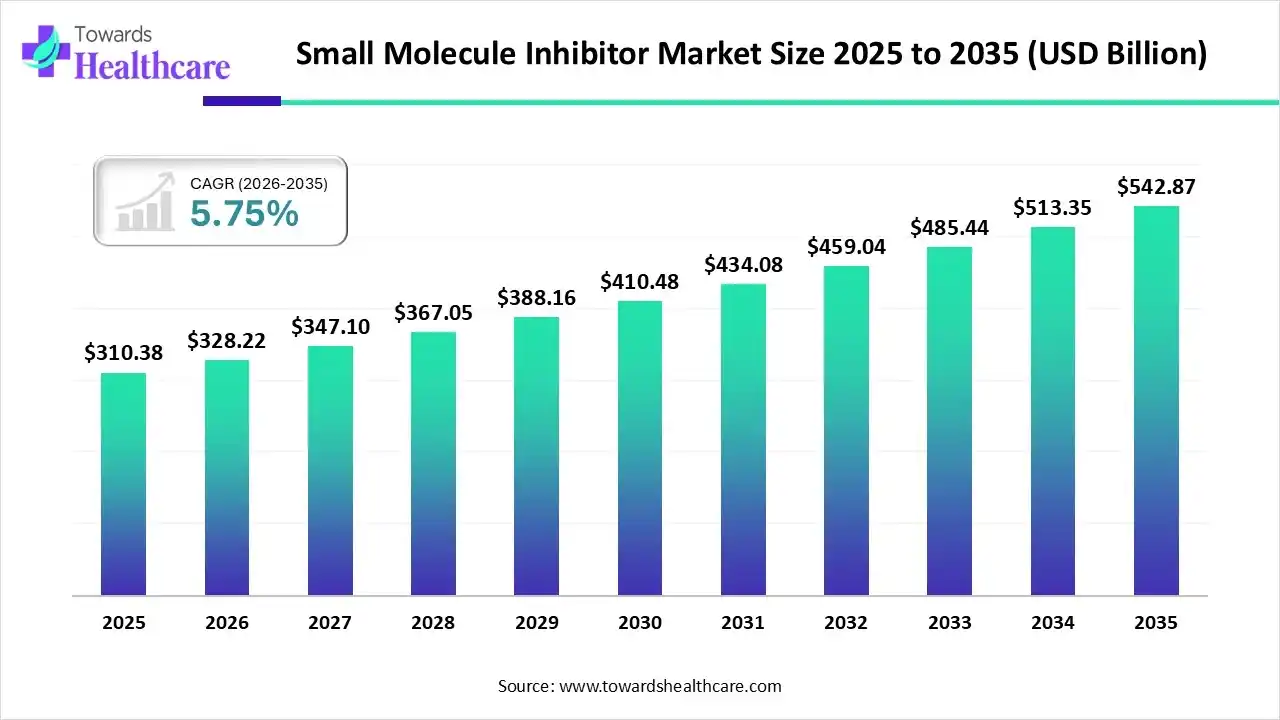
Small Molecule Inhibitor Market Trends and Growth (2026)

The growing disease burden globally is increasing the demand for small-molecule inhibitors. AI technologies, advanced healthcare, R&D investment, and government support are also driving their demand, where the industries are also investing and collaborating to develop new products, promoting market growth.

Key Takeaways

  • The small molecule inhibitor market will likely exceed USD 328.22 billion by 2026.
  • Valuation is projected to hit USD 542.87 billion by 2035.
  • Estimated to grow at a CAGR of 5.75% starting from 2026 to 2035.
  • North America dominated the global small molecule inhibitor market in 2025.
  • Asia Pacific is expected to be the fastest-growing region between 2026 and 2035.
  • By drug class type, the immunomodulatory small molecules segment held the major revenue share in the market in 2025.
  • By drug class type, the BCL-2 inhibitors segment is expected to be the fastest growing during the forecast period.
  • By therapeutic area type, the oncology segment dominated the market in 2025.
  • By therapeutic area type, the rare diseases segment is expected to be the fastest-growing during the forecast period.
  • By sales channel type, the hospitals segment held the major revenue share in the market in 2025.
  • By sales channel type, the cancer research institutes segment is expected to be the fastest-growing during the forecast period.
  • By molecule type, the small organic molecules segment led the market in 2025.
  • By molecule type, the peptidomimetics segment is expected to be the fastest growing during the forecast period.

Quick Facts Table

Key Elements Scope
Market Size in 2026 USD 328.22 Billion
Projected Market Size in 2035 USD 542.87 Billion
CAGR (2026 - 2035) 5.75%
Leading Region North America
Market Segmentation By Drug Class, By Therapeutic Area, By Sales Channel, By Molecule, By Region
Top Key Players Pfizer Inc., Gilead Sciences, Inc., Takeda Pharmaceutical Co, Takeda Pharmaceutical Co, Roche Holding AG, AstraZeneca plc, Bristol-Myers Squibb, Amgen Inc.,Merck & Co., Inc.

The small molecule inhibitor market is driven by increasing chronic diseases, the advantages of oral drug delivery, and technological advancements. The small molecule inhibitor refers to a compound with low molecular weight, which is used to control or block any biological process by binding to a specific protein or enzyme. These products are being used in the treatment of various diseases such as cancer, rare, autoimmune, infectious, and metabolic diseases.

Different types of AI models are being utilized in the development of small molecule inhibitors, as they help in detecting targets, promote screening of drug candidates and help in reducing workload. AI is also used for molecule modification, which reduces their toxicity and optimizes their safety, potency, and bioavailability. Moreover, they are also being used in the development of personalized solutions and the prediction of their ADME properties.

Blooming Applications

The companies are developing various small-molecule inhibitors to deal with the growing disease burden, which in turn are enhancing their applications across cardiovascular, infectious, and metabolic diseases.

Advancing R&D

A wide range of small-molecule inhibitors is being discovered and developed to offer targeted therapies, which enhance safety and effectiveness, where the investments are also driving their innovations.

Shift Towards Oral Small Molecule Inhibitors

The small molecule inhibitors offer improved oral bioavailability and are affordable compared to biologics, which is increasing their acceptance rate in the treatment of various diseases.

Total Approved Small Molecules

Year Approved Small molecules
2022 21
2024 32

What are the Major Investments in the Small Molecule Inhibitor Market?

  • In March 2025, a total of 20 million in private placement financing was secured by Lomond Therapeutics Holdings, Inc., which will be used to advance lomonitinib, a novel, small molecule inhibitor, along with menin inhibitor and lonitoclax development.
  • In January 2025, the development of highly brain-penetrant and peripherally restricted small molecules will be supported by the $200 million funding secured by Tenvie Therapeutics.

Segmental Insights

Why Did the Immunomodulatory Small Molecules Segment Dominate in the Small Molecule Inhibitor Market in 2025?

Immunomodulatory Small Molecules

The immunomodulatory small molecules segment led the market in 2025, due to a wide range of applications. It also provided enhanced oral bioavailability, which increased their use. They were also used in combination with other therapies to offer targeted action, which enhanced their production rates.

BCL-2 inhibitors 

The BCL-2 inhibitors segment is expected to show the highest growth during the predicted time, due to their growing use in cancer treatment. They offer target-specific action, which is increasing their use in leukaemia and lymphoma. Additionally, their high efficacy is driving the development of new combinations.

How Oncology Segment Dominated the Small Molecule Inhibitor Market in 2025?

Oncology

The oncology segment led the market in 2025, due to its growing incidence rates. Moreover, the growth in the unmet medical need has also increased the use of small-molecule inhibitors. At the same time, high treatment costs also enhanced the use of these inhibitors, where their innovations also promoted their adoption rates.

Rare Diseases

The rare diseases segment is expected to show the fastest growth rate during the predicted time, due to growing government incentives. Furthermore, the growing advances in genetics are also increasing the development of novel small molecules to offer targeted therapies, where the startups are also driving their innovations.

Which Sales Channel Type Segment Held the Dominating Share of the Small Molecule Inhibitor Market in 2025?

Hospitals

The hospitals segment held the dominating share in the market in 2025, as they offered a wide range of expensive therapies. Furthermore, the presence of large patient volume also increased the demand for small-molecule inhibitors. They also provided diagnostic services along with supervision, which enhanced the patients' trust.

Cancer Research Institutes

The cancer research institutes segment is expected to show the highest growth during the upcoming years, due to growing cancer incidences. This, in turn, is driving the development of various advanced therapies, which are backed by government funding and investments.

What Made Small Organic Molecules the Dominant Segment in the Small Molecule Inhibitor Market in 2025?

Small Organic Molecules

The small organic molecules segment held the largest share in the market in 2025, due to increased oral bioavailability. At the same time, they were easy to manufacture and offered improved stability. Moreover, their affordability and growth in their R&D also increased their use for various applications.

Peptidomimetics

The peptidomimetics segment is expected to show the fastest growth rate during the upcoming years, due to their high target specificity. At the same time, they also offered improved stability and bioavailability. Moreover, their growing applications are driving their R&D, increasing their innovations.
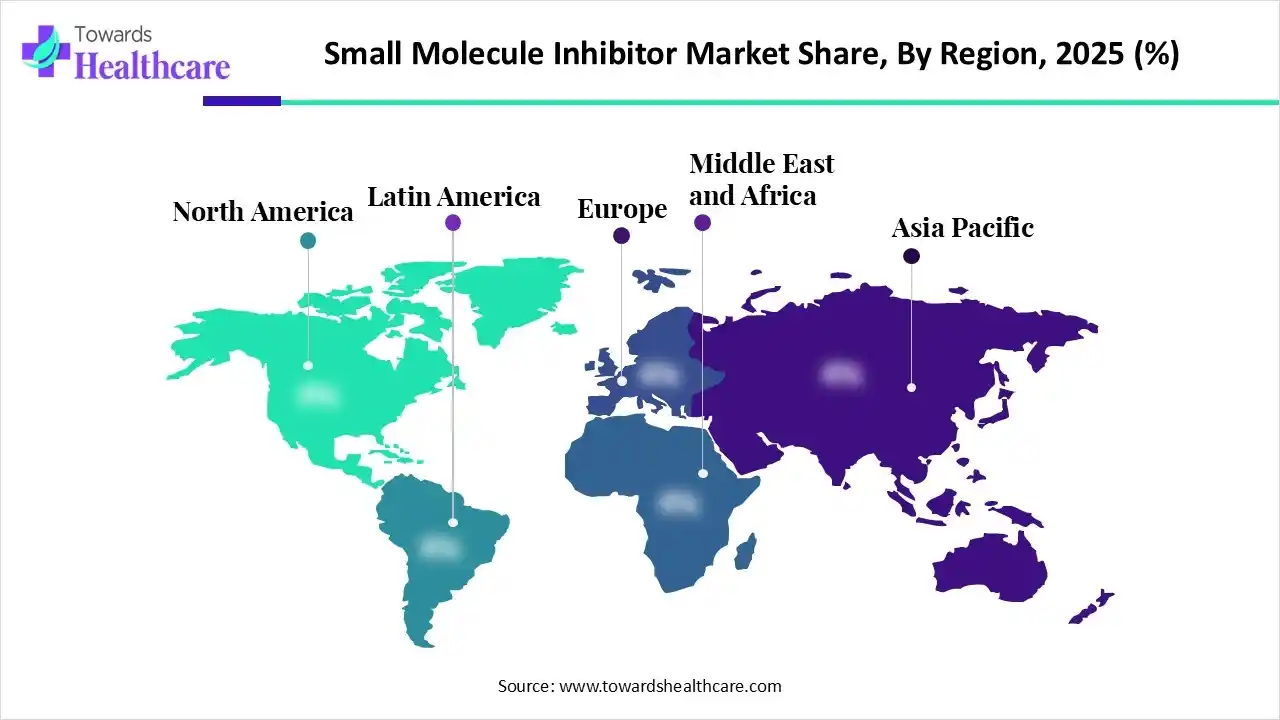
Regional Distribution

Small Molecule Inhibitor Market NA, EU, APAC, LA and MEA Share 2025 (%)

  • North America held the dominance in the small molecule inhibitor market in 2025. 
  • The U.S. led the market by capturing the largest revenue share of the market in 2025. 
  • Asia Pacific is expected to be a significantly growing region in the studied years. 
  • India is anticipated to grow at a rapid CAGR during the forecast period. 
  • Europe is expected to grow at a notable CAGR in the small molecule inhibitor market during the forecast period.
  • The UK is anticipated to grow at a rapid CAGR during the forecast period.

North America dominated the small molecule inhibitor market in 2025, due to the presence of robust industries. At the same time, the growth in healthcare investments also promoted their development and affordability. Additionally, the growth in health awareness and advanced infrastructure also increased their use, which contributed to the market growth.

Due to the presence of high healthcare expenditure, the adoption of small molecules in the U.S. is increasing. Additionally, the presence of large industries is also developing and innovating various treatment options for a variety of diseases. Moreover, growing R&D investments are also increasing their innovations.
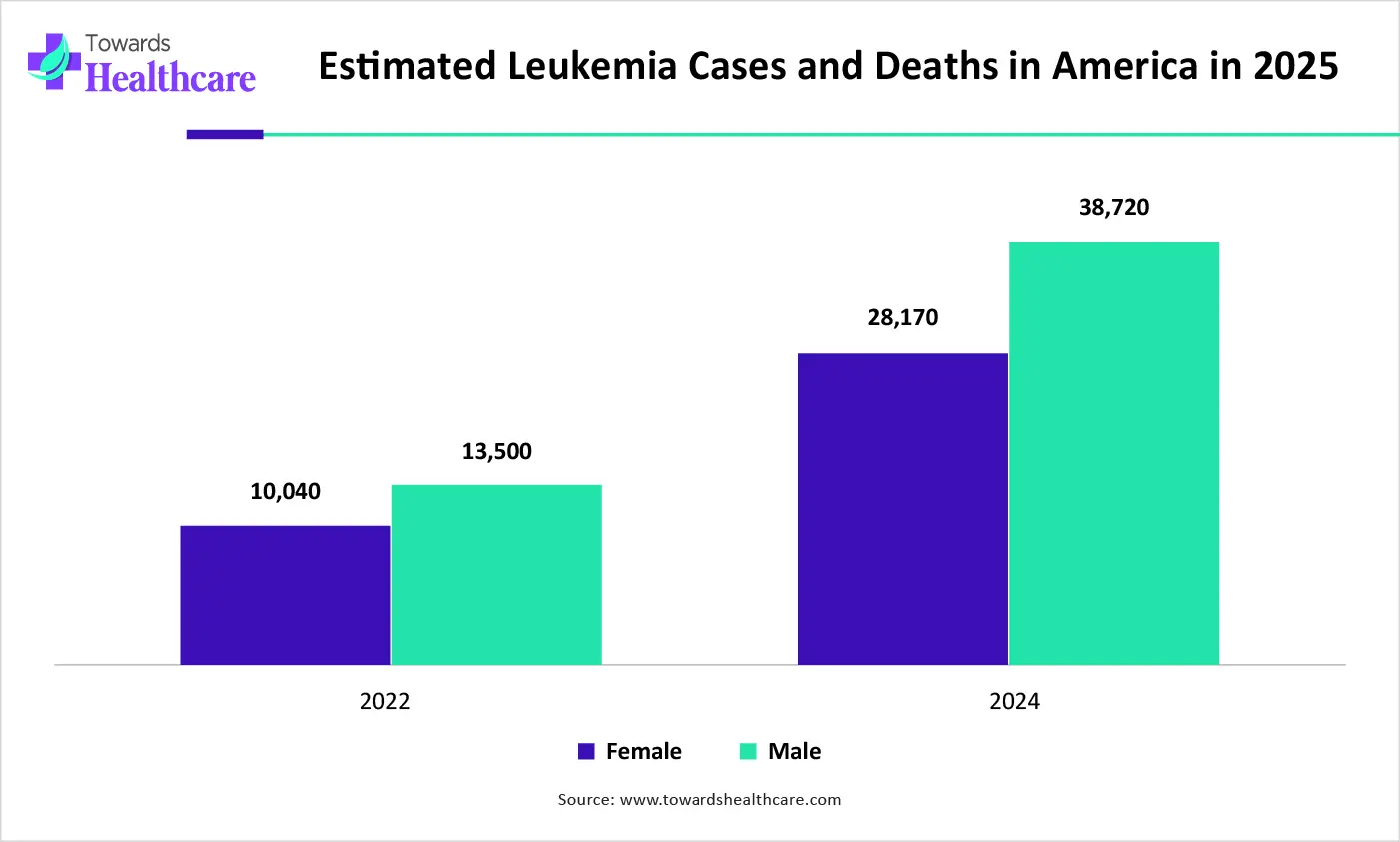
Estimated Leukemia Cases and Deaths in America in 2025

Leukemia Deaths New Cases
Female 10,040 28,170
Male 13,500 38,720


Asia Pacific is expected to host the fastest-growing small molecule inhibitor market during the forecast period, due to growing chronic diseases. The expanding healthcare is also increasing the adoption of various small-molecule inhibitor treatment options, where the industries are also focusing on their innovations. All these factors, along with government support, are enhancing the market growth.

Due to the presence of a large population, the incidence of chronic diseases is increasing in India, which is driving the demand for small-molecule inhibitors. The presence of pharmaceutical industries is also driving the development of generic products, where the expanding healthcare is also encouraging the adoption of advanced treatment options.

Europe is expected to grow significantly in the small molecule inhibitor market during the forecast period, due to the presence of well-developed healthcare systems. This is increasing the use of small molecules for the treatment of cancer and rare diseases, which are supported by the reimbursement policies. Increasing diseases and their awareness are also increasing their innovations, promoting market growth.

The growth in healthcare awareness is increasing the demand for small-molecule inhibitors for target-specific action. Moreover, the presence of advanced healthcare systems and industries is increasing their use and innovations, respectively. Additionally, growing investments are also supporting their R&D, promoting new collaborations among the companies.
Top Vendors in the Small Molecule Inhibitor and Their Offerings

Small Molecule Inhibitor Market Key Players

Companies Headquarters Small Molecule Inhibitor Products
Novartis AG Basel, Switzerland Gleevec and Kisqali
Pfizer Inc New York, U.S. Paxlovid and Ibrance
Gilead Sciences, Inc. California, U.S. Biktarvy, Veklury, Livdelzi, Epclusa, and Harvoni
Takeda Pharmaceutical Co Tokyo, Japan Dexilant, Iclusig, Exkivity, and Fruzaqla
Eli Lilly and Company Indiana, U.S. Verzenio and Orforglipron
Roche Holding AG Basel, Switzerland Alecensa
AstraZeneca plc Cambridge, UK Tagrisso and Lynparza
Bristol-Myers Squibb New Jersey, U.S. Sotykto and Imbruvica
Amgen Inc. California, U.S. Otezla
Merck & Co., Inc. New Jersey, U.S. Lagevrio and Orserdu

SWOT

Strengths

    • The small molecule inhibitors offer improved oral bioavailability, which is increasing their use as pills.
    • They also offer target-specific approaches at the intracellular level, which is increasing their acceptance rates.
    • The small molecule inhibitors are easy to manufacture and have improved stability, which drives their rapid production.
    • Moreover, they are also being used in combination with other treatment options to offer better efficacy.

Weaknesses

    • The small molecule inhibitors often show risk of toxicity due to their off-target effects, leading to interaction with unintended proteins.
    • Moreover, there are cases of drug resistance when used against certain cancer cases and pathogens.

Opportunities

    • Growing interest in immunology and oncology is increasing the development of new therapeutic options, driving the small molecule inhibitor innovations.
    • The increasing demand for precision medicine is also increasing the use of small molecules to develop novel target-based therapies.
    • The growing number of rare diseases is increasing their innovations, where the regulatory incentives are also driving their clinical trials.
    • The growing collaboration and startup ecosystems are also developing next-generation small molecule inhibitor products.

Threats

    • The development of small-molecule inhibitors requires multiple steps, which makes their systems complex.
    • As per the stringent regulations, small molecule inhibitors must also comply with the quality and safety standards, which limit their innovations.

Small Molecule Inhibitor Market Value Chain Analysis

R&D

  • The R&D of the small molecule inhibitor involves the use of AI and advanced computational tools for the identification of novel targets of chronic diseases.
  • Key players: Novartis AG, Merck & Co., Inc., Pfizer Inc.

Clinical Trials and Regulatory Approvals

  • The safety, efficacy, and quality of the product are evaluated in the clinical trials and regulatory approval of the small molecule inhibitors.
  • Key players: Pfizer Inc., Novartis AG, AstraZeneca plc.

Patient Support and Services

  • Patient support programs, patient assistance programs, educational resources, and logistical support are provided in the patient support and services for small molecule inhibitors.
  • Key players: Novartis AG, Merck & Co., Inc., Pfizer Inc.

Recent Developments in the Small Molecule Inhibitor Market

  • In March 2025, to advance HRS-5346, which is an investigational oral small molecule Lipoprotein(a), or Lp(a), inhibitor, an exclusive license agreement was formed between MSD and Jiangsu Hengrui Pharmaceuticals Co., Ltd.
  • In February 2025, to discover novel small-molecule drug candidates against immunology and neurology targets, a partnership and licensing agreement was formed between BridGene Biosciences, Inc. and Takeda.

Segments Covered in the Report

By Drug Class

  • Kinase inhibitors
  • Proteasome inhibitors
  • PARP inhibitors
  • BCL-2 inhibitors
  • BTK inhibitors
  • CDK inhibitors
  • Immunomodulatory small molecules
  • CGRP inhibitors
  • Others

By Therapeutic Area

  • Oncology
  • Autoimmune and inflammatory diseases
  • Infectious diseases
  • Neurology
  • Cardiovascular and metabolic disorders
  • Rare diseases
  • Pain management

By Sales Channel

  • Hospitals
  • Cancer research institutes
  • Specialty clinics
  • Retail pharmacy chains
  • Specialty pharmacies
  • Mail order pharmacies

By Molecule

  • Small organic molecules
  • Peptidomimetics
  • Natural product-derived molecules

By Region

  • North America
    • U.S.
    • Canada 
    • Mexico 
    • Rest of North America
  • South America
    • Brazil
    • Argentina
    • Rest of South America
  • Europe 
    • Western Europe 
      • Germany 
      • Italy
      • France
      • Netherlands
      • Spain
      • Portugal 
      • Belgium
      • Ireland
      • UK 
      • Iceland 
      • Switzerland
      • Poland
      • Rest of Western Europe
    • Eastern Europe 
      • Austria
      • Russia & Belarus 
      • Türkiye
      • Albania 
      • Rest of Eastern Europe 
  • Asia Pacific
    • China 
    • Taiwan
    • India 
    • Japan 
    • Australia and New Zealand
    • ASEAN Countries (Singapore, Malaysia)
    • South Korea 
    • Rest of APAC 
  • MEA 
    • GCC Countries
      • Saudi Arabia 
      • United Arab Emirates (UAE)
      • Qatar 
      • Kuwait 
      • Oman 
      • Bahrain 
    • South Africa
    • Egypt 
    • Rest of MEA

FAQ's

The small molecule inhibitor market stands at USD 328.22 billion in 2026 and is expected to reach USD 542.87 billion by 2035, growing at a CAGR of 5.75% from 2026 to 2035.

North America is currently leading the small molecule inhibitor market due to the presence of robust industries.

The small molecule inhibitor market includes five segments by drug class, by therapeutic area, by sales channel, by molecule, and by region.

Key trends include growing applications, increasing R&D, and a shift from biologics

Growing chronic diseases are a factor that dries the market growth.

Ministry of Health and Family Welfare, Government of India, National Institutes of Health, FDA, WHO, PIB, CDC.

Tags

Meet the Team

Rohan Patil is a seasoned market research professional with over 5+ years of focused experience in the healthcare sector, bringing deep domain expertise, strategic foresight, and analytical precision to every project he undertakes.

Learn more about Rohan Patil


Aditi Shivarkar is a seasoned professional with over 14 years of experience in healthcare market research. As a content reviewer, Aditi ensures the quality and accuracy of all market insights and data presented by the research team.

Learn more about Aditi Shivarkar

Related Reports