Pipeline Programs

CGT Companies Tracked

Manufacturing Facilities


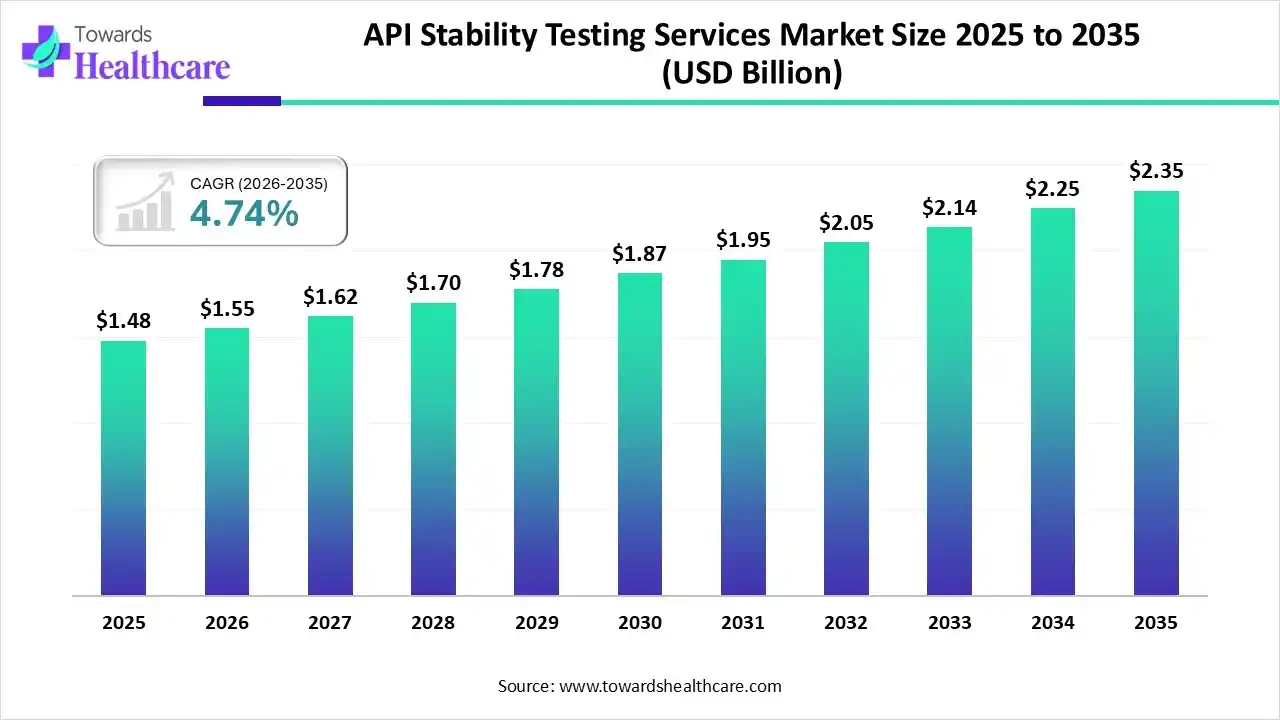
The global API stability testing services market size was estimated at USD 1.48 billion in 2025 and is predicted to increase from USD 1.55 billion in 2026 to approximately USD 2.35 billion by 2035, expanding at a CAGR of 4.74% from 2026 to 2035.
The "Biologics Boom" and a massive wave of global regulatory updates (specifically ICH Q1A to Q1F revisions) that require more rigorous, multi-year real-time and accelerated data for drug substances are driving the demand for API stability testing services. Growing diseases, AI integration, and new stability testing platform launches are also promoting the market growth.
The API stability testing services market is driven by stringent regulatory requirements for drug substances before they are formulated into finished products. The API stability testing services encompass specialized laboratory services utilized to evaluate and monitor the API stability. Moreover, these services help in ensuring the product’s safety, efficacy, and quality throughout its shelf life.
API stability testing services check how drug ingredients hold up over time. Tight government rules drive this market to ensure medicines stay safe and work correctly. Right now, companies are moving fast toward digital tracking and advanced software to predict shelf life much more quickly. They are also outsourcing this work to specialized labs to cut down on costs. The demand is booming because more generic drugs are hitting the market, and complex biopharma products need highly specific storage. Moving forward, the industry expects massive long-term growth as strict global guidelines require extensive batch testing. Asia is leading the charge as a massive hub for affordable, high-quality drug testing.
The use of AI in the API stability testing services market is increasing, where it analyzes large datasets of the API, ensuring their stability and quality. Its algorithms also analyze the degradation pathways, reducing the reliance on real-time stability studies. It also detects the product variations, monitors the product’s lifecycle, and helps in the optimization of stability studies under various stress conditions.
Expanding Clinical Pipeline
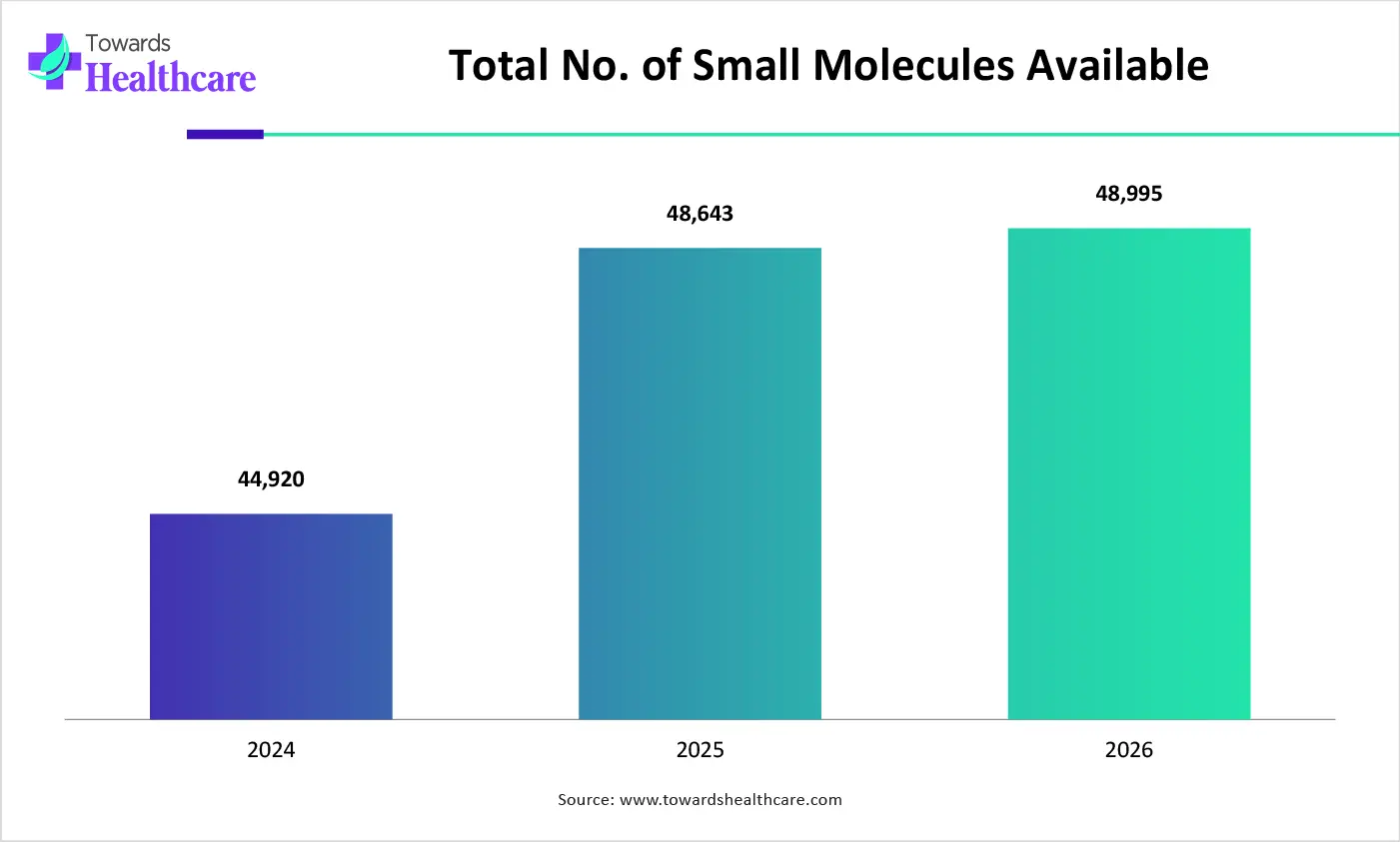
Different types of small molecules, large molecules, biologics, biosimilars, and advanced therapies are being developed, which is increasing the demand for stability data, leading to increased use of API stability testing services.
Technological Advancements
Various digital tools and analytical techniques are being developed and utilized for automated analysis and remote monitoring, where automated stability chambers are also being utilized to enhance the product reproducibility.
Growing Outsourcing Trends
The growing R&D activities, stringent regulations, and investment are leading to new collaborations with CROs and CDMOs to leverage their end-to-end and affordable API stability testing services.
| Key Elements | Scope |
| Market Size in 2026 | USD 1.55 Billion |
| Projected Market Size in 2035 | USD 2.35 Billion |
| CAGR (2026 - 2035) | 4.74% |
| Leading Region | North America by 42.2% |
| Historical Data | 2020 - 2023 |
| Base Year | 2025 |
| Forecast Period | 2026 - 2035 |
| Measurable Values | USD Millions/Units/Volume |
| Market Segmentation | By Test Type, By Molecule Type, By End-User, By Region |
| Top Key Players | Eurofins Scientific, SGS S.A., WuXi AppTec, Charles River Laboratories, Intertek Group PLC, Catalent, Inc., LabCorp, Thermo Fisher Scientific, PPD, Vimta Labs |
Which Test Type Segment Held the Dominating Share of the Market in 2025?
The accelerated stability testing segment held the dominant share of approximate 42% in the API stability testing services market in 2025, as they utilized stress conditions (high temperature/humidity) to predict shelf-life and degradation pathways quickly. Moreover, their affordability, faster results, and compliance with regulatory standards also increased their adoption rates.
Real-time Stability Testing
The real-time stability testing segment is expected to show the highest growth during the predicted time, as it is essential for regulatory approvals and validation of product shelf life. They also provide real-world performance, actual storage conditions, and ensure product safety and efficacy, which is increasing their use.
Why Did the Small Molecules Segment Dominate in the Market in 2025?
The small molecules segment led the API stability testing services market with approximate 58% share in 2025, due to the massive generic drug pipeline. The API stability testing services were also utilized for stability and storage assessments, where their regulatory compliance also encouraged their use.
Large Molecules
The large molecules segment is expected to show the fastest growth rate with 12.1% CAGR during the upcoming years, as they require ultra-cold storage ($-80$°C) and complex analytical methods (capillary electrophoresis, bioassays) that command 3x higher service fees. The growing chronic diseases are increasing the demand, where all these factors are promoting the use of API stability testing services.
What Made Pharmaceutical & Biotech Companies the Dominant Segment in the Market in 2025?
The pharmaceutical & biotech companies segment held the dominant share of approximately 63.6% in the API stability testing services market in 2025, driven by their increased reliance on "Stability-as-a-Service" to avoid the cost of building compliant in-house stability suites. Additionally, stringent regulations and growth in R&D investments also increased the use of API stability testing services.
Contract Development & Manufacturing Organizations (CDMOs)
The contract development & manufacturing organizations (CDMOs) segment is expected to show the highest growth during the forthcoming years, due to growing outsourcing trends. The CDMOs offer affordable in-house stability testing infrastructure and expertise, which is increasing their collaborations, where their scalable services and regulatory compliance are also attracting the industries.
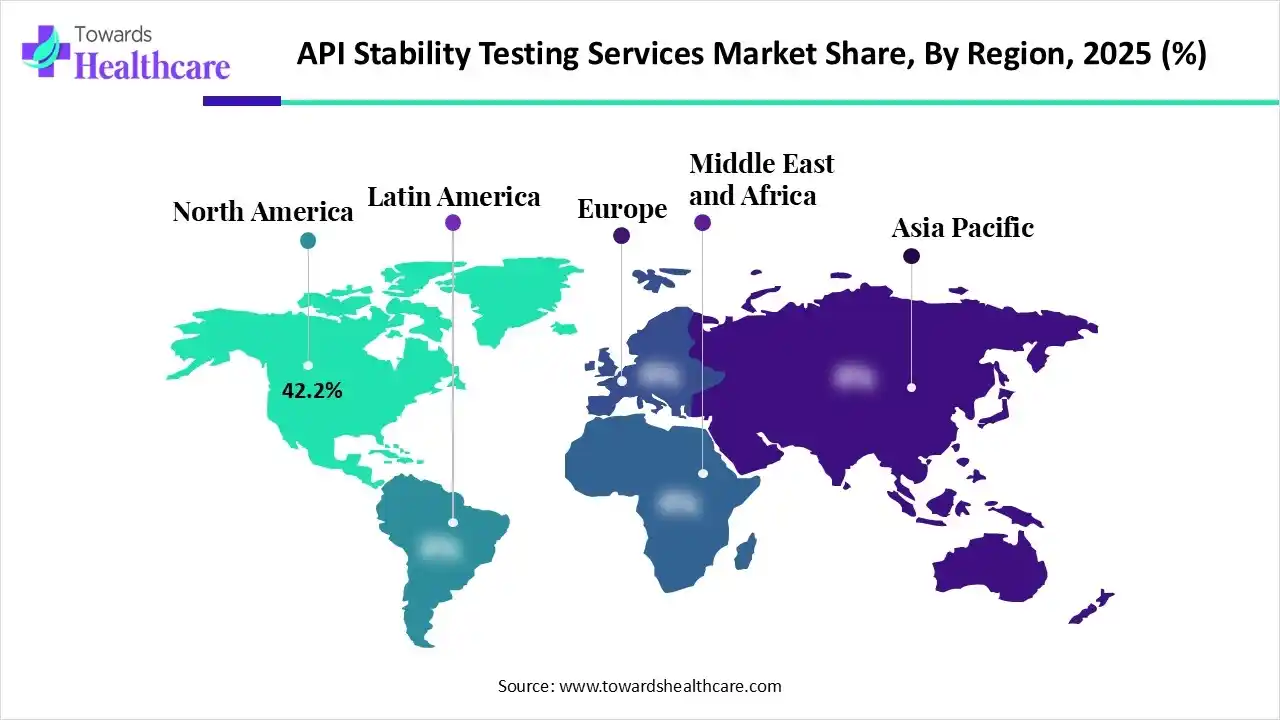
North America dominated the API stability testing services market with approximate 42.2% in 2025, due to the presence of advanced pharmaceutical and biotech industries, which contributed to the increased development of various medications, increasing the use of API stability testing services. Stringent regulation and enhanced R&D activities also increased their use, where the growth in outsourcing trends also contributed to the market growth.
U.S. Market Trends
The growth in the R&D investment and presence of advanced pharmaceutical biotech companies are increasing the use of API stability testing services in the U.S. The increasing advancement in biologics and biosimilars is also increasing their demand. Additionally, growing stringent regulations and outsourcing trends are also increasing their demand.
Canada Market Trends
Canada’s growth stems from strict Health Canada regulations and an expanding biomanufacturing sector. The government heavily invests in local clinical trials and domestic vaccine production capabilities. This creates a continuous need for robust stability testing of advanced biologic ingredients. Additionally, cold-chain infrastructure development is booming across provinces like Ontario and Quebec. This directly helps specialized laboratories accommodate the strict, ultra-low temperature storage demands required for modern, highly complex therapeutic drugs.
Asia Pacific is expected to host the fastest-growing API stability testing services market with 9.1% CAGR during the forecast period, due to expanding pharmaceutical manufacturing capabilities, driving the production of generic products, and increasing the use of API stability testing services. The expanding CDMOs and CROs ecosystem is also increasing its demand, where the growing government support is also enhancing the market growth.
China Market Trends
The expanding API manufacturing hubs and pharmaceutical industries in China are propelling the development of small molecules and generic APIs, which is increasing the demand for API stability testing services. Additionally, the growing government initiatives and reliance on CDMOs are also increasing their use.
India Market Trends
India is growing rapidly as the world's primary provider of affordable generic medicines. Stringent global regulatory audits from the FDA and EMA force domestic manufacturers to outsource stability testing to specialized local laboratories. The country boasts a massive network of contract research organisations offering high-capacity, cost-effective testing services. Furthermore, increased government funding for local pharma hubs and advanced biosimilar development is accelerating the overall need for complex analytical batch testing.
Europe is expected to grow significantly in the API stability testing services market during the forecast period, due to the presence of a stringent regulatory framework, which is driving the use of API stability testing services to ensure product safety and effectiveness. The presence of robust industries and healthcare infrastructure is also increasing the use of biologics, encouraging their advancements, which ultimately promotes market growth.
UK Market Trends
The presence of a well-developed pharmaceutical and biotech hub in the UK is increasing the use of API stability testing services due to growing demand and adoption of biologics and biosimilars. The stringent regulations are also increasing their use, where the growing R&D and outsourcing trends are also encouraging their demand.
Germany Market Trends
Germany is growing significantly due to its highly sophisticated pharmaceutical ecosystem and strict adherence to EMA guidelines. The country focuses heavily on innovative precision medicines, cell therapies, and complex biologics. These advanced treatments require specialized testing instruments and ultra-low temperature storage environments. To manage high operational costs, German pharmaceutical developers increasingly outsource these highly complex testing procedures to local contract research laboratories equipped with fully automated data tracking systems today.
R&D
Clinical Trials and Regulatory Approvals
Patient Support and Services
| Companies | Headquarters | API Stability Testing Services |
| Eurofins Scientific | Luxembourg City, Luxembourg | ICH-compliant stability services |
| SGS S.A. | Geneva, Switzerland | Comprehensive API testing following ICH Q1A to Q1F guidelines |
| WuXi AppTec | Shanghai, China | Flexible stability programs for small molecules and biologics |
| Charles River Laboratories | Wilmington, U.S. | Tailored stability studies with integrated analytical support |
| Intertek Group PLC | London, UK | cGMP stability testing |
| Catalent, Inc. | Somerset, U.S. | End-to-end stability, storage, and analytical testing |
| Labcorp | Burlington, U.S. | Large-scale stability testing with clinical development expertise |
| Thermo Fisher Scientific | Waltham, U.S. | Integrated API development and stability testing |
| PPD | Wilmington, U.S. | Tailored stability solution and consultations |
| Vimta Labs | Hyderabad, India | Large storage capacity for clinical, transport, and freeze-thaw cycling stability studies |
Strengths
Weaknesses
Opportunities
Threats
In March 2026, “This investment marks a significant milestone for our team and our clients,” said Dr. Scott Wharry, Associate Director of Custom and Flow Chemistry at Almac Sciences. “By combining cGMP flow hydrogenation with our established expertise in cryogenic organometallic chemistry and large-scale packed-bed hydrogenation, we are offering continuous processing capability today. These technologies not only improve safety and efficiency but also align with the industry’s drive toward sustainability and innovation.”
By Test Type
By Molecule Type
By End-User
By Region





Principal Consultant
Rohan Patil is a seasoned market research professional with over 5+ years of focused experience in the healthcare sector, bringing deep domain expertise, strategic foresight, and analytical precision to every project he undertakes.
Learn more about Rohan Patil

Reviewed By
Aditi Shivarkar is a seasoned professional with over 14 years of experience in healthcare market research. As a content reviewer, Aditi ensures the quality and accuracy of all market insights and data presented by the research team.
Learn more about Aditi Shivarkar