Pipeline Programs

CGT Companies Tracked

Manufacturing Facilities


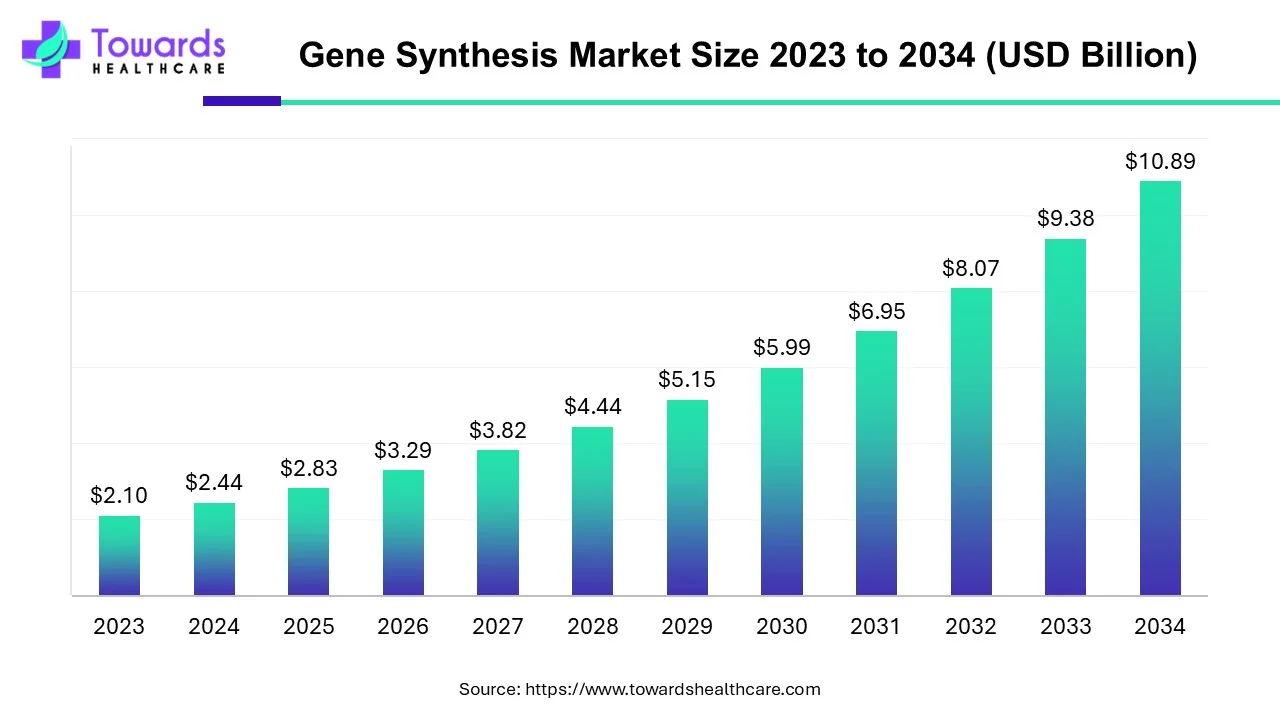
The gene synthesis market size is anticipated to grow from USD 2.83 billion in 2025 to USD 10.89 billion by 2034, with a compound annual growth rate (CAGR) of 16.14% during the forecast period from 2025 to 2034.
Gene synthesis is a dependable and economical technique that yields 100% sequence correctness in bespoke DNA constructs. DNA synthesis is a potent molecular biology method that has revolutionized modern biology and is quickly emerging as an essential component of the research workflow. Gene synthesis is often used in research and development projects in a variety of industries. The gene synthesis market has grown as a result of the growing uses of synthetic biology. Gene synthesis services are being outsourced to specialized organizations by a large number of university and research institutions, small biotech startups and firms. The market for gene synthesis has drawn large governmental and private investments. Gene synthesis infrastructure and technologies are receiving significant funding from governments, universities, and biotechnology corporations. Funding and research grants have made it easier to produce new products and upgrade technology, which has increased gene synthesis market growth.
Gene synthesis has made an incredible contribution to the quickly changing field of drug research, from the creation of vaccines to new therapeutic targets to biologics. Biology research has been changed by gene synthesis technology. Scientists may now design or reprogram entire genomes and cells rather than being restricted to the traditional techniques of modifying one gene at a time. Technologies and methods for synthesizing DNA are rapidly establishing themselves as essential components of contemporary molecular biology and are essential to the study of synthetic biology. It is no longer an idea that complete genes, new genetic pathways, or even entire genomes may be synthesized.
The ethical considerations surrounding the use of gene drives and genetic engineering in conservation are often categorized as including risk assessment and management, opportunity costs, risk and benefit distributions, public acceptability and participation, and oversight. Although they are crucial, the ethical issues go beyond them since genetic engineering has the ability to drastically change the beliefs, methods, and values associated with conservation.
There are now a lot of novel genetic illnesses being reported in the medical literature, in addition to the well over 6,000 established genetic disorders. There are several uncommon genetic diseases that have received far less attention and may not have been properly identified. Numerous substances found in both artificial and natural surroundings have the potential to damage a person's DNA. These agents may include alcohol, combustion products, viruses, and substances produced by fungi, bacteria, or plants; they may also include industrial chemicals, oxygen, UV and ionizing radiation, and combustion products. Owing to the extended half-lives of many of these substances, humans have developed defensive mechanisms to mitigate their negative effects as well as methods for repairing the harm that cannot be prevented. A multitude of variables are driving up the incidence of genetic abnormalities, which in turn is driving up demand for gene synthesis.
For instance,
By method, the solid-phase synthesis segment held the largest gene synthesis market share in 2025. Combinatorial chemistry, oligonucleotide, oligosaccharide, and peptide synthesis all make extensive use of solid-phase synthesis. Solid-phase synthesis offers several benefits for creating intricate peptide-based macrocycles. Easy purification, quick production of linear peptide intermediates, and experience with large-scale peptide synthesis are the general benefits of solid-phase synthesis. Simple equipment, ease of use, a single synthesis process, uniform and controllable particle sizes, minimal pollution, and the ability to prevent or lessen the hard agglomeration phenomenon—which is easily observed in the liquid phase—are just a few of the solid phase synthesis method's many notable benefits. Its cost is also cheap.
By service, the antibody DNA synthesis segment dominated the gene synthesis market in 2025. Various modified antibody molecules for study, diagnosis, and therapy have been developed as a result of advancements in recombinant monoclonal antibody (rAb) technology. A number of laborious processes are involved in developing antibody therapies, such as generating lead candidate genes, cloning them into vectors, and amplifying plasmids in Escherichia coli cells. The effective in vitro production of synthetic DNA products has been made possible by recent advancements in synthetic biology and automation. Recombinant antibodies (rAbs) have a wide range of uses in toxicological and biological research. Recombinant monoclonal antibodies are frequently employed as biochemical indicators and diagnostic instruments or in the development of potent therapeutic interventions that target autoimmune diseases, cancer, and a wide range of other illnesses.
By service, the viral DNA synthesis segment is estimated to grow at the fastest rate during the forecast period. The ability to chemically synthesize viral genomes offers researchers a novel and potent tool for examining the expression, function, and pathogenic potential of viral genes. If there's no natural viral template available, this approach comes in quite handy. On a scale that would be hard to do with traditional molecular biology techniques, it also permits the genetic manipulation of viral genomes.
By application, the gene & cell therapy development segment held the largest share of the gene synthesis market in 2025. Because genes may be artificially created for insertion or replacement, gene synthesis has the potential to completely transform the way tailored medications are administered. Patient care may be completely transformed by personalized medication. Using pharmacogenetic and pharmacogenomic data, this therapeutic approach recommends medications tailored to each patient. The foundation for a system that potentially helps millions of people is being laid by innovations in customized healthcare. Patient-centered best practices, actionable precision diagnostics, and effective precision therapy must be combined to scale personalized care to a more accessible and standardized level.
By region, North America dominated the gene synthesis market in 2025. North America has a reputation for leading the market in the area when it comes to technical developments, research, and development. The market is growing at a large rate because of nations like the United States and Canada. Genetic problems are becoming more common and need both gene synthesis and gene therapy.
For instance,
U.S Market Trends
With about 40% of the worldwide synthetic biology business, the U.S. leads the world in this field. Due to this, the U.S. is in a strong position to establish industry standards, therefore raising the bar for acceptable practice and holding businesses accountable for negligence if they fall short of it. Due to its market dominance, the U.S. is able to take the initiative that ought to inspire other nations with developing synthetic biology businesses to follow suit. Companies that produce synthetic DNA have a strong incentive to make sure they can meet the demand for their product since the U.S. government is a major sponsor of life sciences research.
For Instance,
Canada Market Trends
Canada has a strong biotechnology research base, supported by universities, pharmaceutical companies, and government-backed research programs. Gene synthesis is increasingly used in drug discovery, genomics, and personalized medicine. Demand is also rising for faster DNA construction and automated workflows. Enzymatic synthesis offers new opportunities for local providers. Research centers can benefit from custom genes, gene libraries, and advanced DNA manufacturing services. Partnerships between biotechnology firms and academic institutions may further strengthen Canada’s synthetic biology capabilities and commercial applications.
By region, Asia Pacific is estimated to grow with the fastest CAGR during the forecast period. The market for gene synthesis is growing at a rapid rate, and the largest region is Asia Pacific. The market is expanding as a result of nations like South Korea, China, Japan, and India. These nations are demonstrating government investment in biotechnology, genetic engineering, agriculture, and healthcare, as well as technical advancements.
China Market Trends
China is rapidly expanding its gene synthesis capabilities. Large biotechnology investments support synthetic biology, genomic research, and biopharmaceutical development. Domestic companies are increasing production capacity and adopting automated synthesis platforms. Research and development remains a major application. Demand is also coming from precision medicine and genetic disease research. Opportunities are emerging in high-throughput synthesis, gene libraries, and lower-cost DNA production. Local manufacturing strength can support faster supply for pharmaceutical, academic, and industrial biotechnology users across China.
India Market Trends
India is one of the top 5 economies in the world and a major contributor to biotechnology and gene synthesis. The Indian government has launched a number of projects that support the expansion of the sector. The prevalence of genetic illnesses is rising in India as well, and gene synthesis will be necessary for both diagnosis and therapy. Rare genetic illnesses have gradually gained more attention in India in recent years, drawing the interest of researchers, medical professionals, and decision-makers.
Europe is considered to be a significantly growing area, due to the presence of key players and the rising adoption of advanced technologies. Key players, such as Eurofins Genomics, BioCat GmbH, and Macrogen Europe, are the major contributors to the market. The rising prevalence of rare, genetic disorders and cancer also prompts scientists to conduct gene synthesis research. Europe is estimated to have one-fifth of the global cancer cases. The increasing investments, collaborations, and mergers & acquisitions further potentiate market growth.
In October 2023, the French government awarded €10.4 million in grants to Astraveus SAS as part of the "Innovation in Biotherapies and Bioproduction" initiative. The initiative promotes excellence in research and manufacturing of biotherapies and enables the company to develop the Lakhesys platform.
UK Market Trends
The UK is building a strong gene synthesis ecosystem around synthetic biology and engineering biology. Government funding has supported DNA synthesis infrastructure and genome foundries. The Edinburgh Genome Foundry is designed to automate large DNA construct development for research and industry. Universities and startups are also testing new synthesis technologies. Opportunities are growing in automated workflows, synthetic genomes, therapeutics, and bioengineering. Collaboration between academic centers and biotechnology companies remains an important driver of innovation and technology commercialization across Britain.
Germany Market Trends
Germany stands out for its deep research network and established biotechnology industry. Universities, Max Planck institutes, and research clusters actively work in synthetic biology. Gene synthesis supports vaccine research, gene and cell therapy development, diagnostics, and molecular engineering. PCR-based enzyme synthesis is gaining attention alongside conventional methods. Government and research funding also strengthen innovation. Opportunities exist for automated DNA synthesis, bioinformatics, custom gene construction, and research services. Strong pharmaceutical infrastructure can help translate laboratory discoveries into commercial applications.
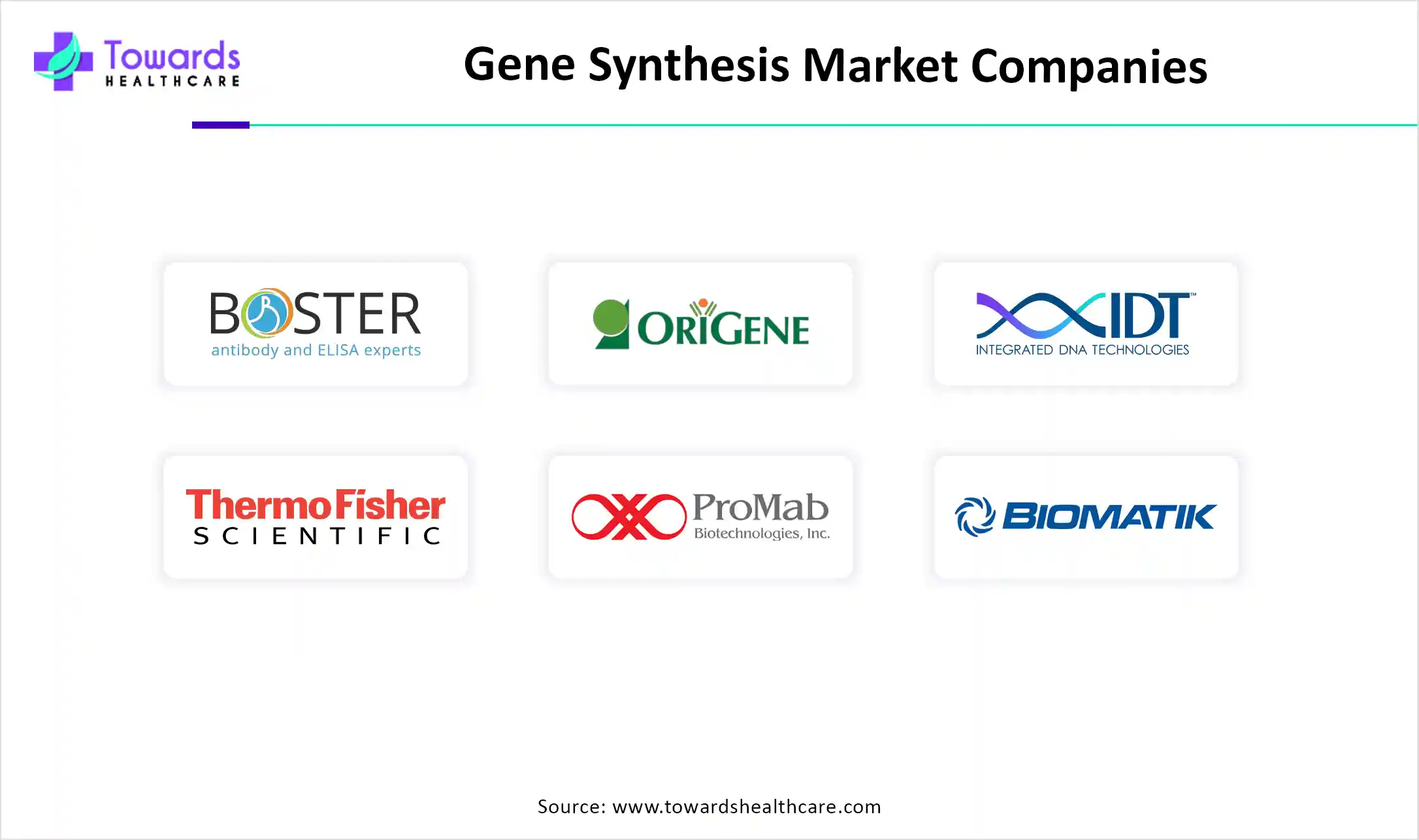
| Company Name | Twist Bioscience |
| Headquarters | California, U.S. |
| Pipeline | In January 2024, high-quality synthetic DNA may be supplied to consumers by Twist Bioscience Corporation thanks to its silicon platform. Today, the business said that bigger DNA preparations up to 1 milligram would now be available through Twist Express Genes, a new, industry-leading gene synthesis service. It will take five business days to complete shipping orders. |
| Company Name | Integrated DNA Technologies Inc. |
| Headquarters | Lowa, U.S. |
| Pipeline | In March 2024, Integrated DNA Technologies (IDT), a global provider of genomics solutions, is adding a new bespoke vector onboarding tool to its gene synthesis capabilities. Researchers who wish to expedite functional investigations with 100% sequence-verified clonal DNA and avoid internal cloning processes can utilize this user-friendly approach. Researchers may submit their vector sequence via IDT's website without needing to get in touch with a salesperson by utilizing the company's new gene synthesis custom vector onboarding tool. This eliminates needless back-and-forth communications. |
In August 2026, “Customers are navigating complex genomic programs that require speed, flexibility, and confidence at every stage of development,” said Jennifer Meade, president of Integrated DNA Technologies. “They need solutions that can evolve alongside their requirements without compromising quality, performance, or supply continuity. IDT is building that full spectrum of capabilities, and the connected system customers need to turn ambitious scientific ideas into lasting impact, with the speed, quality, scalability, and partnership needed to accelerate innovation and support program evolution over time.”
By Method
By Services
By Application
By Region



Principal Consultant
Payal Rabde is a Healthcare Market Research Analyst at Towards Healthcare Research & Consulting with 4+ years of experience in pharmaceuticals, biotechnology, medical devices, and life sciences.
Learn more about Payal Rabde

Reviewed By
Aditi Shivarkar is a seasoned professional with over 14 years of experience in healthcare market research. As a content reviewer, Aditi ensures the quality and accuracy of all market insights and data presented by the research team.
Learn more about Aditi Shivarkar