

Pipeline Programs

CGT Companies Tracked

Manufacturing Facilities


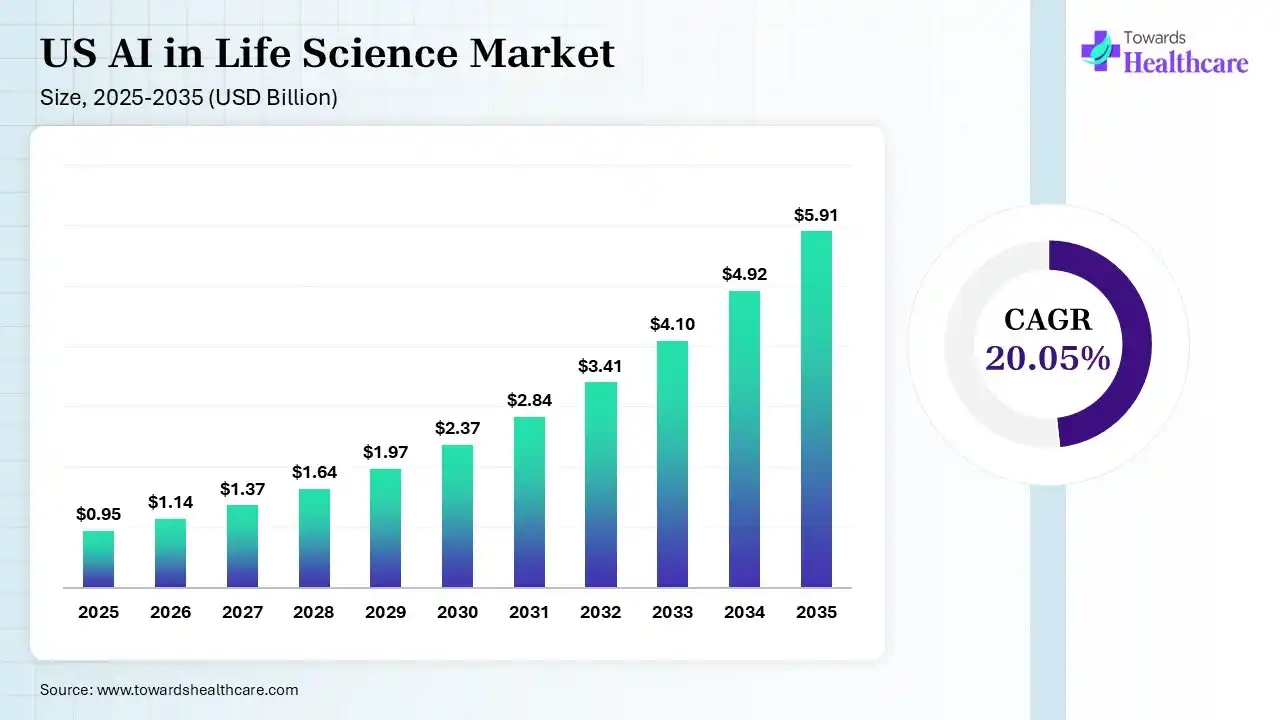
The U.S. AI in life science market size was estimated at USD 0.95 billion in 2025 and is predicted to increase from USD 1.14 billion in 2026 to approximately USD 5.91 billion by 2035, expanding at a CAGR of 20.05% from 2026 to 2035. The U.S. AI in life science market is increasing due to AI-based technology revolutionizing all aspects from drug discovery to clinical trials, targeted medicine, healthcare imaging, and medical care operations.
AI-based technology in life sciences supports organizations to reshape business models, modernize biopharma production, and improve everything from cognitive molecule research and clinical trial data movement to self-healing supply chain applications and product intelligence. AI-driven technology to different domains in the life sciences, involving drug discovery, marine biology, genomics, and education. AI-based technology encompasses the science and engineering behind creating intelligent machines capable of tasks that typically rely on human intelligence, like reasoning, learning, decision-making, and problem-solving. AI-based technology applications relate to healthcare data analysis for disease diagnostics and treatment planning with platforms. AI transforms drug discovery by improving many phases, involving chemical synthesis, drug design, polypharmacology, drug repurposing, and drug screening.
The U.S. AI in life science market continues to expand as companies adopt artificial intelligence to improve research, clinical development, precision medicine, and manufacturing. Growing use of generative AI, digital twins, and predictive analytics is helping organizations reduce development time and improve operational efficiency. Future opportunities are expected in personalized therapies, laboratory automation, and real-world evidence analysis. Government agencies continue supporting innovation through research funding, public-private partnerships, AI policy initiatives, and investments in advanced computing infrastructure. Collaboration among technology firms, universities, healthcare providers, and pharmaceutical companies is expected to strengthen innovation and accelerate the commercialization of AI-driven life science solutions.
Clinical Trial Optimization:
Optimizing clinical trials to achieve increasing precision, reduce challenges, rapid timelines, and sU.S.tainable expense savings, while maintaining the increasing quality standards. It enhances trial design, speeds up patient recruitment, optimizes site selection, and improves protocol compliance.
Precision Medicine:
Precision medicine aims to offer targeted treatment and encourage multimodal data analysis U.S.ing novel AI/ML strategies to understand disease mechanisms and discover important digital biomarkers.
| Table | Scope |
| Market Size in 2026 | USD 1.14 Billion |
| Projected Market Size in 2035 | USD 5.91 Billion |
| CAGR (2026 - 2035) | 20.05% |
| Historical Data | 2020 - 2023 |
| Base Year | 2025 |
| Forecast Period | 2026 - 2035 |
| Measurable Values | USD Millions/Units/Volume |
| Market Segmentation | By Component, By Technology, By Application, By Deployment Mode, By Enterprise Size, By Delivery Mode |
| Top Key Players | Pfizer, Sanofi, Novartis & Eli Lilly, AstraZeneca, Insilico Medicine |
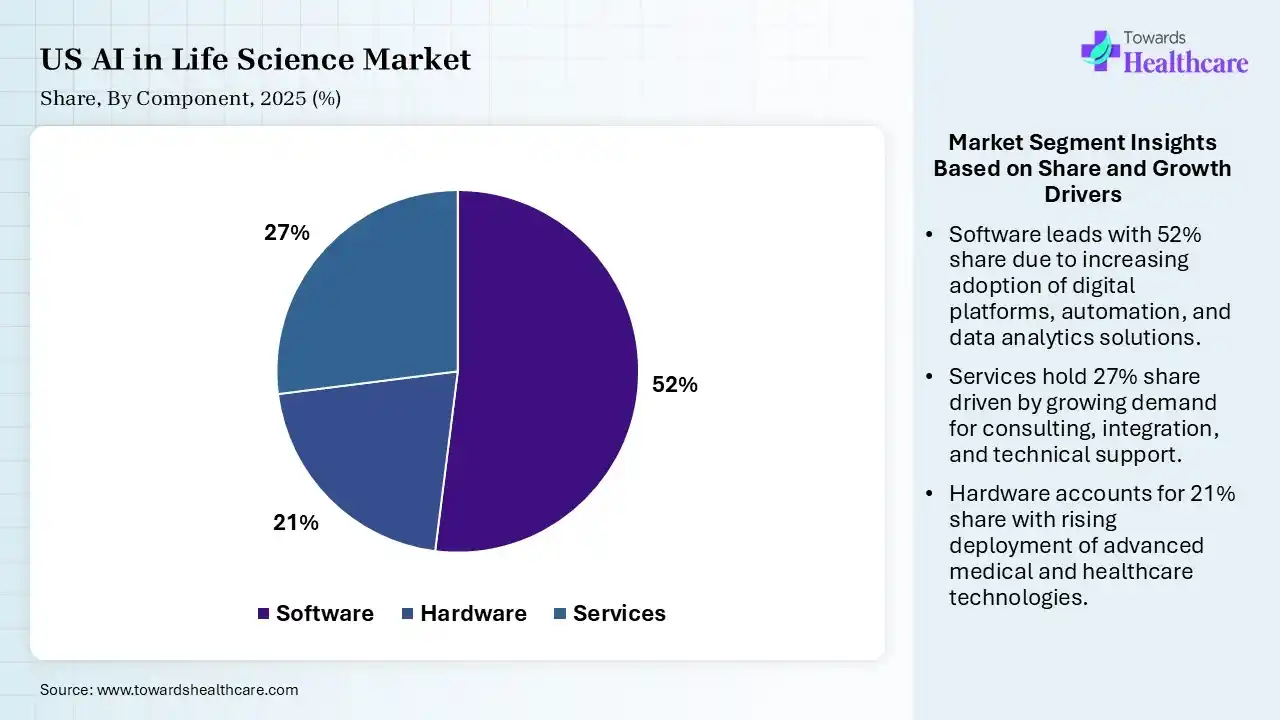
| Segment | Share 2025 (%) |
| Software | 52% |
| Hardware | 21% |
| Services | 27% |
The Software Segment Led the U.S. AI in Life Science Market in 2025
The software segment contributed the largest market share of 52% in 2025, as life science software products are being used to mechanize a significant part of the consumer’s workflow via the introduction of algorithms to simplify their workload. Modern software for life sciences provides real-time analysis and dashboards, and warnings so decision-makers respond surely, in real-time.
The services segment held a significant share of 27% and is expected to grow at the fastest CAGR during the forecast period. Life sciences cloud services provide significant positive transformation, involving lower physical work, increased productivity, more capabilities, useful insights, and a better consumer experience. Life sciences solutions support driving innovation, navigating risks, and achieving growth in the medical care and life sciences fields.
The hardware segment held a significant share of 21% in the market, as hardware technology helps to automate production systems, enabling healthcare tool manufacturers to create advanced-quality products while adhering to organizations' standards. This technology speeds up discovery, confirms precise experimental control, and cuts operational expenses.
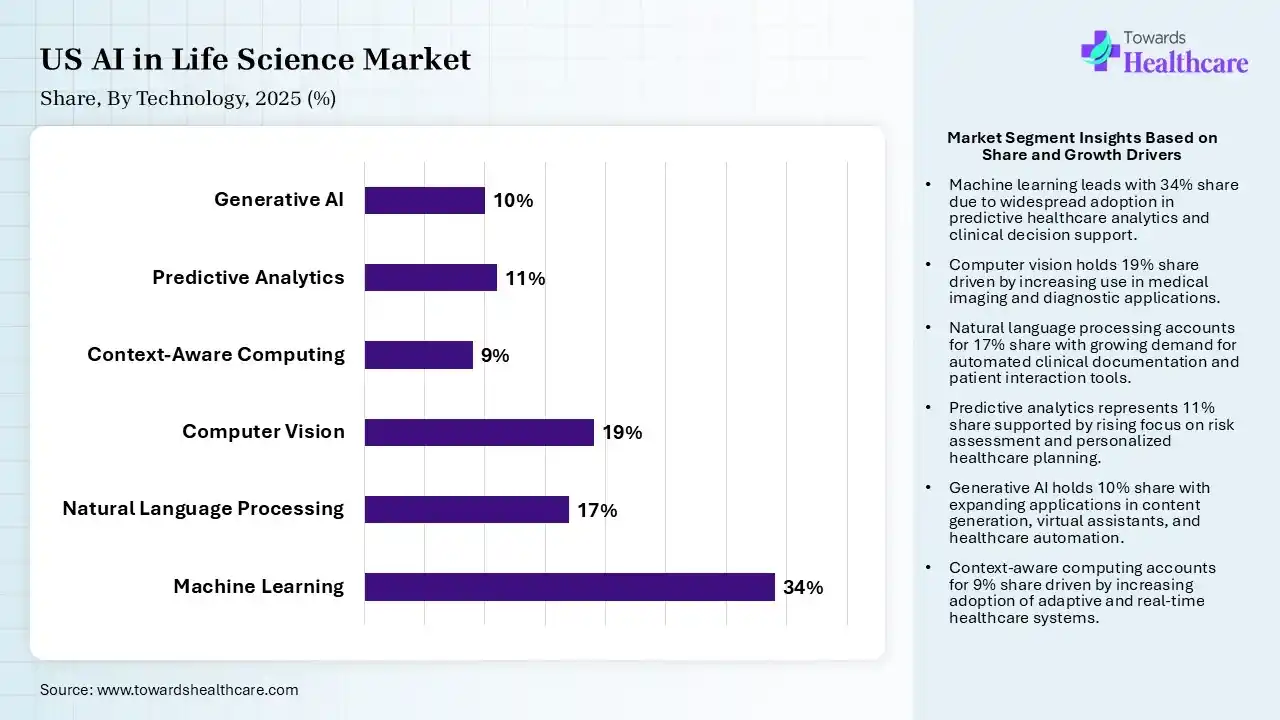
| Segment | Share 2025 (%) |
| Machine Learning | 34% |
| Natural Language Processing | 17% |
| Computer Vision | 19% |
| Context-Aware Computing | 9% |
| Predictive Analytics | 11% |
| Generative AI | 10% |
Machine Learning Segment Led the U.S. AI in Life Science Market in 2025
The machine learning segment contributed the largest market share of 34%, as machine learning has the strength to transform patient results, improve the quality of care, modernize medical care delivery, and, more significantly, make healthcare more accessible and affordable. Machine learning supports research institutions, organizations, and start-ups to innovate and create transformative services across the medical care sector.
The computer vision segment held a significant share of 19% of the market, as CVs in healthcare improve diagnostics, primary diagnosis of health conditions, and advanced treatment approaches. CV systems in medical care are advantageous for both medical personnel and their patients. CV assists physicians in making accurate diagnoses.
The natural language processing segment held a significant share of 17% of the U.S. AI in life science market, as this technology is applied in the medical indU.S.try to keep healthcare records consistent. Speech recognition technology converts spoken or handwritten notes into structured electronic health records. NLP can also be used to examine existing healthcare records.
The generative AI held a significant share of 10% of the market and is expected to grow at the fastest CAGR during the forecast period. This type of AI in life sciences authorizes scientists to accelerate the drug development system, design tailored therapeutics, and gain a significant understanding of challenging biological technology. Generative AI applications in life sciences have evolved as a transformative force, playing a significant role in drug discovery, genomics, and medical care.
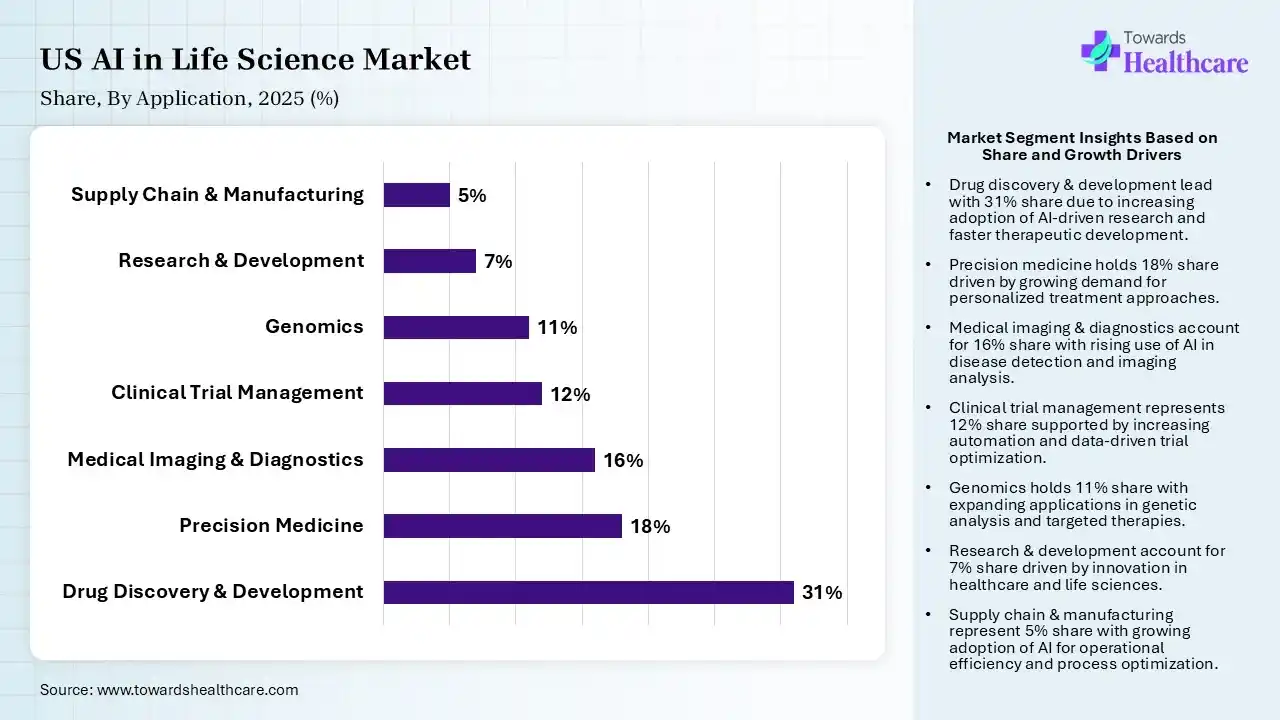
| Segment | Share 2025 (%) |
| Drug Discovery & Development | 31% |
| Precision Medicine | 18% |
| Medical Imaging & Diagnostics | 16% |
| Clinical Trial Management | 12% |
| Genomics | 11% |
| Research & Development | 7% |
| Supply Chain & Manufacturing | 5% |
The Drug Discovery & Development Segment led the U.S. AI in Life Science Market in 2025
The drug discovery & development segment held a significant share of 31% in the market. Artificial intelligence (AI) has the potential to transform the drug discovery process, providing enhance effcectiveness, precision, and speed. Artificial intelligence (AI) has transformed drug discovery and advancement by speeding up timelines, lowering expenses, and growing success rates.
The precision medicine segment held a significant 18% share of the market, as AI-based technology improves precision medicine by analyzing massive datasets to deliver rapid, more precise diagnoses and targeted treatments. AI-driven precision medicine offers a framework for assessing your organization's precision medicine AI-based maturity levels.
The medical imaging & diagnostics segment held a significant share of 16% in the U.S. AI in life science market, as AI-driven technology rationalizes data management, automates system validation, and shortens government workflows. AI-based technology for healthcare diagnosis and medical care is not at risk of being taken over by machines.
The genomics segment contributed the largest market share of 11%, and is expected to grow at the fastest CAGR during the forecast period, as AI technology screens a patient's genomic data over time to evaluate treatment efficiency and detect the development of resistance or relapse. AI-based technology is significant in genomics as it allows scientists to analyse massive and complex genomic data more effectively and precisely than before.
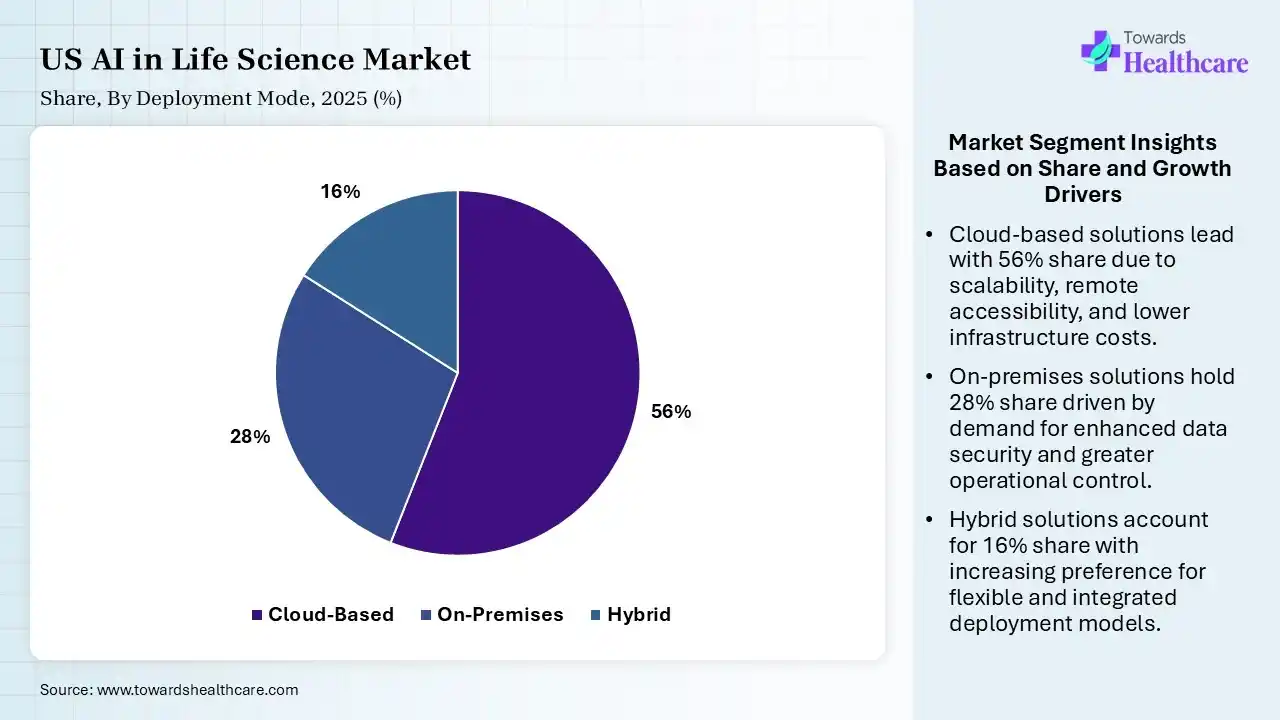
| Segment | Share 2025 (%) |
| Cloud-Based | 56% |
| On-Premises | 28% |
| Hybrid | 16% |
The Cloud-Based Segment led the U.S. AI in Life Science Market in 2025
The cloud-based segment contributed the largest market share of 56%, and is expected to grow at the fastest CAGR during the forecast period. It streamlines data management, powers system validation, and streamlines supervisory workflows. Cloud services give life sciences organizations a flexible way to manage data storage, removing the requirement for costly investments in physical data centers and servers.
The on-premises segment held a significant share of 28% in the U.S. AI in life science market, as on-premises storage includes hosting patient information and servers in its own physical environment. This provides comprehensive control over patients' data, making it a significant choice for businesses with strict security or compliance requirements.
The hybrid segment held a significant share of 16% in the market, as hybrid work offers support to improve well-being, economic condition, and mobility, allowing lower commuting costs and more autonomy in how employees work. Hybrid work environments often technologically allow an adaptation that lends itself to partnering in multiple locations.
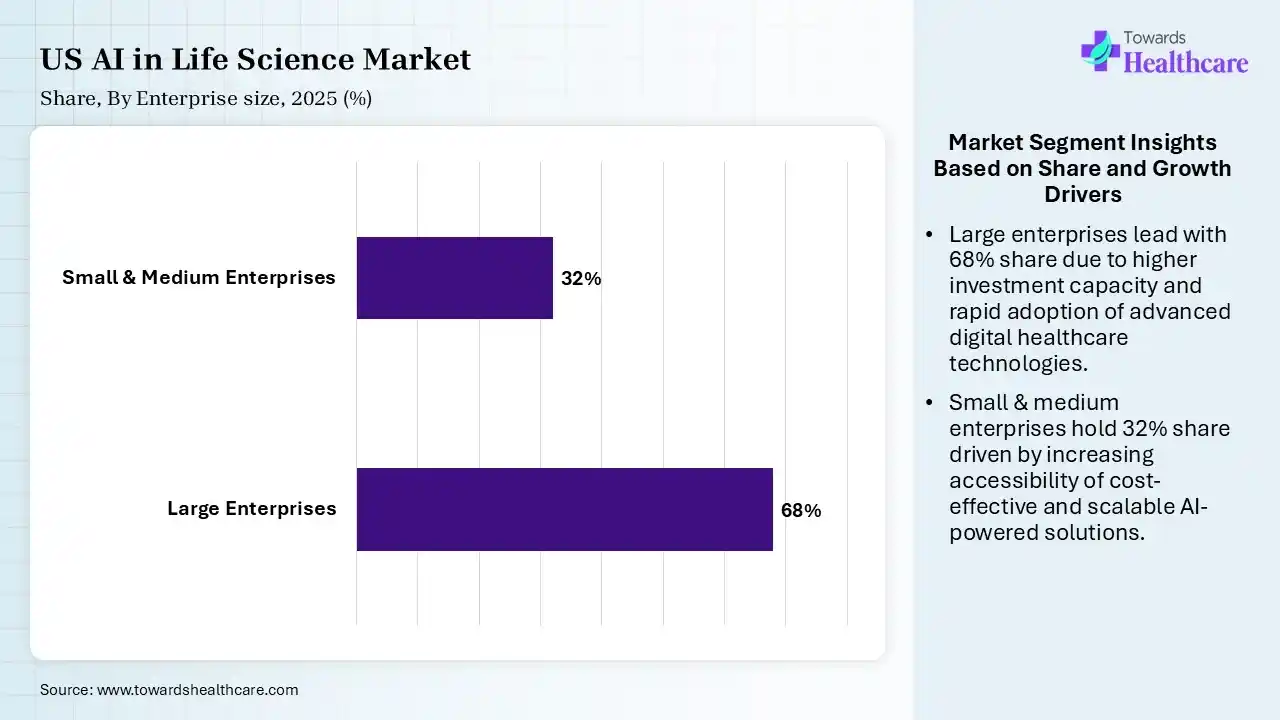
| Segment | Share 2025 (%) |
| Large Enterprises | 68% |
| Small & Medium Enterprises | 32% |
The Large Enterprises Segment led the U.S. AI in Life Science Market in 2025
The large enterprises segment contributed the largest market share of 68%, as AI-based technology is transforming life sciences by accelerating therapeutics discovery, enhancing diagnostics, streamlining healthcare trials, targeting treatment plans, and allowing more exact data analysis. Artificial intelligence analyzes vast data in real time, offering valuable insights for informed decision-making.
The small & medium enterprises segment held a significant share of 32% in the market, and is expected to grow at the fastest CAGR during the forecast period. AI-based technologies have the strength to significantly enhance operational effectiveness, product growth, consumer engagement, and competitive benefits for SMEs. AI-based technologies are driving adoption in SMEs and examining their various U.S. applications that contribute to boosted productivity, enhanced decision-making, and novelty.
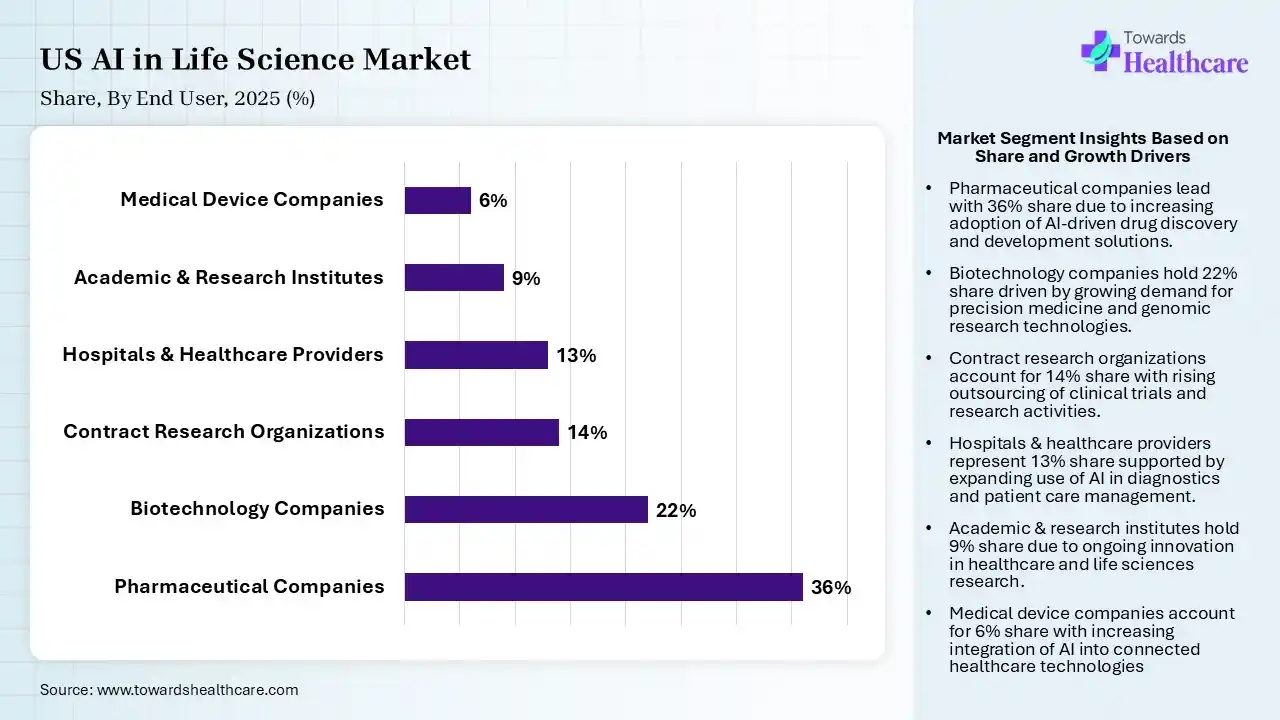
| Segment | Share 2025 (%) |
| Pharmaceutical Companies | 36% |
| Biotechnology Companies | 22% |
| Contract Research Organizations | 14% |
| Hospitals & Healthcare Providers | 13% |
| Academic & Research Institutes | 9% |
| Medical Device Companies | 6% |
The Pharmaceutical Companies Segment led the U.S. AI in Life Science Market in 2025
The pharmaceutical companies segment contributed the largest market share of 36%, as AI-driven strategies in drug research and advancement provide the strength to streamline and expedite the identification, optimization, and design of new therapeutic products. AI-based systems predict drug toxicity by analyzing the chemical structure and features of compounds.
The biotechnology companies segment contributed the largest market share of 22%, as AI-based technology authorizes life sciences companies to quickly process massive biological datasets, detect promising therapeutic targets, and expedite the advancement process, significantly saving precious time. time and resources. AI-based technology is renovating the biotech sector by making processes earlier, more precise, and significantly scalable in sectors such as genetic engineering.
The contract research organizations segment contributed the largest market share of 14%, as contract research organizations are using AI-based technology to accelerate the search for novel drug discovery. CROs also use AI-based technology to speed up preclinical drug discovery, modernize clinical trial execution, automate regulatory compliance, and heighten real-world data (RWD) analysis.
The hospitals & healthcare providers segment contributed the largest market share of 13%, as AI-driven robot-based surgeries, cybersecurity, patient management, and fraud identification in various U.S. other areas in healthcare areas. Hospitals U.S.e artificial intelligence to improve bed allocation, targeted scheduling, and healthcare supply chain organization.
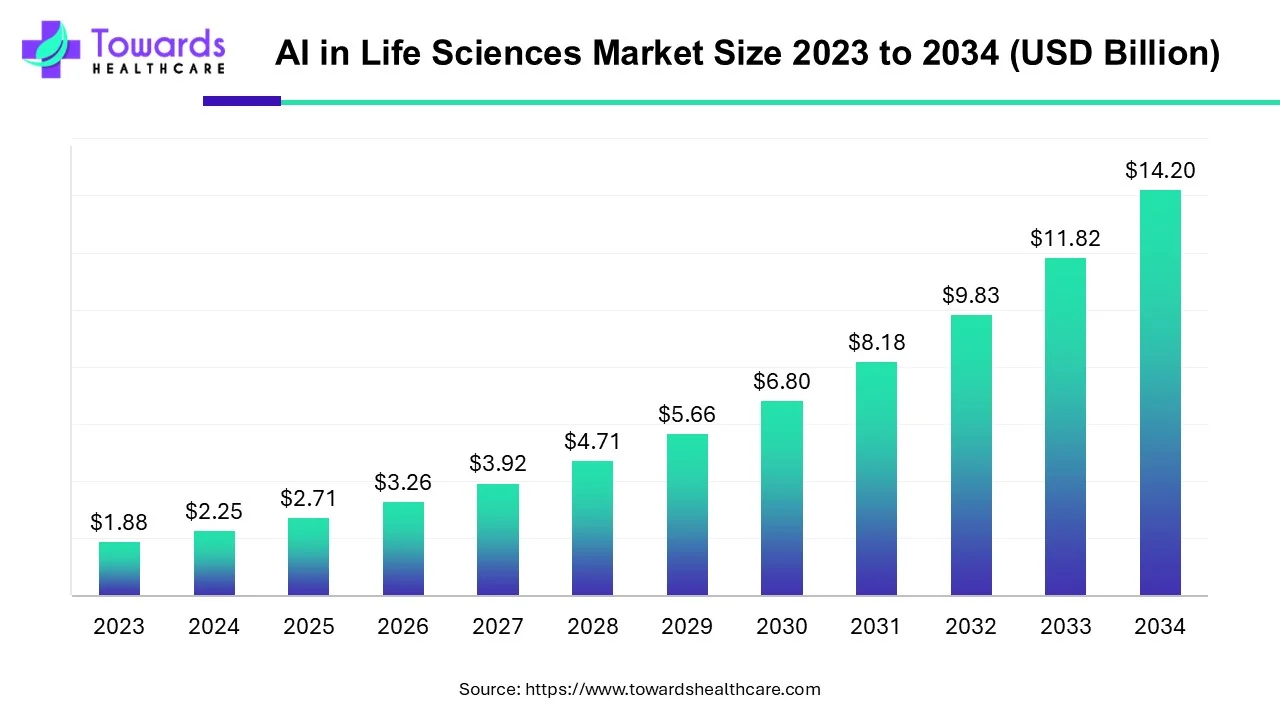
The global artificial intelligence in life sciences market size was calculated at USD 2.71 billion in 2025, to reach USD 3.26 billion in 2026 is expected to be worth USD 17.08 billion by 2035, expanding at a CAGR of 20.21% from 2026 to 2035
The Northeast remains a leading hub because of its strong pharmaceutical industry, renowned universities, and advanced biomedical research centers. The West Coast continues to drive innovation through technology companies, AI startups, and biotechnology clusters that encourage rapid product development. The Midwest is witnessing steady growth with increasing investments in healthcare technology, medical research, and manufacturing facilities. Southern states are expanding their presence through supportive business policies, rising healthcare infrastructure investments, and growing biotechnology parks. Texas and North Carolina are attracting life science companies with skilled talent and research collaborations. Meanwhile, the Mountain and Southwest regions are gaining attention as emerging innovation centers, supported by expanding digital health ecosystems, government-backed research initiatives, and increasing adoption of AI across healthcare and life science organizations.
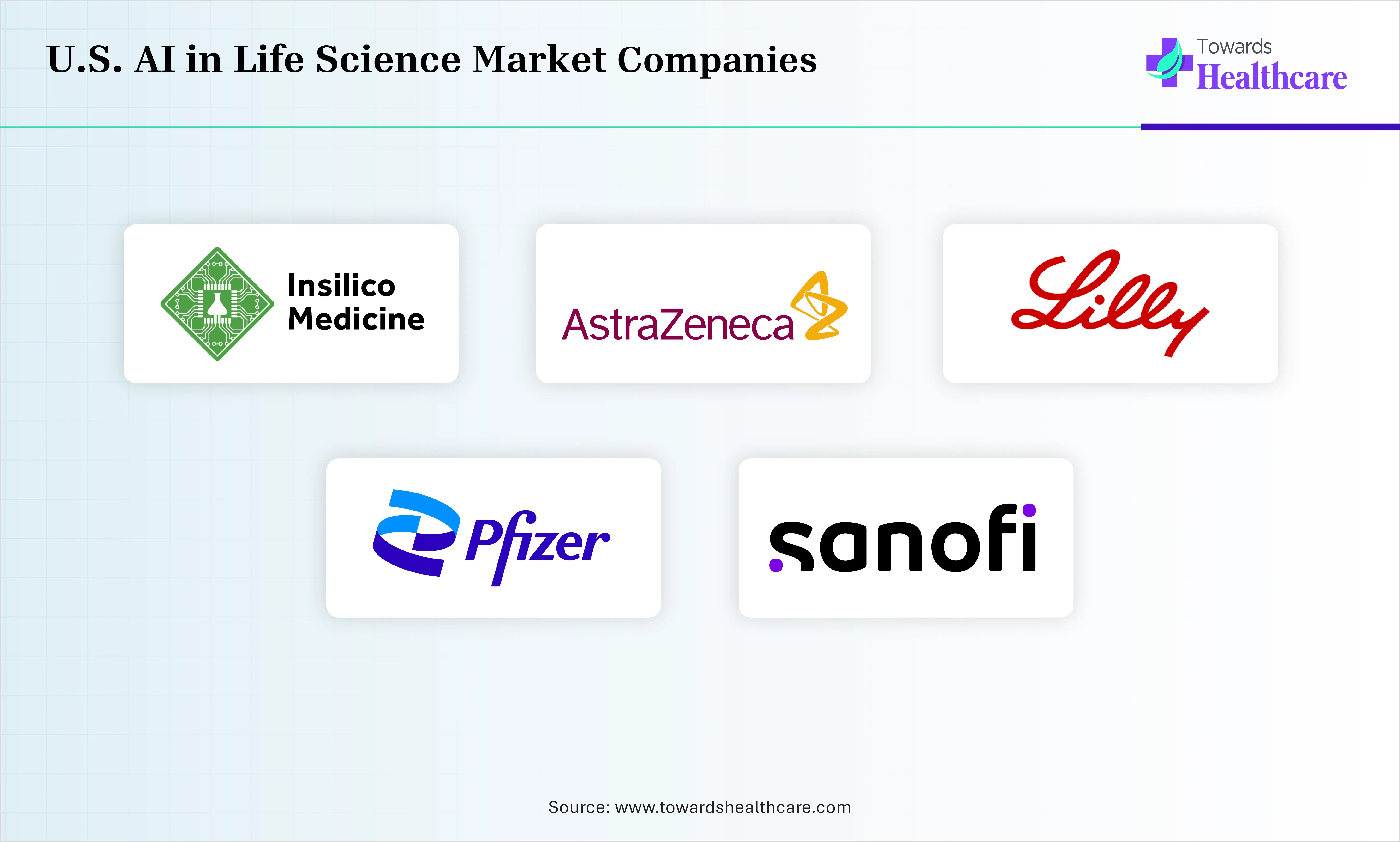
| Company | Headquarters | Latest Update |
| Pfizer | United States | Pfizer developed the COVID-19 vaccine quickly, leveraging AI-based drug discovery's potential despite the low 12% success rate of drugs in clinical trials. |
| Sanofi | United States | Sanofi's digital transformation accelerates drug discovery, clinical development, and personalized patient care, reducing time to therapy. |
| Novartis & Eli Lilly | United States | Eli Lilly exclU.S.ive global license for the advancement, manufacturing, and commercialisation of new oral therapeutics in preclinical development for some indications. |
| AstraZeneca | United States | AstraZeneca is leveraging digital twins, surrogate AI-based models, and agentic AI-driven systems to speed up pharmaceutical production. |
| Insilico Medicine | United States | In April 2026, Insilico Medicine, a clinical-stage generative artificial intelligence (AI)-based biotechnology organization, announced the strategic formation of the industry’s first Longevity Board. |
In January 2026. “Biology and drug discovery are reaching their transformer moments,” said Kimberly Powell, vice president of healthcare at NVIDIA. “BioNeMo turns experimental data into usable intelligence for AI, so every experiment informs the next. This creates a continuous learning cycle that speeds up discovery and helps researchers build new frontier models to tackle some of biology’s toughest challenges.”
Strengths
Weakness
Opportunities
Threat
By Component
By Technology
By Application
By Deployment Mode
By Enterprise Size
By Delivery Mode











Principal Consultant
Shivani Zoting is a dedicated research analyst specializing in the healthcare industry. With a strong academic foundation, a B.Sc. in Biotechnology and an MBA in Pharmabiotechnology, she brings a unique blend of scientific understanding and strategy.
Learn more about Shivani Zoting
Reviewed By
Aditi Shivarkar is a seasoned professional with over 14 years of experience in healthcare market research. As a content reviewer, Aditi ensures the quality and accuracy of all market insights and data presented by the research team.
Learn more about Aditi Shivarkar









